Threat Intelligence Blog

Contact us to discuss any insights from our Blog, and how we can support you in a tailored threat intelligence report.
Black Arrow Cyber Threat Briefing 04 December 2020
Black Arrow Cyber Threat Briefing 4 December 2020: Covid vaccine supply chain targeted by hackers; Criminals Favour Ransomware and BEC; Bank Employee Sells Personal Data of 200,000 Clients; 2020 Pandemic changing short- and long-term approaches to risk; Cyber risks take the fun out of connected toys; Remote Workers Admit Lack of Security Training
Welcome to this week’s Black Arrow Cyber Threat Briefing – a weekly digest, collated and curated by our cyber experts to provide senior and middle management with an easy to digest round up of the most notable threats, vulnerabilities and cyber related news from the last week.

Top Cyber Headlines of the Week
Covid vaccine supply chain targeted by hackers, say security experts
Cyber attackers have targeted the cold supply chain needed to deliver Covid-19 vaccines, according to a report detailing a sophisticated operation likely backed by a nation state.
The hackers appeared to be trying to disrupt or steal information about the vital processes to keep vaccines cold as they travel from factories to hospitals and doctors’ offices.
https://www.ft.com/content/9c303207-8f4a-42b7-b0e4-cf421f036b2f
Criminals to Favour Ransomware and BEC Over Breaches in 2021
The era of the mega-breach may be coming to an end as cyber-criminals eschew consumers’ personal data and focus on phishing and ransomware.
Cyber-criminals are relying less on stolen personal information and more on “poor consumer behaviors” such as password reuse to monetize attacks.
https://www.infosecurity-magazine.com/news/criminals-favor-ransomware-bec/
Bank Employee Sells Personal Data of 200,000 Clients
South Africa–based financial services group Absa has stated that one of its employees sold the personal information of 200,000 clients to third parties.
The group confirmed on Wednesday that the illegal activity had occurred and that 2% of Absa's retail customer base had been impacted.
The employee allegedly responsible for it was a credit analyst who had access to the group's risk-modeling processes.
Data exposed as a result of the security incident included clients' ID numbers, addresses, contact details, and descriptions of vehicles that they had purchased on finance.
https://www.infosecurity-magazine.com/news/bank-employee-sells-personal-data/
LastPass review: Still the leading password manager, despite security history
"'Don't put all your eggs in one basket' is all wrong. I tell you 'put all your eggs in one basket, and then watch that basket,'" said industrialist Andrew Carnegie in 1885. When it comes to privacy tools, he's usually dead wrong. In the case of password managers, however, Carnegie is usually more dead than wrong. To wit, I have been using LastPass so long I don't know when I started using LastPass and, for now, I've got no reason to change that.
The most significant security innovations of 2020
Who gets access? That is the question that drives every security measure and innovation that’s landed on PopSci’s annual compendium since we launched the category in 2008. Every year, that question gets bigger and bigger. In 2020, the world quaked under a global pandemic that took 1.4 million lives, the US saw a rebirth in its civil rights movement, and a spate of record-breaking wildfires forced entire regions to evacuate. And those are just the new scares. A buildup of angst against ad trackers and app snooping led to major changes in hardware and software alike. It was a year full of lessons, nuances, and mini revolutions, and we strive to match that with our choices.
https://www.popsci.com/story/technology/most-important-security-innovations-2020/
2020 security priorities: Pandemic changing short- and long-term approaches to risk
Security planning and budgeting is always an adventure. You can assess current risk and project the most likely threats, but the only real constant in cybersecurity risk is its unpredictability. Layer a global pandemic on top of that and CISOs suddenly have the nearly impossible task of deciding where to request and allocate resources in 2021.
Show how the COVID pandemic has changed what security focuses on now and what will drive security priorities and spending in 2021. Based on a survey of 522 security professionals from the US, Asia/Pacific and Europe, the study reveals how the pandemic has changed the way organizations assess risk and respond to threats—permanently.
Cyber risks take the fun out of connected toys
As Christmas approaches, internet-enabled smart toys are likely to feature heavily under festive trees. While some dolls of decades past were only capable of speaking pre-recorded phrases, modern equivalents boast speech recognition and can search for answers online in real time.
Other connected gadgets include drones or cars such as Nintendo’s Mario Kart Live Home Circuit, where players race each other in a virtual world modelled after their home surroundings.
But for all the fun that such items can bring, there is a risk — poorly-secured Internet of Things toys can be turned into convenient tools for hackers.
https://www.ft.com/content/c653e977-435f-4553-8401-9fa9b0faf632
Remote Workers Admit Lack of Security Training
A third of remote working employees have not received security training in the last six months.
400 remote workers in the UK across multiple industries, while 83% have had access to security best practice training and 88% are familiar with IT security policies, 32% have received no security training in the last six months.
Also, 50% spend two or more hours a week on IT issues, and 42% felt they had to go around the security policies of their organization to do their job.
https://www.infosecurity-magazine.com/news/remote-workers-training/
Threats
Ransomware
Delaware County Pays $500,000 Ransom After Outages
A US county is in the process of paying half-a-million dollars to ransomware extorters who locked its local government network, according to reports.
Pennsylvania’s Delaware County revealed the attack last week, claiming in a notice that it had disrupted “portions of its computer network.
“We commenced an immediate investigation that included taking certain systems offline and working with computer forensic specialists to determine the nature and scope of the event. We are working diligently to restore the functionality of our systems,” it said.
https://www.infosecurity-magazine.com/news/delaware-county-pays-500k-ransom/
MasterChef Producer Hit by Double Extortion Ransomware
A multibillion-dollar TV production company has become the latest big corporate name caught out by ransomware, it emerged late last week.
The firm owns over 120 production firms around the world, delivering TV shows ranging from MasterChef and Big Brother to Black Mirror and The Island with Bear Grylls.
In a short update last Thursday, it claimed to be managing a “cyber-incident” affecting the networks of Endemol Shine Group and Endemol Shine International, Dutch firms it acquired in a $2.2bn deal in July.
Although ransomware isn’t named in the notice, previous reports suggest the firm is being extorted.
https://www.infosecurity-magazine.com/news/masterchef-producer-double/
Sopra Steria to take multi-million euro hit on ransomware attack
The company revealed in October that it had been hit by hackers using a new version of Ryuk ransomware.
It now says that the fallout, with various systems out of action, is likely to have a gross negative impact on operating margin of between €40 million and €50 million.
The group's insurance coverage for cyber risks is EUR30 million, meaning that negative organic revenue growth for the year is now expected to be between 4.5% and five per cent (previously between two per cent and four per cent). Free cash flow is now expected to be between €50 million and €100 million (previously between €80 million and €120 million).
BEC
FBI: BEC Scams Are Using Email Auto-Forwarding
The agency notes in an alert made public this week that since the COVID-19 pandemic began, leading to an increasingly remote workforce, BEC scammers have been taking advantage of the auto-forwarding feature within compromised email inboxes to trick employees to send them money under the guise of legitimate payments to third parties.
This tactic works because most organizations do not sync their web-based email client forwarding features with their desktop client counterparts. This limits the ability of system administrators to detect any suspicious activities and enables the fraudsters to send malicious emails from the compromised accounts without being detected, the alert, sent to organizations in November and made public this week, notes.
https://www.bankinfosecurity.com/fbi-bec-scams-are-using-email-auto-forwarding-a-15498
Phishing
Phishing lures employees with fake 'back to work' internal memos
Scammers are trying to steal email credentials from employees by impersonating their organization's human resources (HR) department in phishing emails camouflaged as internal 'back to work' company memos.
These phishing messages have managed to land in thousands of targeted individuals' mailboxes after bypassing G Suite email defences according to stats provided by researchers at email security company Abnormal Security who spotted this phishing campaign.
There is a high probability that some of the targets will fall for the scammers' tricks given that during this year's COVID-19 pandemic most companies have regularly emailed their employees with updates regarding remote working policy changes.
Warning: Massive Zoom phishing targets Thanksgiving meetings
Everyone should be on the lookout for a massive ongoing phishing attack today, pretending to be an invite for a Zoom meeting. Hosted on numerous landing pages, BleepingComputer has learned that thousands of users' credentials have already been stolen by the attack.
With many in the USA hosting virtual Thanksgiving dinners and people in other countries conducting Zoom business meetings, as usual, today is a prime opportunity to perform a phishing attack using Zoom invite lures.
Malware
All-new Windows 10 malware is excellent at evading detection
Security researchers at Kaspersky have discovered a new malware strain developed by the hacker-for-hire group DeathStalker that has been designed to avoid detection on Windows PCs.
While the threat actor has been active since at least 2012, DeathStalker first drew Kaspersky's attention back in 2018 because of its distinctive attack characteristics which didn't resemble those employed by cybercriminals or state-sponsored hackers.
https://www.techradar.com/news/all-new-windows-10-malware-is-excellent-at-evading-detection
New TrickBot version can tamper with UEFI/BIOS firmware
The operators of the TrickBot malware botnet have added a new capability that can allow them to interact with an infected computer's BIOS or UEFI firmware.
The new capability was spotted inside part of a new TrickBot module, first seen in the wild at the end of October, security firms Advanced Intelligence and Eclypsium said in a joint report published today.
The new module has security researchers worried as its features would allow the TrickBot malware to establish more persistent footholds on infected systems, footholds that could allow the malware to survive OS reinstalls.
https://www.zdnet.com/article/new-trickbot-version-can-tamper-with-uefibios-firmware/
Russia-linked APT Turla used a new malware toolset named Crutch
Russian-linked APT group Turla has used a previously undocumented malware toolset, named Crutch, in cyberespionage campaigns aimed at high-profile targets, including the Ministry of Foreign Affairs of a European Union country.
The Turla APT group (aka Snake, Uroburos, Waterbug, Venomous Bear and KRYPTON) has been active since at least 2007 targeting diplomatic and government organizations and private businesses in the Middle East, Asia, Europe, North and South America, and former Soviet bloc nations.
https://securityaffairs.co/wordpress/111813/apt/turla-crutch-malware-platform.html
MacBooks under attack by dangerous malware: What to do
a recent spate of malware attacks targeting macOS of late that installs backdoors to steal sensitive personal information. The security firm discovered that a new malware variant is being used online and backed by a rogue nation-state hacking group known as OceanLotus, which also operates under the name AKTP2 and is based in Vietnam.
The new malware was created by OceanLotus due to the “similarities in dynamic behavior and code” from previous malware connected to the Vietnamese-based hacking group.
https://www.laptopmag.com/news/macbooks-under-attack-by-dangerous-malware-what-to-do
Hackers Using Monero Mining Malware as Decoy, Warns Microsoft
The company’s intelligence team said a group called BISMUTH hit government targets in France and Vietnam with relatively conspicuous monero mining trojans this summer. Mining the crypto generated side cash for the group, but it also distracted victims from BISMUTH’s true campaign: credential theft.
Crypto-jacking “allowed BISMUTH to hide its more nefarious activities behind threats that may be perceived to be less alarming because they’re ‘commodity’ malware,” Microsoft concluded. It said the conspicuousness of monero mining fits BISMUTH’s “hide in plain sight” MO.
Microsoft recommended organizations stay vigilant against crypto-jacking as a possible decoy tactic.
https://www.coindesk.com/hackers-using-monero-mining-malware-as-decoy-warns-microsoft
Vulnerabilities
Zerologon is now detected by Microsoft Defender for Identity
There has been a huge focus on the recently patched CVE-2020-1472 Netlogon Elevation of Privilege vulnerability, widely known as ZeroLogon. While Microsoft strongly recommends that you deploy the latest security updates to your servers and devices, we also want to provide you with the best detection coverage possible for your domain controllers. Microsoft Defender for Identity along with other Microsoft 365 Defender solutions detect adversaries as they try to exploit this vulnerability against your domain controllers.
Privacy
'We've heard the feedback...' Microsoft 365 axes per-user productivity monitoring after privacy backlash
If you heard a strange noise coming from Redmond today, it was the sound of some rapid back-pedalling regarding the Productivity Score feature in its Microsoft 365 cloud platform.
Following outcry from subscribers and privacy campaigners, the Windows giant has now vowed to wind back the functionality so that it no longer produces scores for individual users, and instead just summarizes the output of a whole organization. It was feared the dashboard could have been used by bad bosses to measure the productivity of specific employees using daft metrics like the volume of emails or chat messages sent through Microsoft 365.
As usual, contact us to help assess where your risks lie and to ensure you are doing all you can do to keep you and your business secure.
Look out for our weekly ‘Cyber Tip Tuesday’ video blog and on our YouTube channel.
You can also follow us on Facebook, Twitter and LinkedIn.
Links to articles are for interest and awareness and linking to or reposting external content does not endorse any service or product, likewise we are not responsible for the security of external links.
The Risks Posed by Home Routers - Cyber Tip Tuesday video
Welcome to this week's Black Arrow Cyber Tip Tuesday, this week James is talking about the security of home routers. A recent study in Germany of 127 home routers from 7 different brands including D-Link, Linksys, TP-Link and Zyxel found that almost 60 percent of models hadn't had a security update in over a year and most were affected by hundreds of known vulnerabilities. On top of that, they found that vendors were shipping updates with no fixes for critical vulnerabilities that have been known about for many years, some are even observed as being actively exploited. Most routers are based on a Linux operating system which is patched and maintained regularly but the home router manufacturers are choosing to use old and known vulnerable versions of the operating system without sending updates to customers devices.
Welcome to this week's Black Arrow Cyber Tip Tuesday, this week James is talking about security of home routers. A recent study in Germany of 127 home routers from 7 different brands including D-Link, Linksys, TP-Link and Zyxel found that almost 60 percent of models hadn't had a security update in over a year and most were affected by hundreds of known vulnerabilities. On top of that, they found that vendors were shipping updates with no fixes for critical vulnerabilities that have been known about for many years, some are even observed as being actively exploited. Most routers are based on a Linux operating system which is patched and maintained regularly but the home router manufacturers are choosing to use old and known vulnerable versions of the operating system without sending updates to customers devices.
The lesser of the evils seemed to be Asus and Netgear who both applied more security fixes more frequently but another recent study found that 79 of Netgear's routers have a critical security vulnerability that would allow a remote attacker to take complete control of the device and the network behind which has been present since 2007. With the increasing popularity of home working it is essential that both individuals and firms take in to account this increase in attack surface and apply appropriate controls and mitigations to prevent their data and their clients data from being captured by malicious third parties.
When approached correctly, home working can provide significant benefits to productivity without compromising security. Speak to us today to find out how you can achieve this.

Black Arrow Cyber Threat Briefing 27 November 2020
Black Arrow Cyber Threat Briefing 27 November 2020: Hundreds of C-level executives’ credentials available for $100 to $1500; Bluetooth Attack Can Steal a Tesla Model X in Minutes; Three members of TMT cybercrime group arrested in Nigeria; Cyber criminals make £2.5m raid on law firms in lockdown; Hackers post athletes’ naked photos online
Welcome to this week’s Black Arrow Cyber Threat Briefing – a weekly digest, collated and curated by our cyber experts to provide senior and middle management with an easy to digest round up of the most notable threats, vulnerabilities and cyber related news from the last week.
Top Cyber Headlines of the Week
Hundreds of C-level executives’ credentials available for $100 to $1500 per account

A credible threat actor is offering access to the email accounts of hundreds of C-level executives for $100 to $1500 per account.
The availability of access to the email accounts of C-level executives could allow threat actors to carry out multiple malicious activities, from cyber espionage to BEC scams.
The threat actor is selling login credentials for Office 365 and Microsoft accounts and the price depends on the size of the C-level executives’ companies and the internal role of the executive.
The threat actor claims its database includes login credentials of high-level executives such as:
CEO, CTO, COO, CFO, CMO. President, Vice President, Executive Assistant, Finance Manager, Accountant, Director, Finance Director, Financial Controller and Accounts Payables
https://securityaffairs.co/wordpress/111588/cyber-crime/executives-credentials-dark-web.html
This Bluetooth Attack Can Steal a Tesla Model X in Minutes
Tesla has always prided itself on its so-called over-the-air updates, pushing out new code automatically to fix bugs and add features. But one security researcher has shown how vulnerabilities in the Tesla Model X's keyless entry system allow a different sort of update:
A hacker could rewrite the firmware of a key fob via Bluetooth connection, lift an unlock code from the fob, and use it to steal a Model X in just a matter of minutes.
https://www.wired.com/story/tesla-model-x-hack-bluetooth/
Three members of TMT cybercrime group arrested in Nigeria
Three Nigerians suspected of being part of a cybercrime group that has made tens of thousands of victims around the world have been arrested today in Lagos, Nigeria, Interpol reported.
In a report disclosing its involvement in the investigation, security firm Group-IB said the three suspects are members of a cybercrime group they have been tracking since 2019 and which they have been tracking under the codename of TMT.
Group-IB said the group primarily operated by sending out mass email spam campaigns containing files laced with malware.
https://www.zdnet.com/article/three-members-of-tmt-cybercrime-group-arrested-in-nigeria/
Cyber criminals make £2.5m raid on law firms in lockdown
The large number of lawyers working from home has become a magnet for cyber criminals, the Solicitors Regulation Authority has said, revealing a 300% increase in phishing scams in the first two months of lockdown alone.
In the first half of 2020, firms reported that nearly £2.5m held by them had been stolen by cybercriminals, more than three times the amount reported in the same period in 2019.
Law firm staff working remotely on less secure devices than the office network and those without dedicated office space finding it hard to keep information confidential. Those using video meetings also need to make sure that unauthorised parties cannot overhear or see a confidential meeting.
Hackers post athletes’ naked photos online
Four British athletes are among hundreds of female sports stars and celebrities whose intimate photographs and videos have been posted online in a targeted cyberattack.
The hack, which the athletes became aware of this week, has caused panic and one leading sports agency has advised its clients to take extra measures to protect their private data.
The athletes, who had photographs and videos stolen from their phones, were considering steps last night to have the material removed from the dark net.
https://www.thetimes.co.uk/article/hackers-post-athletes-naked-photos-online-86sq27hgl
Threats
Ransomware
Manchester United hackers 'demanding million-pound ransom'
Manchester United are still suffering the effects of a significant cyberattack that targeted the club earlier this week.
Following last weekend's 'sophisticated' attack, the club has revealed it is still suffering severe disruption to its internal systems, several of which had to be shut down following the incident.
Reports have also claimed that the hackers are demanding "millions of pounds" before they let the club regain full control.
https://www.techradar.com/sg/news/manchester-united-hackers-demanding-million-pound-ransom
Egregor Ransomware Attack Hijacks Printers to Spit Out Ransom Notes
The South American retail giant Cencosud was hit with ransomware last week? The retailer was infected by an Egregor ransomware attack which, in time honoured fashion, stole sensitive files that it found on the compromised network, and encrypted data on Cencosud’s drives to lock workers out of the company’s data.
A text file was left on infected Windows computers, telling the store that private data would be shared with the media if it was not prepared to begin negotiating with the hackers within three days.
That’s nothing unusual, but Egregor’s novel twist is that it can also tell businesses that their computer systems are well and truly breached by sending its ransom note to attached printers.
Sopra Steria: Adding up outages and ransomware clean-up, Ryuk attack will cost us up to €50m
Sopra Steria has said a previously announced Ryuk ransomware infection will not only cost it "between €40m and €50m" but will also deepen expected financial losses by several percentage points.
The admission comes weeks after the French-headquartered IT outsourcing firm's Active Directory infrastructure was compromised by malicious people who deployed the Ryuk ransomware, using what the company called "a previously unknown strain."
https://www.theregister.com/2020/11/25/sopra_steria_ransomware_damage_50m_euros/
Phishing
GoDaddy scam shows how voice phishing can be more deceptive than email schemes
Companies can protect employees from phishing schemes through a combination of training, secure email gateways and filtering technologies. But what protects workers from phone-based voice phishing (vishing) scams, like the kind that recently targeted GoDaddy and a group of cryptocurrency platforms that use the Internet domain registrar service?
Experts indicate that there are few easy answers, but organizations intent on putting a stop to such activity may have to push for more secure forms of verification, escalation procedures for sensitive requests, and better security awareness of account support staffers and other lower-level employees.
Google Services Weaponized to Bypass Security in Phishing, BEC Campaigns
A spike in recent phishing and business email compromise (BEC) attacks can be traced back to criminals learning how to exploit Google Services, according to research from Armorblox.
Social distancing has driven entire businesses into the arms of the Google ecosystem looking for a reliable, simple way to digitize the traditional office. A report detailing how now-ubiquitous services like Google Forms, Google Docs and others are being used by malicious actors to give their spoofing attempts a false veneer of legitimacy, both to security filters and victims.
Malware
Malware creates scam online stores on top of hacked WordPress sites
A new cybercrime gang has been seen taking over vulnerable WordPress sites to install hidden e-commerce stores with the purpose of hijacking the original site's search engine ranking and reputation and promote online scams.
The attacks were discovered earlier this month targeting a WordPress honeypot which was set up and managed.
The attackers leveraged brute-force attacks to gain access to the site's admin account, after which they overwrote the WordPress site's main index file and appended malicious code.
https://www.zdnet.com/article/malware-creates-online-stores-on-top-of-hacked-wordpress-sites/
Enter WAPDropper – An Android Malware Subscribing Victims to Premium Services by Telecom Companies
WAPDropper, a new malware which downloads and executes an additional payload. In the current campaign, it drops a WAP premium dialler which subscribes its victims to premium services without their knowledge or consent.
The malware, which belongs to a newly discovered family, consists of two different modules: the dropper module, which is responsible for downloading the 2nd stage malware, and a premium dialler module that subscribes the victims to premium services offered by legitimate sources – In this campaign, telecommunication providers in Thailand and Malaysia.
https://research.checkpoint.com/2020/enter-wapdropper-subscribe-users-to-premium-services-by-telecom-companies/
LightBot: TrickBot’s new reconnaissance malware for high-value targets
The notorious TrickBot gang has released a new lightweight reconnaissance tool used to scope out an infected victim's network for high-value targets.
Over the past week, security researchers began to see a phishing campaign normally used to distribute TrickBot's BazarLoader malware switch to installing a new malicious PowerShell script.
IoT
The smart video doorbells letting hackers into your home
Smart doorbells with cameras let you see who’s at the door without getting up off the sofa, but in-depth security testing has found some are leaving your home wide open to uninvited guests.
With internet-connected smart tech on the rise, smart doorbells are a common sight on UK streets. Popular models, such as Ring and Nest doorbells, are expensive, but scores of similar looking devices have popped up on Amazon, eBay and Wish at a fraction of the price.
https://www.which.co.uk/news/2020/11/the-smart-video-doorbells-letting-hackers-into-your-home/
Password Attacks
Up to 350,000 Spotify accounts hacked in credential stuffing attacks
An unsecured internet-facing database containing over 380 million individual records, including login credentials that were leveraged for breaking into 300,000 to 350,000 Spotify accounts. The exposed records included a variety of sensitive information such as people’s usernames and passwords, email addresses, and countries of residence.
The treasure trove of data was stored on an unsecured Elasticsearch server that was uncovered. Both the origin and owners of the database remain unknown. However, the researchers were able to validate the veracity of the data as Spotify confirmed that the information had been used to defraud both the company and its users.
Passwords exposed for almost 50,000 vulnerable Fortinet VPNs
A hacker has now leaked the credentials for almost 50,000 vulnerable Fortinet VPNs.
Over the weekend a hacker had posted a list of one-line exploits to steal VPN credentials from these devices.
Present on the list of vulnerable targets are IPs belonging to high street banks, telecoms, and government organizations from around the world.
Vulnerabilities
UK urges orgs to patch critical MobileIron RCE bug
The UK National Cyber Security Centre (NCSC) issued an alert yesterday, prompting all organizations to patch the critical CVE-2020-15505 remote code execution (RCE) vulnerability in MobileIron mobile device management (MDM) systems.
An MDM is a software platform that allows administrators to remotely manage mobile devices in their organization, including the pushing out of apps, updates, and the ability to change settings. This management is all done from a central location, such as an admin console running on the organization's server, making it a prime target for attackers.
Critical Unpatched VMware Flaw Affects Multiple Corporates Products
VMware has released temporary workarounds to address a critical vulnerability in its products that could be exploited by an attacker to take control of an affected system.
"A malicious actor with network access to the administrative configurator on port 8443 and a valid password for the configurator admin account can execute commands with unrestricted privileges on the underlying operating system," the virtualization software and services firm noted in its advisory.
Tracked as CVE-2020-4006, the command injection vulnerability has a CVSS score of 9.1 out of 10 and impacts VMware Workspace One Access, Access Connector, Identity Manager, and Identity Manager Connector.
https://thehackernews.com/2020/11/critical-unpatched-vmware-flaw-affects.html
GitHub fixes 'high severity' security flaw spotted by Google
GitHub has finally fixed a high severity security flaw reported to it by Google Project Zero more than three months ago.
The bug affected GitHub's Actions feature – a developer workflow automation tool was "highly vulnerable to injection attacks".
GitHub's Actions support a feature called workflow commands as a communication channel between the Action runner and the executed action.
https://www.zdnet.com/article/github-fixes-high-severity-security-flaw-spotted-by-google/
Google Chrome users still vulnerable to multiple zero-day attacks
As business users and consumers have moved most of their workloads to the cloud, more and more of their work is being done in web browsers such as Google Chrome as opposed to in applications installed locally on their systems.
This means that the web browser is now an essential yet vulnerable entry point that if compromised, could give cybercriminals access to a user's entire digital life including their email, online banking, social networks and more. However, despite this risk, users are failing to update to the latest version of Google Chrome.
https://www.techradar.com/news/google-chrome-users-still-vulnerable-to-multiple-zero-day-attacks
Microsoft releases patching guidance for Kerberos security bug
Released details on how to fully mitigate a security feature bypass vulnerability in Kerberos KDC (Key Distribution Centre) patched during this month's Patch Tuesday.
The remotely exploitable security bug tracked as CVE-2020-17049 exists in the way KDC decides if service tickets can be used for delegation via Kerberos Constrained Delegation (KCD).
Kerberos is the default authentication protocol for domain connected devices running Windows 2000 or later. Kerberos KDC is a feature that manages service tickets used for encrypting messages between network servers and clients.
Data Breaches
Sophos notifies customers of data exposure after database misconfiguration
UK-based cyber-security vendor Sophos is currently notifying customers via email about a security breach the company suffered earlier this week.
Exposed information included details such as customer first and last names, email addresses, and phone numbers (if provided).
Privacy
Microsoft productivity score feature criticised as workplace surveillance
Microsoft has been criticised for enabling “workplace surveillance” after privacy campaigners warned that the company’s “productivity score” feature allows managers to use Microsoft 365 to track their employees’ activity at an individual level.
The tools, first released in 2019, are designed to “provide you visibility into how your organisation works”, according to a Microsoft blogpost, and aggregate information about everything from email use to network connectivity into a headline percentage for office productivity.
Other News
Robot vacuum cleaners can eavesdrop on your conversations, researchers reveal - Bitdefender
You can protect the company from hackers, but can you protect the company from the CEO?
Botnets have been silently mass-scanning the internet for unsecured ENV files | ZDNet
Windows 10 KB4586819 update fixes gaming and USB 3.0 issues (bleepingcomputer.com)
As usual, contact us to help assess where your risks lie and to ensure you are doing all you can do to keep you and your business secure.
Look out for our weekly ‘Cyber Tip Tuesday’ video blog and on our YouTube channel.
You can also follow us on Facebook, Twitter and LinkedIn.
Links to articles are for interest and awareness and linking to or reposting external content does not endorse any service or product, likewise we are not responsible for the security of external links.
Shopping Online Safely - Black Arrow Cyber Tip Tuesday video
Shopping Online Safely - Black Arrow Cyber Tip Tuesday video
Shopping Online Safely; Black Friday and into Christmas Shopping special edition - Black Arrow Cyber Tip Tuesday video
Black Arrow Cyber Threat Briefing 20 November 2020
Black Arrow Cyber Threat Briefing 20 November 2020
Welcome to this week’s Black Arrow Cyber Threat Briefing – a weekly digest, collated and curated by our cyber experts to provide senior and middle management with an easy to digest round up of the most notable threats, vulnerabilities and cyber related news from the last week.
Welcome to this week’s Black Arrow Cyber Threat Briefing – a weekly digest, collated and curated by our cyber experts to provide senior and middle management with an easy to digest round up of the most notable threats, vulnerabilities and cyber related news from the last week.
Top Cyber Headlines of the Week
Cyber crime is 'a constant threat' to SMEs
Criminals are diversifying and growing more dangerous, while SMEs remain complacent and mostly oblivious to the threats.
With a quarter of small and medium-sized enterprises (SME) falling victim to a cyberattack in the last 12 months, the threat towards these organizations is constant. This is according to a new report from Direct Line – Business, which claims that businesses aren't doing all they can to stay safe.
The report states that, if a cyber attack were to occur, many organisations would find themselves in a seriously dangerous position given they hold less than $13,000 in cash reserves. Besides financial damage, many should also expect damaged client and customer relationships due to eroded trust.
With cybercriminals diversifying into different methods of attack, SMEs need to stay vigilant on multiple fronts. Phishing is still the most popular weapon for criminals, the report states, but malware and ransomware, as well as DDoS attacks, are also notable mentions.
https://www.itproportal.com/features/cybercrime-is-a-constant-threat-to-smes/
The most common passwords of 2020 are atrocious
Bottom line: Choosing secure passwords has never been humanity’s strong suit and let’s face it, it’s never going to be. People simply have too many accounts to protect these days, leading to poor practices such as simplifying passwords to make them easier to remember and reusing the same password across multiple accounts.
https://www.techspot.com/news/87657-most-common-passwords-2020-atrocious.html#Share
Why ransomware is still so successful: Over a quarter of victims pay the ransom
Over a quarter of organisations that fall victim to ransomware attacks opt to pay the ransom as they feel as if they have no other option than to give into the demands of cyber criminals – and the average ransom amount is now more than $1 million.
Cyber crime is maturing. Here are 6 ways organisations can keep up
In 2020, the world has experienced many challenges. Among them, hastened digitalisation has brought new opportunities but also new risks. According to the World Economic Forum Global Risks Report 2020, cyber attacks rank first among global human-caused risks and RiskIQ predicts that by 2021 cyber crime will cost the world $11.4 million each minute.
https://www.weforum.org/agenda/2020/11/how-to-protect-companies-from-cybercrime/
Ransomware-as-a-service: The pandemic within a pandemic
Ransomware is a massive problem. But you already knew that.
Technical novices, along with seasoned cyber security professionals, have witnessed over the past year a slew of ransomware events that have devastated enterprises around the world. Even those outside of cyber security are now familiar with the concept: criminals behind a keyboard have found a way into an organization’s system, prevented anyone from actually using it by locking it up, and won’t let anyone resume normal activity until the organization pays a hefty fee.
https://public.intel471.com/blog/ransomware-as-a-service-2020-ryuk-maze-revil-egregor-doppelpaymer/
CISOs say a distributed workforce has critically increased security concerns
73% of security and IT executives are concerned about new vulnerabilities and risks introduced by the distributed workforce, Skybox Security reveals.
The report also uncovered an alarming disconnect between confidence in security posture and increased cyberattacks during the global pandemic.
https://www.helpnetsecurity.com/2020/11/18/distributed-workforce-security/
Threats
Ransomware
Capcom confirms Ragnar Locker ransomware attack, data exposure
Capcom has confirmed that a recent security incident was due to a Ragnar Locker ransomware infection, potentially leading to the exposure of customer records.
This week, the Japanese gaming giant confirmed that the company had fallen prey to "customized ransomware" which gave attackers unauthorised access to its network -- as well as the data stored on Capcom Group systems.
Ransomware attack forces web hosting provider Managed.com to take servers offline
One of the biggest providers of managed web hosting solutions, has taken down all its servers in order to deal with a ransomware attack.
The ransomware impacted the company's public facing web hosting systems, resulting in some customer sites having their data encrypted.
The incident only impacted a limited number of customer sites, which the company said it immediately took offline.
https://www.zdnet.com/article/web-hosting-provider-managed-shuts-down-after-ransomware-attack/
Phishing
Office 365 phishing campaign detects sandboxes to evade detection
Microsoft is tracking an ongoing Office 365 phishing campaign that makes use of several methods to evade automated analysis in attacks against enterprise targets.
"We’re tracking an active credential phishing attack targeting enterprises that uses multiple sophisticated methods for defence evasion and social engineering," Microsoft said.
"The campaign uses timely lures relevant to remote work, like password updates, conferencing info, helpdesk tickets, etc."
Malware
Adult site users targeted with ZLoader malware via fake Java update
A malware campaign ongoing since the beginning of the year has recently changed tactics, switching from exploit kits to social engineering to target adult content consumers.
The operators use an old trick to distribute a variant of ZLoader, a banking trojan that made a comeback earlier this year after an absence of almost two years, now used as an info stealer.
Lazarus malware strikes South Korean supply chains
Lazarus malware has been tracked in new campaigns against South Korean supply chains, made possible through stolen security certificates.
Cyber security researchers reported the abuse of the certificates, stolen from two separate, legitimate South Korean companies.
https://www.zdnet.com/article/lazarus-malware-strikes-south-korean-supply-chains/
Malware activity spikes 128%, Office document phishing skyrockets
The report demonstrates threat actors becoming even more ruthless. Throughout Q3, hackers shifted focus from home networks to overburdened public entities, including the education sector and the Election Assistance Commission (EAC). Malware campaigns, like Emotet, utilized these events as phishing lure themes to assist in delivery.
https://www.helpnetsecurity.com/2020/11/13/malware-activity-q3-2020/
Cloud
Attackers can abuse a misconfigured IAM role across 16 Amazon services
Researchers at Palo Alto’s Unit 42 have confirmed that they have compromised a customer’s AWS cloud account with thousands of workloads using a misconfigured identity and access management (IAM) role.
Vulnerabilities
More than 245,000 Windows systems still remain vulnerable to BlueKeep RDP bug
A year and a half after Microsoft disclosed the BlueKeep vulnerability impacting the Windows RDP service, more than 245,000 Windows systems still remain unpatched and vulnerable to attacks.
The number represents around 25% of the 950,000 systems that were initially discovered to be vulnerable to BlueKeep attacks during a first scan in May 2019.
Windows Kerberos authentication breaks due to security updates
Microsoft is investigating a new known issue causing enterprise domain controllers to experience Kerberos authentication problems after installing security updates released to address CVE-2020-17049 during this month's Patch Tuesday, on November 10.
Cisco Patches Critical Flaw After PoC Exploit Code Release
A critical path-traversal flaw exists in Cisco Security Manager that lays bare sensitive information to remote, unauthenticated attackers.
A day after proof-of-concept (PoC) exploit code was published for a critical flaw in Cisco Security Manager, Cisco has hurried out a patch.
https://threatpost.com/critical-cisco-flaw-sensitive-data/161305/
Widespread Scans Underway for RCE Bugs in WordPress Websites
WordPress websites using buggy Epsilon Framework themes are being hunted by hackers.
Millions of malicious scans are rolling across the internet, looking for known vulnerabilities in the Epsilon Framework for building WordPress themes, according to researchers.
According to the Wordfence Threat Intelligence team, more than 7.5 million probes targeting these vulnerabilities have been observed, against more than 1.5 million WordPress sites, just since Tuesday.
https://threatpost.com/widespread-scans-rce-bugs-wordpress-websites/161374/
Webex fixed some seriously spooky security flaws
Cisco has patched several troubling security vulnerabilities in its Webex video conferencing service.
The flaws in the video conferencing software were flagged. Researchers took a deeper look at the collaboration tools being used for day-to-day work to better understand how they could impact sensitive meetings now being held virtually. During its investigation, the company's security researchers discovered three vulnerabilities in Webex.
https://www.techradar.com/news/cisco-webex-had-some-very-spooky-security-flaws
Data Breaches
Animal Jam was hacked, and data stolen; here’s what parents need to know
WildWorks, the gaming company that makes the popular kids game Animal Jam, has confirmed a data breach.
Animal Jam is one of the most popular games for kids, ranking in the top five games in the 9-11 age category in Apple’s App Store in the U.S., according to data provided by App Annie. But while no data breach is ever good news, WildWorks has been more forthcoming about the incident than most companies would be, making it easier for parents to protect both their information and their kids’ data.
https://techcrunch.com/2020/11/16/animal-jam-data-breach/
Crown Prosecution Service guilty of ‘serious’ data breaches
Prosecutors are routinely guilty of “serious” data breaches that can endanger the public by disclosing addresses of people who report crimes, a watchdog has revealed.
Independent assessors of the Crown Prosecution Service found that prosecutors in England and Wales were responsible for “a significant number of data security breaches”.
Privacy
MacOS Big Sur reveals Apple secretly hates your VPN and firewall
If you're using a Mac VPN and recently updated your device to Big Sur, your privacy may be at risk as it was discovered that Apple apps are able to bypass both firewalls and VPN services in the company's latest version of macOS.
Twitter user mxswd first spotted the issue back in October and provided more details in a tweet which reads: “Some Apple apps bypass some network extensions and VPN Apps. Maps for example can directly access the internet bypassing any NEFilterDataProvider or NEAppProxyProviders you have running”.
https://www.techradar.com/uk/news/macos-big-sur-reveals-apple-secretly-hates-your-vpn-and-firewall
Server failure unearths massive macOS tracking plans
More serious doubts have been raised about Apple's snooping tactics following fresh revelations about the company's macOS software. We’ve already reported how apps in the latest release of macOS can bypass firewalls and VPNs and how the release was bricking some older MacBook Pro machines.
https://www.techradar.com/news/server-failure-unearths-massive-macos-tracking-plans
Employee surveillance software demand increased as workers transitioned to home working
As people hunkered down to work from home during COVID-19, companies turned to employee surveillance software to track their staff.
What does the rise of intrusive tools such as employee surveillance software mean for workers at home?
A new study shows that the demand for employee surveillance software was up 55% in June 2020 compared to the pre-pandemic average. From webcam access to random screenshot monitoring, these surveillance software products can record almost everything an employee does on their computer.
Los Angeles police ban facial recognition software and launch review after officers accused of unauthorized use
The Los Angeles police department (LAPD) has banned commercial facial recognition software and launched a review after 25 officers were accused of using it unofficially to try to identify people.
https://www.theregister.com/2020/11/19/lapd_facial_recogntion/
Nation State Actors
More than 200 systems infected by new Chinese APT 'FunnyDream'
A new Chinese state-sponsored hacking group (also known as an APT) has infected more than 200 systems across Southeast Asia with malware over the past two years.
The malware infections are part of a widespread cyber-espionage campaign carried out by a group named FunnyDream, according to a new report published today by security firm Bitdefender.
The attacks have primarily targeted Southeast Asian governments. While Bitdefender has not named any victim countries, a report published earlier this spring by fellow security firm Kaspersky Lab has identified FunnyDream targets in Malaysia, Taiwan, and the Philippines, with the most victims being located in Vietnam.
https://www.zdnet.com/article/more-than-200-systems-infected-by-new-chinese-apt-funnydream/
Massive, China-state-funded hack hits companies around the world, report says
Attacks are linked to Cicada, a group believed to be funded by the Chinese state.
Researchers have uncovered a massive hacking campaign that’s using sophisticated tools and techniques to compromise the networks of companies around the world.
The hackers, most likely from a well-known group that’s funded by the Chinese government, are outfitted with both off-the-shelf and custom-made tools. One such tool exploits Zerologon, the name given to a Windows server vulnerability, patched in August, that can give attackers instant administrator privileges on vulnerable systems.
Other News
Hackers are leaning more heavily on cloud resources
Underground cloud services may seem like an oxymoron, but they are quite real, and criminals are using them to speed up attacks and leave very little room for compromised businesses to react.
This is according to a new report from cybersecurity firm Trend Micro, which found terabytes of internal business data and logins - including for Google, Amazon and PayPal - for sale on the dark web.
https://www.itproportal.com/news/hackers-are-leaning-more-heavily-on-cloud-resources/
CEOs Will Be Personally Liable for Cyber-Physical Security Incidents by 2024
Digital attack attempts in industrial environments are on the rise. In February 2020, IBM X-Force reported that it had observed a 2,000% increase in the attempts by threat actors to target Industrial Control Systems (ICS) and Operational Technology (OT) assets between 2018 and 2020. This surge eclipsed the total number of attacks against organizations’ industrial environments that had occurred over the previous three years combined.
Reports Published in the Last Week
Sophos 2021 Threat Report: Navigating cybersecurity in an uncertain world
https://nakedsecurity.sophos.com/2020/11/18/sophos-threat-report-2021/
Verizon Releases First Cyber-Espionage Report
https://www.infosecurity-magazine.com/news/verizon-releases-first-cyber/
As usual, contact us to help assess where your risks lie and to ensure you are doing all you can do to keep you and your business secure.
Look out for our weekly ‘Cyber Tip Tuesday’ video blog and on our YouTube channel.
You can also follow us on Facebook, Twitter and LinkedIn.
Links to articles are for interest and awareness and linking to or reposting external content does not endorse any service or product, likewise we are not responsible for the security of external links.

Black Arrow Cyber Threat Briefing 13 November 2020
Black Arrow Cyber Threat Briefing 13 November 2020
Welcome to this week’s Black Arrow Cyber Threat Briefing – a weekly digest, collated and curated by our cyber experts to provide senior and middle management with an easy to digest round up of the most notable threats, vulnerabilities and cyber related news from the last week.
Top Cyber Headlines of the Week
Five Emerging Cyber-Threats to Watch Out for in 2021

What was the driving force behind your company’s digital strategy in 2020? Was it your CEO? Probably not. Your CTO or CISO? Perhaps.
For most organisations, it was COVID-19. In 2019, one company after another said: “work-from-home isn’t an option for us” or “we aren’t interested in shifting operations to the cloud.”
Then everything changed. The pandemic drove a massive shift towards remote work. For many companies, this wasn’t even an option — it was a case of ‘do or die.’
By April 2020, almost half of the American workforce was working from home. As organisations and employees become more comfortable with this, we shouldn’t expect a full return to the traditional in-office model anytime soon, if ever. Work-from-anywhere is the new way of doing business, with employees accessing cloud services, collaborative tools and remote systems from home and public networks – and not always through the safety of a VPN.
https://www.infosecurity-magazine.com/blogs/five-cyber-threats-2021/
Guernsey law firm fined £10,000 for data security breach
Trinity Chambers LLP sent private details about an individual and their family via emails and post, the Data Protection Authority (ODPA) found.
It said a lack of security had given "unconnected" third parties access to the data.
The breach of data by Trinity was the result of "repeated human error", an investigation found.
https://www.bbc.co.uk/news/world-europe-guernsey-54854333
Every employee has a cyber security blind spot
80% of companies say that an increased cyber security risk caused by human factors has posed a challenge during the COVID-19 pandemic, particularly in times of heightened stress.
This is a new report that explores the role employees and their personality play in keeping organisations safe from cyber threats. Including that:
· Cyber crime has increased by 63% since the COVID-19 lockdown was introduced
· Human error has been the biggest cyber security challenge during the COVID-19 pandemic, according to CISOs
· Just a quarter of businesses consider their remote working strategy effective
· 47% of people are concerned about their ability to manage stress during the coronavirus crisis
https://www.helpnetsecurity.com/2020/11/09/cybersecurity-blind-spot/
Zoom settles FTC charges for misleading users about security features
Video conferencing software maker Zoom has reached a deal today with the US Federal Trade Commission to settle accusations that its misled users about some of its security features.
During the height of the COVID-19 pandemic, Zoom had attracted users to its platform with misleading claims that its product supported "end-to-end, 256-bit encryption" and that its service would store recorded calls in an encrypted format.
However, in a complaint filed earlier this year, the investigators found that Zoom's claims were deceptive.
Despite claiming to support end-to-end encrypted (E2EE) calls, Zoom didn't support E2EE calls in the classic meaning of the word.
https://www.zdnet.com/article/zoom-settles-ftc-charges-for-misleading-users-about-security-features/
Threats
Ransomware
How Ryuk Ransomware operators made $34 million from one victim
One hacker group that is targeting high-revenue companies with Ryuk ransomware received $34 million from one victim in exchange for the decryption key that unlocked their computers.
The threat actor is highly proficient at moving laterally inside a compromised network and erasing as much of their tracks as possible before detonating Ryuk ransomware.
Ransomware hits e-commerce platform X-Cart
E-commerce software vendor X-Cart suffered a ransomware attack at the end of October that brought down customer stores hosted on the company's hosting platform.
The incident is believed to have taken place after attackers exploited a vulnerability in a third-party software to gain access to X-Cart's store hosting systems.
https://www.zdnet.com/article/ransomware-hits-e-commerce-platform-x-cart
Linux version of RansomEXX ransomware discovered
A Linux version of the RansomEXX ransomware, marking the first time a major Windows ransomware strain has been ported to Linux to aid in targeted intrusions.
RansomEXX is a relatively new ransomware strain that was first spotted earlier this year in June.
https://www.zdnet.com/article/linux-version-of-ransomexx-ransomware-discovered/
Laptop mega-manufacturer Compal hit by DoppelPaymer ransomware – same one that hit German hospital
Compal, the world’s second-largest white-label laptop manufacturer, has been hit by the file-scrambling DoppelPaymer ransomware gang – and the hackers want $17m in cryptocurrency before they'll hand over the decryption key.
The Taiwanese factory giant, which builds systems for Apple, Lenovo, Dell, and HP, finally admitted malware infected its computers and encrypted its documents after first insisting it had suffered no more than an IT "abnormality" and that its staff had beaten off a cyber-attack.
https://www.theregister.com/2020/11/09/compal_ransomware_report/
Capcom hit by ransomware attack, is reportedly being extorted for $11 million
Earlier this week it emerged that third-party giant Capcom's internal systems had been hacked, though the company claimed that no customer data was affected.
It has now emerged that the publisher was targeted by the Ragnar Locker ransomware, software designed to exfiltrate information from internal networks before encrypting the lot: at which point the victim is locked-out, contacted, and extorted.
Business Email Compromise (BEC)
Jersey business targeted in £130,000 invoice scam
A Jersey building company has been targeted by a sophisticated impersonation scam, which saw fraudsters intercept more than £130,000 in invoice payments.
The owners, who wish to remain anonymous, said they were "left reeling" after realising their email correspondence with a customer had been hacked, and payments diverted to a scam bank account.
After taking swift action, they were able to recover all their money, but they now want to make sure other islanders do not fall victim. They are encouraging businesses in particular to be "extra vigilant".
https://www.itv.com/news/channel/2020-11-13/jersey-business-targeted-in-130000-invoice-scam
Phishing
Smishing attack tells you “mobile payment problem” – don’t fall for it!
As we’ve warned before, phishing via SMS, or smishing for short, is still popular with cybercriminals.
Sure, old-fashioned text messages have fallen out of favour for personal communications, superseded round the world by instant messaging apps such as WhatsApp, WeChat, Instagram, Telegram and Signal.
But for brief, one-off business communications such as “Your home delivery will arrive at 11:30 today” or “Your one-time login code is 217828”, SMS is still a popular and useful messaging system.
That’s because pretty much every mobile phone in the world can receive text messages, regardless of its age, feature set or ability to access the internet.
Even if you’ve got no credit to send messages or make calls, no third-party apps installed, and no Wi-Fi connectivity, SMSes sent to you will still show up.
Malware
Play Store identified as main distribution vector for most Android malware
The official Google Play Store has been identified as the primary source of malware installs on Android devices in a recent academic study — considered the largest one of its kind carried out to date.
Using telemetry data, researchers analysed the origin of app installations on more than 12 million Android devices for a four-month period between June and September 2019.
In total, researchers looked at more than 34 million APK (Android application) installs for 7.9 million unique apps.
This new malware wants to add your Linux servers and IoT devices to its botnet
A new form of malware is targeting Linux servers and Internet of Things (IoT) devices and adding them to a botnet in what appears to be the first stage of a hacking campaign targeting cloud-computing infrastructure – although the purpose of the attacks remains unclear.
The malicious worm has been dubbed Gitpaste-12, reflecting on how it uses GitHub and Pastebin for housing component code and has 12 different means of compromising Linux-based x86 servers, as well as Linux ARM- and MIPS-based IoT devices.
New 'Ghimob' malware can spy on 153 Android mobile applications
Security researchers have discovered a new Android banking trojan that can spy and steal data from 153 Android applications.
Named Ghimob, the trojan is believed to have been developed by the same group behind the Astaroth (Guildma) Windows malware, according to a report published.
Distribution was never carried out via the official Play Store.
Instead, the Ghimob group used emails or malicious sites to redirect users to websites promoting Android apps.
https://www.zdnet.com/article/new-ghimob-malware-can-spy-on-153-android-mobile-applications/
Microsoft Teams Users Under Attack in ‘Fake Updates’ Malware Campaign
Attackers are using ads for fake Microsoft Teams updates to deploy backdoors, which use Cobalt Strike to infect companies’ networks with malware.
The campaign is targeting various types of companies, with recent targets in the K-12 education sector, where organisations are currently dependent on using apps like Teams for videoconferencing due to COVID-19 restrictions.
Cobalt Strike is a commodity attack-simulation tool that’s used by attackers to spread malware, particularly ransomware. Recently, threat actors were seen using Cobalt Strike in attacks exploiting Zerologon, a privilege-elevation flaw that allows attackers to access a domain controller and completely compromise all Active Directory identity services.
https://threatpost.com/microsoft-teams-fakeupdates-malware/161071/
DDoS
DDoS attacks are cheaper and easier to carry out than ever before
DDoS attacks are getting more complex and more sophisticated while also getting cheaper and easier to carry out as cyber criminals take advantage of the sheer number of insecure internet-connected devices.
Distributed Denial of Service attacks have been a problem for many years, with cyber attackers gaining control of armies of devices and directing their internet traffic at targets in order to take the victim offline.
The disruption causes problems for both businesses and individual users who are prevented from accessing digital services they require – and that's especially a problem as 2020's coronavirus pandemic has forced people to be more reliant on digital services than ever before.
https://www.zdnet.com/article/ddos-attacks-are-cheaper-and-easier-to-carry-out-than-ever-before/
IoT
IoT security is a mess. These guidelines could help fix that
The supply chain around the Internet of Things (IoT) has become the weak link in cyber security, potentially leaving organisations open to cyber attacks via vulnerabilities they're not aware of. But a newly released set of guidelines aims to ensure that security forms part of the entire lifespan of IoT product development.
The Guidelines for Securing the IoT – Secure Supply Chain for IoT report from the European Union Agency for Cybersecurity (ENISA) sets out recommendations throughout the entire IoT supply chain to help keep organisations protected from vulnerabilities that can arise when building connected things.
https://www.zdnet.com/article/iot-security-is-a-mess-these-guidelines-could-help-fix-that/
Vulnerabilities
Windows 10 update created a major password problem
A temporary fix for a frustrating Windows 10 bug that prevents software from storing account credentials, meaning the user must re-enter their username and password each time they log-in.
The flaw is also said to delete cookies held in web browsers, preventing websites from memorising credentials and serving bespoke content to the user.
First reported in April, the issue is present in specific builds of Windows 10 version 2004 and affects applications such as Outlook, Chrome, Edge, OneDrive and more.
https://www.techradar.com/news/windows-10-update-made-a-right-mess-of-this-basic-password-feature
Colossal Intel Update Anchored by Critical Privilege-Escalation Bugs
A massive Intel security update this month addresses flaws across a myriad of products – most notably, critical bugs that can be exploited by unauthenticated cyber criminals in order to gain escalated privileges.
These critical flaws exist in products related to Wireless Bluetooth – including various Intel Wi-Fi modules and wireless network adapters – as well as in its remote out-of-band management tool, Active Management Technology (AMT).
Overall, Intel released 40 security advisories on Tuesday, each addressing critical-, high- and medium-severity vulnerabilities across various products. That by far trumps October’s Intel security update, which resolved one high-severity flaw.
https://threatpost.com/intel-update-critical-privilege-escalation-bugs/161087/
Hackers are exploiting unpatched VoIP flaws to compromise business accounts
A hacking campaign has compromised VoIP (Voice over Internet Protocol) phone systems at over 1,000 companies around the world over the past year in a campaign designed to make profit from selling compromised accounts.
While the main purpose appears to be dialling premium rate numbers owned by attackers or selling phone numbers and call plans that others can use for free, access to VoIP systems could provide cyber criminals with the ability to conduct other attacks, including listening to private calls, cryptomining, or even using compromised systems as a steppingstone towards much more intrusive campaigns.
One hacking group has compromised the VoIP networks of almost 1,200 organisations in over 20 countries by exploiting the vulnerability, with over half the victims in the UK. Industries including government, military, insurance, finance and manufacturing are believed to have fallen victim to the campaign
Google patches two more Chrome zero-days
Google has released today Chrome version 86.0.4240.198 to patch two zero-day vulnerabilities that were exploited in the wild.
These two bugs mark the fourth and fifth zero-days that Google has patched in Chrome over the past three weeks.
The difference this time is that while the first three zero-days were discovered internally by Google security researchers, these two new zero-days came to Google's attention after tips from anonymous sources.
https://www.zdnet.com/article/google-patches-two-more-chrome-zero-days/
Data Breaches
Ticketmaster fined £1.25m over payment data breach
Ticketmaster UK has been fined £1.25m for failing to keep its customers' personal data secure.
The fine was issued by the Information Commissioner's Office (ICO) following a cyber-attack on the Ticketmaster website in 2018.
The ICO said personal information and payment details had potentially been stolen from more than nine million customers in Europe.
https://www.bbc.co.uk/news/technology-54931873
Millions of Hotel Guests Worldwide Caught Up in Mass Data Leak
A cloud misconfiguration affecting users of a popular reservation platform threatens travellers with identity theft, scams, credit-card fraud and vacation-stealing.
A widely used hotel reservation platform has exposed 10 million files related to guests at various hotels around the world, thanks to a misconfigured Amazon Web Services S3 bucket. The records include sensitive data, including credit-card details.
Prestige Software’s “Cloud Hospitality” is used by hotels to integrate their reservation systems with online booking websites like Expedia and Booking.com.
https://threatpost.com/millions-hotel-guests-worldwide-data-leak/161044/
DWP exposed 6,000 people’s data online for two years
The Department for Work and Pensions (DWP) has removed the personal details of thousands of people after they were exposed online for two years.
The files, published in March and June 2018, listed routine payments to the outsourcing giant Capita and included the National Insurance (NI) numbers of approximately 6,000 people, according to the Mirror. These individuals were believed to be applying for the disability benefit, PIP. No other personal data was exposed in the incident.
https://www.itpro.co.uk/security/data-breaches/357724/dwp-data-breach-exposed-6000-ni-numbers
Data breach at Mashable leaks users’ personal information online
Technology and culture news website Mashable have announced that the personal data of users has been discovered in a leaked database posted on the internet.
In a statement issued this week, Mashable confirmed that a database containing information from readers who made use of the platform’s social media sign-in feature had been found online.
The media company said that “a hacker known for targeting websites and apps” was responsible for the breach. The suspect has not been named.
Leaked data is said to include the full names, locations, email addresses, genders, IP addresses, and links to social media profiles of users.
Other News
Try to avoid thinking of the internet as a flashy new battlefield, warns former NCSC chief
https://www.theregister.com/2020/11/11/ciaran_martin_speech_cyber_policy/
Microsoft says three APTs have targeted seven COVID-19 vaccine makers
https://www.zdnet.com/article/microsoft-says-three-apts-have-targeted-seven-covid-19-vaccine-makers/
New stealthy hacker-for-hire group mimics state-backed attackers
As usual, contact us to help assess where your risks lie and to ensure you are doing all you can do to keep you and your business secure.
Look out for our weekly ‘Cyber Tip Tuesday’ video blog and on our YouTube channel.
You can also follow us on Facebook, Twitter and LinkedIn.
Links to articles are for interest and awareness and linking to or reposting external content does not endorse any service or product, likewise we are not responsible for the security of external links.
Cyber and Information Security is more than IT - Cyber Tip Tuesday
Cyber security and information security is not an IT issue, sure IT is a big part of it, but whether you have IT in-house or if you outsource your IT, cyber security extends far further than just being sat within IT.
You need to ask yourself if your Board is able to make effective decisions about cyber security? Does it understand all this stuff? Is your Board educated in the different threats, and the different countermeasures? What about your people controls?
Attackers very often go after your people as a week entry point into your organisation, rather than trying to break in via your technical infrastructure. How well protected are your people? Do you have robust policies and procedures in place?
Many firms ignore the human layer, where the biggest vulnerabilities exist, and many firms are failing in exercising good governance over their cyber and information security risks.
We can help to make sure all of your bases are covered, not just your IT, but people and governance too, to help you defend your organisations against one of the biggest risks to your business. Contact us today.
Cyber security and information security is not an IT issue, sure IT is a big part of it, but whether you have IT in-house or if you outsource your IT, cyber security extends far further than just being sat within IT.
You need to ask yourself if your Board is able to make effective decisions about cyber security? Does it understand all this stuff? Is your Board educated in the different threats, and the different countermeasures? What about your people controls?
Attackers very often go after your people as a week entry point into your organisation, rather than trying to break in via your technical infrastructure. How well protected are your people? Do you have robust policies and procedures in place?
Many firms ignore the human layer, where the biggest vulnerabilities exist, and many firms are failing in exercising good governance over their cyber and information security risks.
We can help to make sure all of your bases are covered, not just your IT, but people and governance too, to help you defend your organisations against one of the biggest risks to your business. Contact us today.

Black Arrow Cyber Threat Briefing 06 November 2020
Cyber Threat Briefing 06 November 2020
Welcome to this week’s Black Arrow Cyber Threat Briefing – a weekly digest of open source intelligence (OSINT), collated and curated by our cyber experts to provide senior and middle management with an easy to digest round up of the most notable threats, vulnerabilities and cyber related news from the last week.

Top Cyber Headlines of the Week
2020 could be 'the worst year in cyber security history'
Businesses around the world are severely unprepared to face the sheer scale of cyber threats facing us today, new research has claimed.
The latest 2020 Business Threat Landscape report from security firm Bitdefender has said that this could be the worst year in cyber security history, as despite multiple warnings, many firms still aren't ready to protect themselves.
Bitdefender's report found that the "new normal" of remote working had led many businesses to face difficulties in ensuring their online protection, with 50% of organisations "completely unprepared" to face a scenario in which they had to migrate their entire workforce in a working from home environment.
https://www.techradar.com/news/2020-could-be-the-worst-year-in-cybersecurity-history
Two-Thirds of Financial Services Firms Suffered Cyber-Attack in the Past Year
Almost two-thirds (65%) of large financial services companies have suffered a cyber attack in the past year, while 45% have experienced a rise in attack attempts since the start of the COVID-19 pandemic.
This is according to new research from HelpSystems, which surveyed 250 CISOs and CIOs in global financial services firms about the impact of the pandemic on their cybersecurity.
It highlighted that these organisations are taking cybersecurity increasingly seriously, with 92% stating that they have increased investment in this area over the past 12 months, with 26% doing so by a significant amount. The main targets of this investment have included secure file transfer (64%), protecting the remote workforce (63%) and cloud/office365 (56%).
https://www.infosecurity-magazine.com/news/two-thirds-financial-services/
Proofpoint survey: IT security leaders worry about and are ill-prepared to defeat cyber-attacks
IT security leaders say they are ill-prepared for a cyber attack and believe that human error and a lack of security awareness are major risk factors for their organisations, according to a series of reports and surveys from cyber security vendor Proofpoint. But there are some marked variations in both the rates and the types of cyber attack between the regions surveyed.
It’s a dynamic attack landscape: in the DACH countries of Germany, Austria and Switzerland 67 per cent of IT security leaders say they have suffered at least one attack in the last 12 months, while in Benelux 72 per cent of respondents say their business has suffered at least one cyber attack in the same time period. In Sweden 59 per cent of businesses have been attacked at least once, while in the UAE the figure is much higher at 82 per cent - with 51 per cent of IT security leaders in the UAE saying their business has been targeted multiple times.
https://www.theregister.com/2020/11/05/proofpoint_survey_it_security_leaders/
Akamai sees doubling in malicious internet traffic as remote world’s bad actors boom, too
Akamai Technologies’ CEO said he is impressed by the amazing traffic levels on the internet during the coronavirus pandemic, and the world technology infrastructure’s ability to handle it. But during the stay-at-home boom, the web and cyber security expert also has been closely watching a boom in bad actors.
With so many people working from home, hackers are taking advantage, and massively increasing the number of attacks as daily routine changes caused by the pandemic are prolonged, and become potentially permanent.
“I think the threat actors are trying to take advantage of the pandemic, and of course, the prize is greater now that so much business has moved online”
Quarter-over-quarter — Akamai reported its Q3 results this week — the cyber security and cloud computing company has tracked a doubling of malicious traffic as telecommuting makes for easier targets.
Attacks Against Microsoft’s Remote Desktop Protocol Soar Under Work From Home Measures
The number of Remote Desktop Protocol (RDP) attacks soared by 140% in Q3 compared with the previous quarter, as cyber criminals looked to take advantage of companies relying on remote access while working from home.
RDP makes it possible for one computer to connect to another over a network and control it as though the individual was sat at the keyboard themselves. While the Microsoft tool is useful for businesses and popular among IT administrators, it has increasingly been targeted by hackers who try to gain administrator access to company servers. Once inside they are able to disable security software, steal files, delete data and install malicious software.
Slovak internet security firm ESET detected the surge between July and September, with the number of separate companies reporting brute-force attacks against their RDP connection increasing by 37% quarter-over-quarter.
Threats
Ransomware
Ransomware gangs that steal your data don't always delete it
Ransomware gangs that steal a company's data and then get paid a ransom fee to delete it don't always follow through on their promise.
The number of cases where something like this has happened has increased, according to a report published by Coveware this week and according to several incidents shared by security researchers with ZDNet researchers over the past few months.
https://www.zdnet.com/article/ransomware-gangs-that-steal-your-data-dont-always-delete-it/
Spike in Emotet activity could mean big payday for ransomware gangs
There's been a massive increase in Emotet attacks and cyber criminals are taking advantage of machines compromised by the malware to launch more malware infections as well as ransomware campaigns.
The October 2020 HP-Bromium Threat Insights Report reports a 1,200% increase in Emotet detections from July to September compared to the previous three months in which deployment of the malware appeared to decline.
https://www.zdnet.com/article/spike-in-emotet-activity-could-mean-big-payday-for-ransomware-gangs/
Italian beverage vendor Campari knocked offline after ransomware attack
Campari Group, the famed Italian beverage vendor behind brands like Campari, Cinzano, and Appleton, has been hit by a ransomware attack and has taken down a large part of its IT network.
The attack took place last Sunday, on November 1, and has been linked to the RagnarLocker ransomware gang, according to a copy of the ransom note shared with ZDNet by a malware researcher who goes online by the name of Pancak3.
Hackney Council still working to restore services as IT boss describes horror at cyber attack
Hackney’s director of information communication technology (ICT) Rob Miller was playing football with his family on a Sunday morning early in October when he got a message letting him know there was a systems outage being investigated at the Town Hall.
By the end of Sunday, the council had moved swiftly to shut down its systems, declared an emergency and notified national agencies after Miller’s team found “clear markers” that the local authority had been hit by a serious cyber attack.
Leading toy maker Mattel hit by ransomware
Toy industry giant Mattel disclosed that they suffered a ransomware attack in July that impacted some of its business functions but did not lead to data theft.
Mattel is the second-largest toymaker in the world with 24,000 employees and $5.7 billion in revenue for 2019. Mattel is known for its popular brands, including Barbie, Hot Wheels, Fisher-Price, American Girl, and Thomas & Friends.
https://www.bleepingcomputer.com/news/security/leading-toy-maker-mattel-hit-by-ransomware/
Business Email Compromise (BEC)
BEC attacks increase in most industries, invoice and payment fraud rise by 155%
BEC attacks increased 15% quarter-over-quarter, driven by an explosion in invoice and payment fraud, Abnormal Security research reveals.
“As the industry’s only measure of BEC attack volume by industry, our quarterly BEC research is important for CISOs to prepare and stay ahead of attackers,” said Evan Reiser, CEO of Abnormal Security.
“Not only are BEC campaigns continuing to increase overall, they are rising in 75% of industries that we track. Since these attacks are targeted and sophisticated, these increases could indicate an ability for threat actors to scale that may overwhelm some businesses.”
For this research, BEC campaigns across eight major industries were tracked, including retail/consumer goods and manufacturing, technology, energy/infrastructure, services, medical, media/tv, finance and hospitality.
https://www.helpnetsecurity.com/2020/11/03/bec-attacks-increase-quarter-over-quarter/
Phishing
Sneaky Office 365 phishing inverts images to evade detection
A creative Office 365 phishing campaign has been inverting images used as backgrounds for landing pages to avoid getting flagged as malicious by crawlers designed to spot phishing sites.
These inverted backgrounds are commonly used as part of phishing kits that attempt to clone legitimate login pages as closely as possible to harvest a target's credentials by tricking them into entering them into a fake login form.
The BBC Experiences Over 250,000 Malicious Email Attacks Per Day
The British Broadcasting Corporation (BBC), the UK’s public service broadcaster, faces in excess of a quarter of a million malicious email attacks every day, according to data obtained following a Freedom of Information (FoI) request.
The corporation blocked an average of 283,597 malicious emails per day during the first eight months of 2020.
According to the data, every month the BBC receives an average of 6,704,188 emails that are classified as scam or spam as well as 18,662 malware attacks such as viruses, ransomware and spyware. In total, 51,898,393 infected emails were blocked in the period from January to August 2020.
The month which contained the highest amount of recorded incidents was July, when the BBC received 6,787,635 spam and 13,592 malware attempts. The next highest was March, when the COVID-19 first struck the UK, with 6,768,632 spam emails and 14,089 malware attacks.
https://www.infosecurity-magazine.com/news/bbc-experiences-malicious-email/
Malware
US Cyber Command exposes new Russian malware
US Cyber Command has exposed eight new malware samples that were developed and deployed by Russian hackers in recent attacks
Six of the eight samples are for the ComRAT malware (used by the Turla hacking group), while the other two are samples for the Zebrocy malware (used by the APT28 hacking group).
Both ComRAT and Zebrocy are malware families that have been used by Russia hacking groups for years, with ComRAT being deployed in attacks for more than a decade, having evolved from the old Agent.BTZ malware.
https://www.zdnet.com/article/us-cyber-command-exposes-new-russian-malware/
IoT
New data shows just how badly home users overestimate IoT security
A new survey from the National Cyber Security Alliance (NCSA) shows adult workers vastly overestimate the security of the internet devices in their homes.
The survey polled 1,000 adults – 500 aged 18-34 and 500 aged 50-75 – and found that the overwhelming majority of both believed the internet of things devices they owned were secure.
IoT devices, particularly those that are cheap, outdated and hard to upgrade, are widely considered to be an easy target for hackers. Yet 87 percent of the younger group and 77 percent of the older group said they were either “somewhat” or “very confident” in the security of their connected things
Vulnerabilities
Windows 10 zero-day could allow hackers to seize control of your computer
A security bug has been discovered that affects every version of the Windows operating system, from Windows 7 to Windows 10. The vulnerability can be found within the Windows Kernel Cryptography Driver and enables attackers to gain admin-level control of a victim’s computer.
The flaw was discovered by Google’s Project Zero security team, which subsequently notified Microsoft. The Redmond-based firm was given seven days to patch the bug before Google published further details – a task that proved beyond the company.
Adobe warns Windows, MacOS users of critical acrobat and reader flaws
Adobe has fixed critical-severity flaws tied to four CVEs in the Windows and macOS versions of its Acrobat and Reader family of application software services. The vulnerabilities could be exploited to execute arbitrary code on affected products.
These critical flaws include a heap-based buffer overflow, out-of-bounds write glitch and two use-after free flaws. The bugs are part of Adobe’s regularly scheduled patches, which overall patched critical-, important- and moderate-severity vulnerabilities tied to 14 CVEs.
https://threatpost.com/adobe-windows-macos-critical-acrobat-reader-flaws/160903/
Zero-day in Cisco AnyConnect Secure Mobility Client yet to be fixed
Cisco has disclosed a zero-day vulnerability, in the Cisco AnyConnect Secure Mobility Client software with the public availability of a proof-of-concept exploit code.
The flaw resided in the inter-process communication (IPC) channel of Cisco AnyConnect Client, it can be exploited by authenticated and local attackers to execute malicious scripts via a targeted user.
Critical bug actively used to deploy Cobalt Strike on Oracle servers
Threat actors are actively exploiting Oracle WebLogic servers unpatched against CVE-2020-14882 to deploy Cobalt Strike beacons which allow for persistent remote access to compromised devices.
Cobalt Strike is a legitimate penetration testing tool also used by threat actors in post-exploitation tasks and to deploy so-called beacons that enable them to gain persistent remote access.
This later allows them to access the compromised servers to harvest data and to deploy second stage malware payloads.
Oracle Solaris Zero-Day Attack Revealed
A previously known threat group, called UNC1945, has been compromising telecommunications companies and targeting financial and professional consulting industries, by exploiting a security flaw in Oracle’s Solaris operating system.
Researchers said that the group was exploiting the bug when it was a zero-day, long before a patch arrived.
The bug, was recently addressed in Oracle’s October 2020 Critical Patch Update. The vulnerability exists in the Oracle Solaris Pluggable Authentication Module (PAM) and allows an unauthenticated attacker with network access via multiple protocols to exploit and compromise the operating system. Threat actors utilized a remote exploitation tool, which researchers call “EVILSUN,” to exploit the flaw.
https://threatpost.com/oracle-solaris-zero-day-attack/160929/
Data Breaches
Marriott Hotels fined £18.4m for data breach that hit millions
The UK's data privacy watchdog has fined the Marriott Hotels chain £18.4m for a major data breach that may have affected up to 339 million guests.
The Information Commissioner's Office (ICO) said names, contact information, and passport details may all have been compromised in a cyber-attack.
The breach included seven million guest records for people in the UK.
The ICO said the company failed to put appropriate safeguards in place but acknowledged it had improved.
https://www.bbc.co.uk/news/technology-54748843
23,600 hacked databases have leaked from a defunct 'data breach index' site
More than 23,000 hacked databases have been made available for download on several hacking forums and Telegram channels in what threat intel analysts are calling the biggest leak of its kind.
The database collection is said to have originated from Cit0Day.in, a private service advertised on hacking forums to other cybercriminals.
Cit0day operated by collecting hacked databases and then providing access to usernames, emails, addresses, and even cleartext passwords to other hackers for a daily or monthly fee.
Cybercriminals would then use the site to identify possible passwords for targeted users and then attempt to breach their accounts at other, more high-profile sites.
Other News
Deloitte's 'Test your Hacker IQ' site fails itself after exposing database user name, password in config file
Suspended sentence for bank IT worker who hacked his boss's webcam because he didn't get a payrise
APT Groups Finding Success with Mix of Old and New Tools
Quantum computing may make current encryption obsolete, a quantum internet could be the solution
Reports Published in the Last Week
NCSC defends UK from more than 700 cyber attacks while supporting national pandemic response
The NCSC's fourth Annual Review reveals its ongoing work against cyber attacks, support for the UK during the coronavirus pandemic.
https://www.ncsc.gov.uk/news/ncsc-defends-uk-700-cyber-attack-national-pandemic
Ransomware Demands continue to rise as Data Exfiltration becomes common, and Maze subdues
The Coveware Quarterly Ransomware Report describes ransomware incident response trends during Q3 of 2020. Ransomware groups continue to leverage data exfiltration as a tactic, though trust that stolen data will be deleted is eroding as defaults become more frequent when exfiltrated data is made public despite the victim paying. In Q3, Coveware saw the Maze group sunset their operations as the active affiliates migrated to Egregor (a fork of Maze). We also saw the return of the original Ryuk group, which has been dormant since the end of Q1.
https://www.coveware.com/blog/q3-2020-ransomware-marketplace-report
As usual, contact us to help assess where your risks lie and to ensure you are doing all you can do to keep you and your business secure.
Look out for our weekly ‘Cyber Tip Tuesday’ video blog and on our YouTube channel.
You can also follow us on Facebook, Twitter and LinkedIn.
Links to articles are for interest and awareness and linking to or reposting external content does not endorse any service or product, likewise we are not responsible for the security of external links.
Key InfoSec Terms and Concepts Explained: Vulnerabilities, Threats, Risks and Countermeasures - Cyber Tip Tuesday Explainer Series
Key InfoSec Terms and Concepts Explained: Vulnerabilities, Threats, Risks and Countermeasures - Cyber Tip Tuesday Explainer Series
Key InfoSec Terms and Concepts Explained: Vulnerabilities, Threats, Risks and Countermeasures - Cyber Tip Tuesday Explainer Series

Black Arrow Cyber Threat Briefing - 30 October 2020
Welcome to this week’s Black Arrow Cyber Threat Briefing – a weekly digest, collated and curated by our cyber experts to provide senior and middle management with an easy to digest round up of the most notable threats, vulnerabilities and cyber related news from the last week.

Threats
Ransomware
Furniture Giant Steelcase Hit by Suspected Ransomware Attack
Steelcase, the world’s largest maker of office furniture, revealed in a filing with the US Securities and Exchange Commission (SEC) that it had become the latest big name to be hit by a major ransomware attack.
The firm claimed to have detected a cyber-attack on its IT systems last Thursday, October 22.
“The company promptly implemented a series of containment measures to address this situation including temporarily shutting down the affected systems and related operations,” it continued. “The company is actively engaged in restoring the affected systems and returning to normal levels of operations.”
https://www.infosecurity-magazine.com/news/furniture-giant-steelcase/
Multinational energy company Enel Group hit by ransomware again, Netwalker demands $14 million
Multinational energy company Enel Group has been hit by a ransomware attack for the second time this year. This time by Netwalker, who is asking a $14 million ransom for the decryption key and to not release several terabytes of stolen data.
Enel is one of the largest players in the European energy sector, with more than 61 million customers in 40 countries. As of August 10, it ranks 87 in Fortune Global 500, with a revenue of almost $90 billion in 2019.
Ransomware vs WFH: How remote working is making cyber attacks easier to pull off
The unique conditions of 2020 mean businesses are more reliant on being digitally connected than ever before. Cyber criminals know this, which is why ransomware attacks have become even more pervasive – and effective during the course this year.Hackers are breaking into networks of organisations ranging from tech companies to local governments and almost every other sector; encrypting servers, services and files with ransomware before demanding a bitcoin ransom that can be measured in hundreds of thousands or even millions of dollars.
REvil ransomware gang claims over $100 million profit in a year
REvil ransomware developers say that they made more than $100 million in one year by extorting large businesses across the world from various sectors.
They are driven by profit and want to make $2 billion from their ransomware service, adopting the most lucrative trends in their pursuit of wealth.
Phishing
Remote Workers Ignore Training to Open Suspicious Emails
Remote workers are increasingly putting corporate data and systems at risk by failing to follow best practice security, according to new research from Mimecast.
The email security vendor polled over 1000 global respondents working from corporate machines to compile its latest report, Company-issued computers: What are employees really doing with them?
It found a litany of risky behaviour: for example, 73% of respondents frequently use their company-issued device for personal matters such as checking webmail (47%), carrying out financial transactions (38%) and online shopping (35%).
https://www.infosecurity-magazine.com/news/remote-workers-ignore-training/
Malware
Emotet campaign used parked domains to deliver malware payloads
Researchers tracking malicious use of parked domains have spotted the Emotet botnet using such domains to deliver malware payloads as part of a large scale phishing campaign.
Domain owners park their domains using parking service providers to monetize them via advertisement networks while they're not being used to host an active website or online service.
The world of malware has a new rising star - and that's a big problem
A fast-spreading malware-as-a-service offering could be providing an alternative to other well-known malware loaders like Emotet and BazarLoader, experts have warned.
Buer was first discovered in August 2019, when it was used to compromise Windows PCs, acting as a gateway for further attacks to follow.
Buer comes with bot functionality, specific to each download. The bots can be configured depending on a variety of filters, including whether the infected machine is 32 or 64 bits, the country where the exploit is taking place and what specific tasks are required.
https://www.techradar.com/uk/news/the-world-of-malware-has-a-new-rising-star-and-thats-a-problem
Akamai sees doubling in malicious internet traffic as remote world’s bad actors' boom, too
Akamai Technologies’ CEO Tom Leighton is impressed by the amazing traffic levels on the internet during the coronavirus pandemic, and the world technology infrastructure’s ability to handle it. But during the stay-at-home boom, the web and cyber security expert also has been closely watching a boom in bad actors.
With so many people working from home, hackers are taking advantage, and massively increasing the number of attacks as daily routine changes caused by the pandemic are prolonged and become potentially permanent.
Vulnerabilities
Microsoft warns of ongoing attacks using Windows Zerologon flaw
Microsoft today warned that threat actors are continuing to actively exploit systems unpatched against the ZeroLogon privilege escalation vulnerability in the Netlogon Remote Protocol (MS-NRPC).
Oracle WebLogic Server RCE Flaw Under Active Attack
The flaw in the console component of the WebLogic Server, CVE-2020-14882, is under active attack, researchers warn.
If an organization hasn’t updated their Oracle WebLogic servers to protect them against a recently disclosed RCE flaw, researchers have a dire warning: “Assume it has been compromised.”
https://threatpost.com/oracle-weblogic-server-rce-flaw-attack/160723/
This CMS cyberattack has affected thousands of sites worldwide
Security researchers have tracked and analysed a highly sophisticated botnet which they believe to be responsible for infecting hundreds of thousands of websites by attacking their content management system (CMS) platforms.
The botnet, named Kashmir Black, has been in operation since November of last year and while it started out small, it has now evolved into a sophisticated operation capable of attacking thousands of sites each day.
https://www.techradar.com/news/this-cms-cyberattack-has-affected-thousands-of-sites-worldwide
Cisco routers have another high-risk vulnerability
A security vulnerability found in a number of its carrier-grade routers is actively being exploited in the wild by cyber criminals.
The vulnerability affects ASR 9000 series routers, iOS XRv 9000 router and the 540, 560, 1000, 5000, 5500 and 6000 series routers from its Network Convergence System (NCS) line.
https://www.techradar.com/news/cisco-routers-have-another-high-risk-vulnerability
Other News
Security scam hacker ogled 722 women via webcams
A computer hacker who used webcams to watch women undressing and having sex faces extradition to the US.
Christopher Taylor spied on 772 victims in 39 countries — including 52 in the UK — from his Wigan home.
The labourer, 57, tricked the women into downloading software that allowed him to take control of their webcams, Westminster magistrates’ court heard.
https://www.metro.news/security-scam-hacker-ogled-772-women-via-webcams/2199001/
Amazon Discloses Security Incident Involving Customers’ Email Addresses
Amazon informed some of its customers about a security incident that involved the unauthorized disclosure of their email addresses.
News of the security incident emerged over the weekend of October 23 when multiple users took to Twitter to voice their confusion over an email they had received from Amazon.
In an email notification the tech giant explained that it had fired an employee after they unlawfully disclosed some customers’ email addresses to a third party.
'Act of War' Clause Could Nix Cyber Insurance Payouts
Companies relying on their business interruption or property insurance policies to cover ransomware attacks and other cyber damages are running the risk of not having coverage during a major attack if insurers are successful in shielding themselves using the ubiquitous "act of war" clause, according to cyber security and insurance experts.
Therapy patients blackmailed for cash after clinic data breach
Many patients of a large psychotherapy clinic in Finland have been contacted individually by a blackmailer, after their data was stolen.
The data appears to have included personal identification records and notes about what was discussed in therapy sessions.
As usual, contact us to help assess where your risks lie and to ensure you are doing all you can do to keep you and your business secure.
Look out for our weekly ‘Cyber Tip Tuesday’ video blog and on our YouTube channel.
You can also follow us on Facebook, Twitter and LinkedIn.
Links to articles are for interest and awareness and linking to or reposting external content does not endorse any service or product, likewise we are not responsible for the security of external links.
What is a Brute Force attack - Cyber Tip Tuesday Explainer Series
This week's Black Arrow Cyber Tip Tuesday video explains Brute Force Attacks as part of our video explainer series, introducing key terms and concepts to help you understand the threats and risks facing your business.
This week's Black Arrow Cyber Tip Tuesday video explains Brute Force Attacks as part of our video explainer series, introducing key terms and concepts to help you understand the threats and risks facing your business.
Cyber Briefing 23 October 2020: Ransomware Continues to Evolve; Infected IoT Up 100%; Brute Force Attacks Up with more Open RDP Ports; 40% Unsure on Mobile Phishing; Most Imitated Phishing Brands
Cyber Briefing 23 October 2020: Ransomware Variants Evolve as Crooks Chase Bigger Paydays; Infected IoT Surges 100% in a Year; Brute Force Attacks Up Due To More Open RDP Ports; 40% of Users Not Sure What Mobile Phishing Is; Microsoft Most Imitated Phishing Brand Q3 2020; DDoS Triples as Ransoms Re-Emerge; Exploited Chrome Bug Fixed; WordPress Forces Security Update; The Most Worrying Vulns Around Today
Welcome to this week’s Black Arrow Cyber Threat Briefing – a weekly digest, collated and curated by our cyber experts to provide senior and middle management with an easy to digest round up of the most notable threats, vulnerabilities and cyber related news from the last week.
Threats
Ransomware
This week has been busy with ransomware related news, including new charges against Russian state-sponsored hackers and numerous attacks against well-known organisations.
In 2017, there was an attack utilizing the NotPetya ransomware to destroy data on systems worldwide. This week, the US govt indicted six Russian intelligence operatives [source], known to be part of the notorious 'Sandworm' group, for hacking operations, including NotPetya.
Ransomware variants continue to evolve as crooks chase bigger paydays
The number of ransomware attacks which threaten to leak stolen data if the victim doesn't pay a ransom to get their encrypted files and servers back is growing – and this is being reflected in the changing nature of the cyber criminal market.
Analysis by cyber security researchers found that over the last three months – between July and September - 80 percent of ransomware attacks combined with data dumps were associated with four families of ransomware – Maze, Sodinokibi, Conti and Netwalker.
The period from April to June saw just three ransomware families account for 80 percent of alerts – DoppelPaymer, Maze and Sodinokibi.
The way DoppelPayer has dropped off and how Conti and NetWalker have suddenly emerged some of the most prolific threats shows how the ransomware space continues to evolve, partly because of how successful it has already become for the crooks behind it. [source]
Why this matters:
Maze was the first major family of ransomware to add threats of data breaches to their ransom demands and other ransomware operators have taken note – and stolen the additional extortion tactic.
There is an inherent competitive nature that has befallen the ransomware landscape. The saturated ransomware market pushes ransomware developers to cut through the noise and gain the best ransomware title and this drives more affiliates to carry out their work and, thus, more successful attacks to reach their goal: to make as much money as possible.
DoppelPaymer's activity has dropped over the last few months – although it still remains active - enabling Conti and NetWalker to grab a larger slice of the pie.
Notable ransomware victims of the last week
French IT giant Sopra Steria hit by Ryuk ransomware
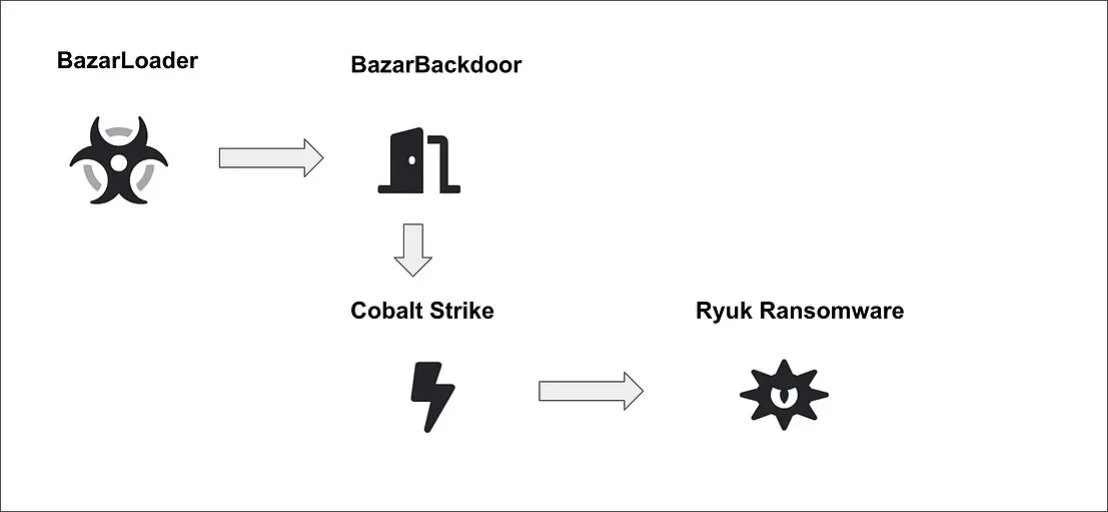
French IT services giant Sopra Steria suffered a cyber attack on October 20th, 2020, that reportedly encrypted portions of their network with the Ryuk ransomware.
Sopra Steria is a European information technology company with 46,000 employees in 25 countries worldwide. The company provides a wide range of IT services, including consulting, systems integration, and software development.
The firm has said that the attack has hit all geographies where they operate and have said it will take them several weeks to recover.
Numerous sources have confirmed that it was Ryuk ransomware threat actors who were behind the attack. This hacking group is known for its TrickBot and BazarLoader infections that allow threat actors to access a compromised network and deploy the Ryuk or Conti ransomware infections.
BazarLoader is increasingly being used in Ryuk attacks against high-value targets due to its stealthy nature and is less detected than TrickBot by security software.
When installed, BazarLoader will allow threat actors to remotely access the victim's computer and use it to compromise the rest of the network.
After gaining access to a Windows domain controller, the attackers then deploy the Ryuk ransomware on the network to encrypt all of its devices, as illustrated in the diagram above. [Source1] [source2]
The Nefilim ransomware operators have posted a long list of files that appear to belong to Italian eyewear and eyecare giant Luxottica.
Luxottica Group S.p.A. is an Italian eyewear conglomerate and the world’s largest company in the eyewear industry (which owns brands including LensCrafters, Sunglass Hut, Apex by Sunglass Hut, Pearle Vision, Target Optical, Eyemed vision care plan, and Glasses.com. Its best known brands are Ray-Ban, Persol, and Oakley) and employs over 80,000 people and generated 9.4 billion in revenue for 2019.
The company was hit by a cyber attack and some of the web sites operated by the company were not reachable, including Ray-Ban, Sunglass Hut, LensCrafters, EyeMed, and Pearle Vision.
Reports indicate that the firm was using a Citrix ADX controller device vulnerable to a critical vulnerability and it is believed that a threat actor or actors exploited the above flaw to infect the systems at the company with ransomware. This appears to have subsequently confirmed with Nefilim ransomware operators having posted a long list of files that appear to belong to Luxottica. [source]
Why this matters:
The analysis of the leaked files revealed that they contain confidential information regarding the recruitment process, professional resumes, and info about the internal structures of the Group’s human resource department. The ransomware operators also published a message which accuses Luxottica of having failed the properly manage the attack.
In the past months, the number of ransomware attacks surged, numerous ransomware gangs made the headlines targeting organisations worldwide and threatening victims with releasing the stolen data if the ransom was not paid.
Extortion is the new thing in cyber crime right now, more so than in the past. Companies cannot hide the cyber attack anymore. Now it’s more about how to manage the breach from the communication perspective. Defending companies from these types of attacks becomes even more strategic: data leak damages can generate tremendous amount of costs for companies worldwide.
Other notable ransomware victims this week include:
Barnes & Noble hit by Egregor ransomware, strange data leaked [source]
Montreal's STM public transport system hit by ransomware attack [source]
WastedLocker ransomware hits US-based ski and golf resort operator Boyne Resorts (WastedLocker was the same one used in the attack on Garmin in July) [source]
Other Threats
Infected IoT Device Numbers Surge 100% in a Year

The volume of infected Internet of Things (IoT) devices globally has soared by 100% over the past year, according to new data from Nokia.
It revealed that infected IoT devices now comprise nearly a third (32.7%) of the total number of devices, up from 16.2% in the 2019 report.
Nokia argued that infection rates for connected devices depend dramatically upon the visibility of the devices on the internet.
In networks where devices are routinely assigned public facing internet IP addresses there is a higher infection rate. In networks where carrier grade NAT is used, the infection rate is considerably reduced, because the vulnerable devices are not visible to network scanning.
With the introduction of 5G well underway, it is expected that not only the number of IoT devices will increase dramatically, but also the share of IoT devices accessible directly from the internet will increase as well, and rates of infection rising accordingly. [source]
Brute force attacks increase due to more open RDP ports
While leaving your back door open while you are working from home may be something you do without giving it a second thought, having unnecessary ports open on your computer or on your corporate network is a security risk that is sometimes underestimated. That’s because an open port can be subject to brute force attacks.
A brute force attack is where an attacker tries every way he can think of to get in. Including throwing the kitchen sink at it. In cases where the method they are trying is to get logged in to your system, they will try endless combinations of usernames and passwords until a combination works.
Brute force attacks are usually automated, so it doesn’t cost the attacker a lot of time or energy. Certainly not as much as individually trying to figure out how to access a remote system. Based on a port number or another system specific property, the attacker picks the target and the method and then sets his brute force application in motion. He can then move on to the next target and will get notified when one of the systems has swallowed the hook.
RDP attacks are one of the main entry points when it comes to targeted ransomware operations. To increase effectiveness, ransomware attacks are getting more targeted and one of the primary attack vectors is the Remote Desktop Protocol (RDP). Remote desktop is exactly what the name implies, an option to remotely control a computer system. It almost feels as if you were actually sitting behind that computer. Which is exactly what makes an attacker with RDP access so dangerous. [source]
Why this matters:
Because of the current pandemic, many people are working from home and may be doing so for a while to come. Working from home has the side effect of more RDP ports being opened. Not only to enable the workforce to access company resources from home, but also to enable IT staff to troubleshoot problems on the workers’ devices. A lot of enterprises rely on tech support teams using RDP to troubleshoot problems on employee’s systems.
But ransomware, although prevalent, is not the only reason for these types of attacks. Cyber criminals can also install keyloggers or other spyware on target systems to learn more about the organization they have breached. Other possible objectives might be data theft, espionage, or extortion.
Phishing
Two in five employees are not sure what a mobile phishing attack is
The COVID-19 pandemic has clearly changed the way people work and accelerated the already growing remote work trend. This has also created new security challenges for IT departments, as employees increasingly use their own personal devices to access corporate data and services.
These changes, where employees, IT infrastructures, and customers are everywhere – has led to employees not prioritising security in their new world of work, and the current distributed remote work environment has also triggered a new threat landscape, with malicious actors increasingly targeting mobile devices with phishing attacks.
A new study looking at the impact that lockdown has had on employees working habits polled 1,200 workers across the US, UK, France, Germany, Belgium, Netherlands, Australia, and New Zealand showed that many employees were unaware of how to identify and avoid a phishing attack, and over two in five (43%) of employees are not even sure what a phishing attack is. [source]
Microsoft is Most Imitated Brand for Phishing Attempts in Q3 2020

The latest Check Point ‘Q3 Brand Phishing Report’, highlighting the brands that hackers imitated the most to lure people into giving up personal data, reveals the brands which were most frequently imitated by criminals in their attempts to steal individuals’ personal information or payment credentials during July, August and September.
In Q3, Microsoft was the most frequently targeted brand by cyber criminals, soaring from fifth place (relating to 7% of all brand phishing attempted globally in Q2 of 2020) to the top of the ranking. 19% of all brand phishing attempts related to the technology giant, as threat actors sought to capitalise on large numbers of employees still working remotely during the Covid-19 pandemic. For the first time in 2020, DHL entered the top 10 rankings, taking the second spot with 9% of all phishing attempts related to the company. [source]
Top phishing brands in Q3 2020
Microsoft (19%)
DHL (9%)
Google (9%)
PayPal (6%)
Netflix (6%)
Facebook (5%)
Apple (5%)
Whatsapp (5%)
Amazon (4%)
Instagram (4%)
Phishing Lures Shifting from COVID-19 updates to Job Opportunities
Researchers are seeing a pivot in the spear-phishing and phishing lures used by cybercriminals, to entice potential job candidates as businesses start to open up following the pandemic.
Cyber criminals cashed in on the surge of COVID-19 earlier this year, with email lures purporting to be from healthcare professionals offering more information about the pandemic. However, as the year moves forward, bad actors are continuing to swap up their attacks and researchers are now seeing ongoing email based attacks that tap into new job opportunities as businesses start to open up. [source]
Denial of Service Attacks
DDoS (Distributed Denial of Service) Attacks Triple in Size as Ransom Demands Re-Emerge
The last quarter of 2020 has seen a wave of web application attacks which have used ransom letters to target businesses across a number of industries.
According to research from Akamai, the largest of these attacks sent over 200Gbps of traffic at their targets as part of a sustained campaign of higher Bits Per Second (BPS) and Packets Per Second (PPS) than similar attacks had displayed a few weeks prior.
Prior to August most of these attacks were targeting the gaming industry but since then these attacks abruptly swung to financial organisations, and later in the cycle, multiple other verticals.
Akamai explained that none of the vectors involved in these series of attacks were new, as most of the traffic was generated by reflectors and systems that were used to amplify traffic. However, multiple organisations began to receive targeted emails with threats of DDoS attacks, where this would be launched unless a ransom amount was paid. A small DDoS would be made against the company to show that the attackers were serious, and then there was a threat of a 1Tbps attack if payment was not made.
Many extortion DDoS campaigns start as a threat letter, and never progress beyond that point but this this campaign has seen frequent ‘sample’ attacks that prove to the target that criminals have the capability to make life difficult.
Many of the extortion emails ended up being caught by spam filters, and not all targets are willing to admit they’ve received an email from the attackers.
Why this matters:
This extortion DDoS campaign is not over and the criminals behind this campaign are changing and evolving their attacks in order to throw off defenders and the law enforcement agencies that are working to track them down.
Vulnerabilities
New Google Chrome version fixes actively exploited zero-day bug
Google released Chrome 86.0.4240.111 this week to address five security vulnerabilities, one of which is being actively exploited.
The announcement from Google stated they they were aware of reports that an exploit for CVE-2020-15999 exists in the wild.
This new version of Chrome started rolling out to the entire userbase. Users on Windows, Mac, and Linux desktop users can upgrade to Chrome 86 by going to Settings -> Help -> About Google Chrome.
The Google Chrome web browser will then automatically check for the new update and install it when available.
Adobe releases another out-of-band patch, squashing critical bugs across creative software
Adobe has released a second out-of-band security update to patch critical vulnerabilities across numerous software products.
The patch, released outside of the tech giant's typical monthly security cycle, impacts Adobe Illustrator, Dreamweaver, Marketo, Animate, After Effects, Photoshop, Premiere Pro, Media Encoder, InDesign, and the Creative Cloud desktop application on Windows and macOS machines.
The vulnerabilities across the different products variously could result in privilege escalation, cross-site scripting (XSS), which could be weaponised to deploy malicious JavaScript in a browser session, or otherwise could result in arbitrary code execution.
Last week, Adobe released a separate set of out-of-band security fixes impacting the Magento platform. On October 15, Adobe said the patch resolved nine vulnerabilities, eight of which are critical -- including a bug that could be abused to tamper with Magento customer lists. [source]
WordPress deploys forced security update for dangerous bug in popular plugin
The WordPress security team has taken a rare step last week and used a lesser-known internal capability to forcibly push a security update for a popular plugin called Loginizer, which provides security enhancements for the WordPress login page, but that was found to contain a dangerous SQL injection bug that could have allowed hackers to take over WordPress sites running older versions of the plugin. [source]
Why this matters:
Remote attackers to run code against the WordPress database — in what is referred to as an unauthenticated SQL injection attack.
These are the most worrying vulnerabilities around today
Failure to patch once again leaves organisations open to attacks
The US National Security Agency (NSA) has published a new cyber security advisory in which it details 25 of the most dangerous vulnerabilities actively being exploited in the wild by Chinese state-sponsored hackers and other cyber criminals.
Unlike zero-day vulnerabilities where hardware and software makers have yet to release a patch, all of the vulnerabilities in the NSA's advisory are well-known and patches have been made available to download from their vendors. However, the problem lies in the fact that organisations have yet to patch their systems, leaving them vulnerable to potential exploits and attacks.
The NSA provided further details on the nature of the vulnerabilities in its advisory while urging organisations to patch them immediately.
Most of the vulnerabilities listed below can be exploited to gain initial access to victim networks using products that are directly accessible from the Internet and act as gateways to internal networks. The majority of the products are either for remote access or for external web services and should be prioritised for immediate patching. The full list can be found here.
The first bug in the list, tracked as CVE-2019-11510, relates to Pulse Secure VPN servers and how an unauthenticated remote attacker can expose keys or passwords by sending a specially crafted URI to perform an arbitrary file reading vulnerability.
Another notable bug from the list, tracked as CVE-2020-5902, affects the Traffic Management User Interface (TMUI) of F5 BIG-IP proxies and load balancers and it is vulnerable to a Remote Code Execution (RCE) vulnerability that if exploited, could allow a remote attacker to take over an entire BIG-IP device.
The Citrix Application Delivery Controller (ADC) and Gateway systems are vulnerable to a directory traversal bug, tracked as CVE-2019-19781, that can lead to remote code execution where an attacker does not need to possess valid credentials for the device.
The advisory also mentions BlueKeep, SigRed, Netlogon, CurveBall and other more well-known vulnerabilities.
To avoid falling victim to any potential attacks exploiting these vulnerabilities, the NSA recommends that organisations keep their systems and products updated and patched as soon as possible after vendors release them. [source]
Miscellaneous Cyber News of the Weeks
Hackers Can Clone Millions of Toyota, Hyundai, and Kia Keys
Owners of cars with keyless start systems have learned to worry about so-called relay attacks, in which hackers exploit radio-enabled keys to steal vehicles without leaving a trace. Now it turns out that many millions of other cars that use chip-enabled mechanical keys are also vulnerable to high-tech theft. A few cryptographic flaws combined with a little old-fashioned hot-wiring—or even a well-placed screwdriver—lets hackers clone those keys and drive away in seconds.
Researchers this week revealed new vulnerabilities in the encryption systems used by immobilisers, the radio-enabled devices inside of cars that communicate at close range with a key fob to unlock the car's ignition and allow it to start. Specifically, they found problems in how Toyota, Hyundai, and Kia implement their encryption system. A hacker who swipes a relatively inexpensive RFID reader/transmitter device near the key fob of any affected car can gain enough information to derive its secret cryptographic value. That, in turn, would allow the attacker to spoof the device to impersonate the key inside the car, disabling the immobiliser and letting them start the engine.
The researchers say the affected car models include the Toyota Camry, Corolla, and RAV4; the Kia Optima, Soul, and Rio; and the Hyundai I10, I20, and I40, amongst others. [source]
As usual, contact us to help assess where your risks lie and to ensure you are doing all you can do to keep you and your business secure.
Look out for our weekly ‘Cyber Tip Tuesday’ video blog and on our YouTube channel.
You can also follow us on Facebook, Twitter and LinkedIn.
Links to articles are for interest and awareness and linking to or reposting external content does not endorse any service or product, likewise we are not responsible for the security of external links.
The Board, not IT, is responsible for Cyber and Information Security
Welcome to this week's Black Arrow Cyber Tip Tuesday.
In our articles in Business Brief magazine and the Guernsey Press, we have consistently highlighted that the Board, not IT, is responsible for Cyber and Information Security.
The financial services regulators in the Channel Islands have also made that very clear.
The GFSC has warned that “Cyber and information security should be taken seriously by the Board and included along with more established risks within a firm’s overall strategy for risk management”.
And the JFSC has told businesses that “As a registered person, the Codes of Practice require you to understand and manage risks, including cyber-security risks, which could affect your business or customers”.
Welcome to this week's Black Arrow Cyber Tip Tuesday.
In our articles in Business Brief magazine and the Guernsey Press, we have consistently highlighted that the Board, not IT, is responsible for Cyber and Information Security.
The financial services regulators in the Channel Islands have also made that very clear.
The GFSC has warned that “Cyber and information security should be taken seriously by the Board and included along with more established risks within a firm’s overall strategy for risk management”. And the JFSC has told businesses that “As a registered person, the Codes of Practice require you to understand and manage risks, including cyber-security risks, which could affect your business or customers”.
There is no room for misunderstanding there.
So, if a cyber incident happened, the Regulator would say to each Director “show us the evidence that you had taken cyber and information security seriously. Show us that you had understood and managed your risks properly, just as we had warned you to do”.
If you are a Director, including a Non-Executive Director, and you had to get that evidence ready for tomorrow morning, would you be able to?
To be clear, it would not be appropriate to say that you handed it over to IT and thought they had sorted it.
Our Black Arrow website contains videos and articles that help Directors understand the basics of cyber and information security.
It is really important that the Board should be an educated customer of cyber security providers, including any outsourced IT providers, to be able to scrutinise and challenge what they are being told. You don’t need to be an expert, but have a good understanding of the basics, and your independent trusted advisors can support you on the details.
Have a look at the information on our site or contact us to see how we can help you achieve what the regulators require of you.

Cyber Threat Briefing 16 October 2020: ransomware tidal wave; notable ransomware victims from the last week; BEC Attacks: Nigeria no longer epicentre, losses top $26B; Trickbot back; MS fix 87 vulns
Cyber Threat Briefing 16 October 2020: ransomware tidal wave of attacks; Notable ransomware victims of the last week; BEC Attacks: Nigeria No Longer the Epicentre as Losses top $26B; Trickbot back after disruption attempts; Microsoft October 2020 Patch Tuesday fixes 87 vulnerabilities; Malware gangs love open source offensive hacking tools
Welcome to this week’s Black Arrow Cyber Threat Briefing – a weekly digest, collated and curated by our cyber experts to provide senior and middle management with an easy to digest round up of the most notable threats, vulnerabilities and cyber related news from the last week.
Threats
Ransomware
Ransomware is growing and growing and getting worse all the time, with the G7 this week warning of ‘a tidal wave of ransomware attacks’ [source]. It is fast approaching becoming such a problem that it may soon reach epidemic status with few organisations left unaffected as firm after firm falls victim.
The ransomware gangs have turned crime into a multi-million pound business empire, it is estimated that $7.5 billion was extorted from victims last year in the United States alone [source], putting any legitimate industry or business sector to shame in term of meteoric growth. This is not small scale actors working out of their bedrooms, they have customer support centres and 24/7 helplines, they have plush offices and flash cars, paid for by the victims of their crimes, paid for by firms like yours paying ransoms.
And here's how attackers are getting in: in nearly half (47%) of ransomware cases gangs used the open remote desktop protocol, a tool that has been used by many companies to help staff work from home, but which can also give attackers a way in if it is not correctly secured.
More than a quarter (26%) of cases were traced back to a phishing email, and a smaller number used specific vulnerability exploits (17%), including Citrix NetScaler CVE-2019-19781 and Pulse VPN CVE-2019-11510. This was followed by account takeovers, at 10%. [source]
Criminal gangs have earned so much money and power they are now outsourcing much of the labour, allowing them to live of their spoils while their empires continue to grow, while they do next to nothing, with more and more joining their ranks [source]
As long as even a small number of victims pay the ransom this remains highly lucrative for attackers.
The ransom for Software AG is $23m, but they will demand much smaller sums from much smaller firms – so how are they doing this? Are larger firms being specifically targeted with tailored phishing campaigns, where they hope they will get lucky in getting an employee to fall for the bait, where lower value targets are being hit with machine/algorithmic generated phishing attacks, with lower levels of sophistication and more of a ‘spray and pray’ approach, hoping casting a wide enough net will still result in larger numbers of lower value victims.
We keep trying to warn firms how bad this is getting, and we don’t do this to drum up business, we do this because we are hugely concerned about the direction this is going and how damaging this can be for any firm.
Many firms are reluctant to take cyber security seriously, believing it won’t happen to them, but it is happening to firm after firm after firm who believed it wouldn’t happen to them. It’s too late to start thinking about what you should have done after you’ve become a victim, it’s far better, and far cheaper, to take steps to avoid being a victim in the first place than trying to recover or pay the ransom.
Of the increasing number of firms that do go hit, many don’t survive, and those that do often find things are never the same again, with impacts on confidence levels in your staff and in your IT and information security departments [source]
Ransomware is not only affecting desktops, laptops and servers, but also now increasingly Android and other mobile platforms [source]
Protecting against ransomware is not a luxury or something that can kicked down the road to look at another day, firms need to ensure they are protecting themselves against this threat now – before they become a victim.
Notable ransomware victims of the last week
There have been a number of high profile victims of ransomware in the last week, notably Software AG, a German conglomerate with operations in more than 70 countries, which was attacked by the Clop group who are threatening to dump stolen data if the $23 million ransom is not paid.
Carnival Cruises were hit with ransomware affecting data and personal information for guests, employees and crew for Carnival Cruises, Holland America and Seabourn as well as casino operations.
Early indications point to the disruption being experiences by Hackney Council with their systems stemming from a ransomware attack, although this has not been confirmed.
BEC
BEC Attacks: Nigeria No Longer the Epicentre as Losses top $26B
Business Email Compromise (BEC) Fraudsters now have bases of operation across at least 39 countries and are responsible for $26 billion in losses annually, and growing.
A study of more than 9,000 instances of BEC attacks all over the world shows that the number has skyrocketed over the past year, and that the social-engineering scam has expanded well beyond its historic roots in Nigeria.
Why this matters:
A recent report entitled The Global Reach of Business Email Compromise, found that these attacks cost businesses a staggering $26 billion every year. And that trend appears to be accelerating. In fact, researchers found BEC attacks currently make up a full 40 percent of cyber crime losses globally, impacting at least 177 countries.
For context, the Anti-Phishing Working Group recently find that the average wire transfer in a BEC scan is around $80,000.
In a BEC attack, a scammer impersonates a company executive or other trusted party and tries to trick an employee responsible for payments or other financial transactions into writing money to a bogus account. Attackers usually conduct a fair amount of recon work, studying executive styles and uncovering the organisations vendors, billing system practices and other information to help mount a convincing attack.
Read more: https://threatpost.com/bec-attacks-nigeria-losses-snowball/160118/
Trickbot back after disruption attempts
The Trickbot botnet looks to be working once again, despite separate efforts in the past few weeks aimed at disrupting its operation.
Earlier this month the Emotet spam botnet – which is often the precursor to TrickBot being loaded onto a system – began receiving spam templates intended for mass distribution. These spam templates contained Microsoft Word document attachments with malicious macros that fetch and load a copy of Emotet onto the victim machine. The Emotet bot reached out to its controllers and received commands to download and execute Trickbot on victim machines.
The Trickbot group tag that researchers identified is tied to a typical infection campaign that information security researchers have been observing for the past 6 months or more.
Additionally, Intel 471 researchers saw an update to the Trickbot plugin server configuration file. Fifteen server addresses were added, and two old servers were retained in the configuration, along with the server’s ‘.onion’ address. This was likely done as a fix that would help operators maintain that their infrastructure remains operational. [link]
Why this matters:
The fix is another round in the back-and-forth between Trickbot’s operators and the separate public and private sector parties that have attempted to disrupt the botnet’s actions. This includes actions by the US Cyber Command and Microsoft, who issued a public statement that it had taken legal action to “combat ransomware ahead of U.S. elections.” The legal action involved Microsoft attempting to disrupt a number of Trickbot command and control server IP addresses in the United States.
The fact that Trickbot has resumed normal operations despite the best efforts of the likes of the US Cyber Command and Microsoft shows how resilient of an operation Trickbot is, and how much more effort is needed to fully take the botnet offline for good. The botnet’s operators have all the IT support of legitimate enterprises – continuity planning, backups, automated deployment, and a dedicated workforce – that allow them to quickly react to disruptive measures.
Read more: https://public.intel471.com/blog/trickbot-online-emotet-microsoft-cyber-command-disruption-attempts/
Vulnerabilities
Microsoft October 2020 Patch Tuesday fixes 87 vulnerabilities

Microsoft this week released its monthly batch of security updates known as Patch Tuesday, and this month the OS maker has patched 87 vulnerabilities across a wide range Microsoft products.
By far, the most dangerous bug patched this month is CVE-2020-16898. Described as a remote code execution (RCE) vulnerability in the Windows TCP/IP stack, this bug can allow attackers to take over Windows systems by sending malicious ICMPv6 Router Advertisement packets to an unpatched computer via a network connection.
Another bug to keep an eye on is CVE-2020-16947, a remote code execution issue in Outlook. Microsoft says this bug can be exploited by tricking a user to open a specially crafted file with an affected version of Microsoft Outlook software. [source1] [source2]
Why this matters:
The bug was discovered internally by Microsoft engineers, and OS versions vulnerable to CVE-2020-16898 include Windows 10 and Windows Server 2019.
With a severity score of 9.8 out of a maximum 10, Microsoft considers the bug dangerous and likely to be weaponised, and rightfully so.
Patching the bug is recommended, but workarounds such as disabling ICMPv6 RDNSS support also exist, which would allow system administrators to deploy temporary mitigations until they quality-test this month’s security updates for any OS-crashing bugs.
Critical SonicWall VPN Portal Bug Allows DoS, Worming RCE
A critical security bug in the SonicWall VPN Portal can be used to crash the device and prevent users from connecting to corporate resources. It could also open the door to remote code execution (RCE), researchers said.
The flaw (CVE-2020-5135) is a stack-based buffer overflow in the SonicWall Network Security Applicance (NSA). According to researchers who discovered it, the flaw exists within HTTP/HTTPS service used for product management and SSL VPN remote access. [source]
Why this matters:
An unskilled attacker could trigger a persistent denial-of-service condition using an unauthenticated HTTP request involving a custom protocol handler.
Adding insult to injury, this particular flaw exists in a pre-authentication routine, and within a component (SSL VPN) which is typically exposed to the public internet.
‘More Than A Billion’ Phone Wide Open To ‘Backdoor’ Remote Code Execution in Adtech Company’s Code
Malicious code impacting more than a billion smartphone owners is currently in the wild and enabling remote code execution. [source]
Why this matters:
Remote code execution is a very serious security violation, and basically enables the owner of that code do almost anything they want on your phone.
Miscellaneous Cyber News of the Weeks
Malware gangs love open source offensive hacking tools
In the cyber security field, the term OST (Open Source Tools) refers to software apps, libraries, and exploits that possess offensive hacking capabilities and have been released as either free downloads or under an open source license.
OST projects are usually released to provide a proof-of-concept exploit for a new vulnerability, to demonstrate a new (or old) hacking technique, or as penetration testing utilities shared with the community.
These discussions have been taking place for more than a decade. However, they have always been based on personal experiences and convictions, and never on actual raw data.
That changed this week when a security researcher compiled data on 129 open source offensive hacking tools and searched through malware samples and cyber-security reports to discover how widespread was the adoption of OST projects among hacking groups — such as low-level malware gangs, elite financial crime groups, and even nation-state sponsored APTs. [source]
The results were compiled in an interactive map – available here
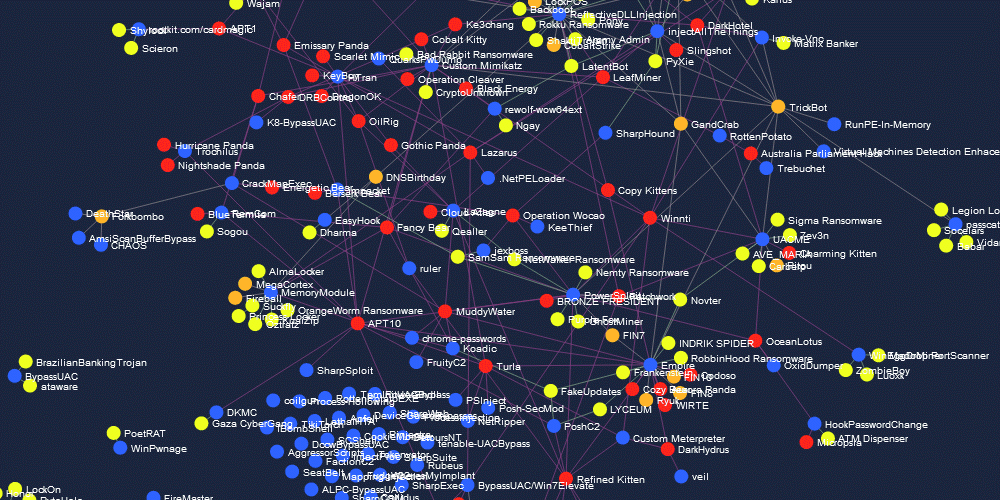
Why this matters:
Today, OST is one of the most (if not the most) controversial topics in the information security community.
On one side, you have the people who are in favour of releasing such tools, arguing that they can help defenders learn and prepare systems and networks for future attacks.
On the opposing side, you have the ones who say that OST projects help attackers reduce the costs of developing their own tools and hiding activities into a cloud of tests and legitimate pen-tests.
Fitbit Spyware Steals Personal Data via Watch Face
A researcher has found they can take advantage of lax Fitbit privacy controls to build a malicious spyware watch face.
A wide-open app-building API (Application Programming Interface) could allow an attacker to build a malicious application that could access Fitbit user data, and send it to any server.
A proof-of-concept was created to do just that, after realizing that Fitbit devices are loaded with sensitive personal data. [source]
Why this matters:
Essentially, the API could send device type, location and user information including gender, age, height, heart rate and weight and it could also access calendar information. While this doesn’t include PII profile data, the calendar invites could expose additional information such as names and locations.
The researcher was able to make the app available through the Fitbit Gallery (where Fitbit showcases various third-party and in-house apps). Thus, the spyware appears legitimate, and increase the likelihood it would be downloaded.
Links to articles are for interest and awareness and linking to or reposting external content does not endorse any service or product, likewise we are not responsible for the security of external links.
As usual, contact us to help assess where your risks lie and to ensure you are doing all you can do to keep you and your business secure.
Look out for our weekly ‘Cyber Tip Tuesday’ video blog and on our YouTube channel.
Do your children present a cyber risk to you? Cyber Tip Tuesday
Do your children present a cyber risk to you?
This week's Cyber Tip Tuesday looks at whether children present a cyber risk to others in the household
This week's Cyber Tip Tuesday looks at whether children present a cyber risk to others in the household
Cyber Weekly Flash Briefing 09 October 2020: Jersey based insurance firm Ardonagh hit with ransomware; Boards increase cyber investment; spike in romance scams; Amazon Prime Day phishing spike
Cyber Weekly Flash Briefing 09 October 2020: Jersey based insurance firm Ardonagh hit with ransomware; Boards increase cyber investment; spike in romance scams; cyber remains top business risk; ransomware surge as hackers take advantage of firms under pressure; Amazon Prime Day spurs phishing spike; new botnet wipes IoT devices; Emotet one of the most prevalent threats; Windows Error Reporting exploited
Links to articles are for interest and awareness and linking to or reposting external content does not endorse any service or product, likewise we are not responsible for the security of external links.
Jersey based insurance firm Ardonagh Group disabled 200 admin accounts as ransomware infection took hold
Jersey-headquartered insurance company Ardonagh Group has suffered a potential ransomware infection.
Reports indicated that the insurance firm had been forced to suspend 200 internal accounts with admin privileges as the "cyber incident" progressed through its IT estate.
The UK's second largest privately owned insurance broker, according to the Financial Times, Ardonagh Group has spent the year to date acquiring other companies.
The timing of the most recent attack is unfortunate: Ardonagh recently published its financials, showing a loss of £94.m, according to reports.
Why this matters:
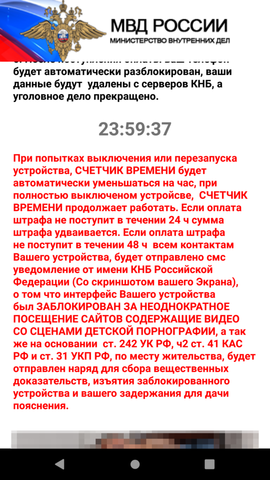
Whilst there is nothing to suggest these attacks are linked this attack comes a week after US insurance giant Gallagher was also hit with ransomware.
No firm is immune to being hit with ransomware, no matter how good they think their defences are, and then it comes down to how well you had planned for ransomware happening and how capable you are to recover and get the business back on its feet.
Read more: https://www.theregister.com/2020/10/06/ardonagh_group_ransomware/ and https://www.insurancetimes.co.uk/news/ardonagh-data-breach-reported-to-information-commissioner/1434888.article
Boards Increase Investment in Cyber security in Face of Threats and Regulatory Fines
Board decisions on cyber security spending are slowly improving following the impact of regulatory fines and COVID-19.
According to research surveying 908 senior IT security decision makers working within organisations with more than 500 employees, 58% plan to add more security budget in the next 12 months.
Amid growing cyber threats and rising risks through the COVID crisis, CISOs report that boards are listening and stepping up with increased budget for cyber security, with 91% agreeing that their board adequately supports them with investment.
Retro-fixing of security to remote working tools was “a path and direction most organisations have been going down, however it was always a lower priority.”
COVID-19 has accelerated the investment into both cloud and remote working budgets, and this includes the need for secure remote access and the ability to access from any location. Having a CISO on the board is helping ensure technology that supports remote working environments are also secure by design.
Why this matters:
Boards are definitely listening and stepping up with increased budget for cyber security, however many firms still tend to view any investment as a cost rather than adding business value. There is still some way to go, boards mainly approve investments after a security incident or through fear of regulatory penalties for non-compliance which shows that cyber security investment decisions are more about insurance than about any desire to lead the field which, in the long run, limits the industry’s ability to keep pace with the cyber-criminals.
Read more: https://www.infosecurity-magazine.com/news/boards-increase-investment-fines/
Online Romance Scams Spike Under Lockdown
Police and banks are celebrating after revealing that £19 million in fraud was stopped in the first half of the year, although romance scams are reportedly on the rise.
Over 600 reports of romance scams were made each month in June, July and August, contributing to a 26% year-on-year increase in cases recorded by Action Fraud, according to Sky News.
These are typically confidence tricks where a vulnerable individual is contacted via a dating site and financially exploited or unwittingly used as a money mule.
Why this matters:
Over 19,400 such crimes were logged with the FBI last year, making it the second highest earner for cyber-criminals after business email compromise (BEC). Over $475 million was lost to romance scammers in 2019, the law enforcement agency said.
In the UK, losses are said to have exceeded £66 million between August 2019 and August 2020. As a result, various dating sites, banking groups and police are running a “Take Five” awareness campaign designed to warn users of the dangers posed by internet scammers.
The spike in romance scams coincided with COVID-19 lockdowns in the UK and much of the rest of the world, and a subsequent shift in crime and fraud online.
Action Fraud claimed it saw an increase in reported attacks in the first month of lockdown, to nearly 4000. UK Finance last month claimed that fraudsters are increasingly shifting their operations online.
However, Action Fraud also revealed this week that millions of pounds worth of fraud has been prevented so far this year thanks to a Banking Protocol first introduced three years ago.
The initiative enables banking staff in branches to alert their local police force when they suspect a customer is being scammed, for example if they are transferring or withdrawing large sums of money. It has been used to good effect to stop romance fraud, and impersonation scams, Action Fraud claimed.
In addition to the £19.3 million in fraud allegedly prevented, 100 arrests were made in the first half of the year.
Read more: https://www.infosecurity-magazine.com/news/online-romance-scams-spike-under/
WEF: Cyber-Attacks Remain Top Business Risk in the West
Cyber-attacks have dropped down the pecking order in terms of top global business risks but remain high on the priority list in North America and Europe, according to the latest World Economic Forum (WEF) data.
The annual Regional Risks for Doing Business report is compiled from over 12,000 responses from business leaders in 127 countries. They are presented with a pre-selected list of 30 global risks and asked to choose the five that they believe to be of most concern for doing business in their country over the next decade.
Why this matters:
Unsurprisingly given the current financial and healthcare crisis, the top two global risks were unemployment and spread of infectious disease, followed by fiscal crisis. Spread of infectious disease also topped the priority list for business leaders regionally in Europe, Eurasia and East Asia and the Pacific.
However, although cyber-attacks fell from second place globally last year to fourth, they are still top-of-mind in the West.
They were named the number one risk of the next decade by North American business leaders, garnering a share of 55% versus infectious diseases in second with 30%. Cyber-risk was placed second in Europe but first in the UK, with 56% versus fiscal crises in second with 45%.
Read more: https://www.infosecurity-magazine.com/news/wef-cyberattacks-top-business-risk/
Ransomware: Surge in attacks as hackers take advantage of organisations under pressure
The number of ransomware attacks has significantly grown over the past few months as cyber criminals look to cash in on security vulnerabilities opened up by the rise in remote working.
Researchers at cyber security company Check Point said the number of daily ransomware attacks across the globe has increased by half over the past three months – and that they've almost doubled in the US.
Why this matters:
One of the reasons ransomware attacks are on the rise is because of the swift switch to remote working that has forced many people to work from home for the first time, something that could leave them vulnerable to phishing emails and malware attacks, especially on a home network that likely won't be as secure as an enterprise environment.
Working from home also makes monitoring devices for malicious activity harder for information security teams than it would be if every user was under one roof, providing hackers with a better chance of going about their business unnoticed.
Amazon Prime Day Spurs Spike in Phishing, Fraud Attacks
Cyber criminals are tapping into Amazon’s annual discount shopping campaign for subscribers, Prime Day, with researchers warning of a recent spike in phishing and malicious websites that are fraudulently using the Amazon brand.
There has been a spike in the number of new monthly phishing and fraudulent sites created using the Amazon brand since August, the most significant since the COVID-19 pandemic forced people indoors in March, according to a new report published this week.
Why this matters:
As shoppers gear up for two days of great deals, cyber criminals are preparing to prey on the unwary, taking advantage of those who let their guard down to snap up bargains.
Prime Day actually happens over two days—this year the event falls on Oct. 13 to 14. Amazon Prime customers enjoy special sales and discounts on top brands to mark the biggest shopping event of the year on the online retail giant’s site.
Amazon last year yielded over $7 billion in sales during the 36-hour event, which could go even bigger this year due to “the decline of brick and mortar retail and the close proximity to the holidays,” researchers noted. Indeed, mandatory stay-at-home orders globally that began with the COVID-19 pandemic in March have significantly boosted Amazon’s business, a trend that shows no signs of abating.
Read more: https://threatpost.com/amazon-prime-day-spurs-spike-in-phishing-fraud-attacks/159960/
Microsoft warns of Android ransomware that activates when you press the Home button
A new strain of mobile ransomware abuses the mechanisms behind the "incoming call" notification and the "Home" button to lock screens on users' devices.
Named AndroidOS/MalLocker.B, the ransomware is hidden inside Android apps offered for download on online forums and third-party websites.
Just like most Android ransomware strains, MalLocker.B doesn't actually encrypt the victim's files but merely prevents access to the rest of the phone.
Once installed, the ransomware takes over the phone's screen and prevents the user from dismissing the ransom note — which is designed to look like a message from local law enforcement telling users they committed a crime and need to pay a fine.
Why this matters:
Ransomware posing as fake police fines has been the most popular form of Android ransomware for more than half a decade now.
Across time, these malware strains have abused various functions of the Android operating systems in order to keep users locked on their home screen.
Past techniques included abusing the System Alert window or disabling the functions that interface with the phone's physical buttons.
MalLocker.B comes with a new variation of these techniques.
The ransomware uses a two-part mechanism to show its ransom note.
The first part abuses the "call" notification. This is the function that activates for incoming calls to show details about the caller, and MalLocker.B uses it to show a window that covers the entire area of the screen with details about the incoming call.
The second part abuses the "onUserLeaveHint()" function. This function is called when users want to push an app into the background and switch to a new app, and it triggers when pressing buttons like Home or Recents. MalLocker.B abuses this function to bring its ransom note back into the foreground and prevent the user from leaving the ransom note for the home screen or another app.
The abuse of these two functions is a new and never-before-seen trick, but ransomware that hijacks the Home button has been seen before.
Suspected Chinese Hackers Unleash Malware That Can Survive OS Reinstalls
Chinese hackers may be using malware that can survive Windows OS reinstalls to spy on computers.
Security firm Kaspersky Lab uncovered the malware, which exploits a computer’s UEFI (Unified Extensible Firmware Interface) to continually persist on a Windows machine.
Why this matters:
Attacking the UEFI is pretty alarming because the software is used to boot up your computer and load the operating system. It also operates separately from your computer’s main hard drive, and usually resides in the motherboard’s SPI flash memory as firmware. As a result, any malicious process embedded in the UEFI can survive an operating system reinstall while evading traditional antivirus solutions. This attack shows that in exceptional cases actors are willing to go to great lengths in order to gain the highest level of persistence on a victim’s machine.
New HEH botnet can wipe routers and IoT devices
A newly discovered botnet contains code that can wipe all data from infected systems, such as routers, servers, and Internet of Things (IoT) devices.
Named HEH, the botnet spreads by launching brute-force attacks against any internet-connected system that has its Telnet ports (23 and 2323) exposed online.
If the device uses default or easy-to-guess Telnet credentials, the botnet gains access to the system, where it immediately downloads one of seven binaries that install the HEH malware.
Why this matters:
This HEH malware doesn't contain any offensive features, such as the ability to launch DDoS attacks, the ability to install crypto-miners, or code to run proxies and relay traffic for bad actors.
The only features present are a function that ensnares infected devices and coerces them to perform Telnet brute-force attacks across the internet to help amplify the botnet; a feature that lets attackers run Shell commands on the infected device; and a variation of this second feature that executes a list of predefined Shell operations that wipe all the device's partitions.
US Department of Homeland Security (DHS) warns that Emotet malware is one of the most prevalent threats today
The malware known as Emotet has emerged as “one of the most prevalent ongoing threats” as it increasingly targets state and local governments and infects them with other malware, the cybersecurity arm of the Department of Homeland Security said on Tuesday.
Why this matters:
Emotet was first identified in 2014 as a relatively simple trojan for stealing banking account credentials. Within a year or two, it had reinvented itself as a formidable downloader or dropper that, after infecting a PC, installed other malware. The Trickbot banking trojan and the Ryuk ransomware are two of the more common follow-ons. Over the past month, Emotet has successfully burrowed into Quebec’s Department of Justice and increased its onslaught on governments in France, Japan, and New Zealand. It has also targeted the Democratic National Committee and numerous other US state and local government agencies.
Hackers exploit Windows Error Reporting service in new fileless attack
A new fileless attack technique that abuses the Microsoft Windows Error Reporting (WER) service is the work of a hacking group that is yet to be identified.
According to researchers the attack vector relies on malware burying itself in WER-based executables to avoid arousing suspicion.
In a blog post on Tuesday the researchers said the new "Kraken" attack -- albeit not a completely novel technique in itself -- was detected on September 17.
A lure phishing document found by the research team was packaged up in a .ZIP file. Titled, "Compensation manual.doc," the file claims to contain information relating to worker compensation rights, but when opened, is able to trigger a malicious macro.
Why this matters:
The macro leads to a payload injected a process connected to the WER service and used by Microsoft to track and address operating system errors.
That reporting service, WerFault.exe, is usually invoked when an error related to the operating system, Windows features, or applications happens," Malwarebytes says. "When victims see WerFault.exe running on their machine, they probably assume that some error happened, while in this case they have actually been targeted in an attack.
What is the Functionality, Usability and Security triangle?
What is the Functionality, Usability and Security triangle?
We explain one of the core concepts of information security, the functionality, usability and security triangle - and explain why getting the balance between the three points is so important
We explain one of the core concepts of information security, the functionality, usability and security triangle - and explain why getting the balance between the three points is so important
Cyber Weekly Flash Briefing 2 October 2020: Entry to Ransom in 45 Mins; Cyber War Collateral; Gallagher Hit with Ransomware; Adapting to Permanent WFH; Consumers Ditch Breached Firms; Awareness Month
Cyber Weekly Flash Briefing 02 October 2020: Ransomware - Entry to Ransom in 45 Minutes; Business concerned by collateral damage in cyber war; Gallagher insurance hit with ransomware; paying ransoms could land you in hot water with regulators; security must adapt to permanent WFH; DDoS attacks are getting more powerful; Consumers Vote to Ditch Breached Firms; New Botnet now Infects Mac and Android Devices; Spyware Variant Snoops on WhatsApp & Telegram Messages; It’s Cyber Security Awareness Month
Links to articles are for interest and awareness and linking to or reposting external content does not endorse any service or product, likewise we are not responsible for the security of external links.
Ransomware: from Entry to Ransom in Under 45 Minutes
Ransomware gangs are performing wide-ranging internet scans to find vulnerable systems and then accelerating attacks to just minutes to capitalize on COVID-19, Microsoft has warned in a blog post introducing the firm’s latest Digital Defense Report
The report claimed that threat actors have “rapidly increased sophistication” over the past year, with ransomware the number one reason for Microsoft incident response between October 2019 and July 2020.
“Attackers have exploited the COVID-19 crisis to reduce their dwell time within a victim’s system — compromising, exfiltrating data and, in some cases, ransoming quickly — apparently believing that there would be an increased willingness to pay as a result of the outbreak. In some instances, cyber-criminals went from initial entry to ransoming the entire network in under 45 minutes”.
“At the same time, we also see that human-operated ransomware gangs are performing massive, wide-ranging sweeps of the internet, searching for vulnerable entry points, as they ‘bank’ access – waiting for a time that is advantageous to their purpose.”
Why this matters:
Not only are attackers speeding up attacks, attackers have also become more sophisticated in performing reconnaissance on high-value targets, so that they appear to know when certain factors like holidays will reduce the victim organisation’s chances of patching, or otherwise hardening their networks.
They’re also aware of how billing cycles operate in certain industries, and thus when specific targets may be more willing to pay.
Read more: https://www.infosecurity-magazine.com/news/ransomware-from-entry-ransom-under/
Business are concerned their companies will be collateral damage in a future cyber-war
Businesses are worrying about being caught in the crossfire of cyber warfare, according to research from Bitdefender – while industry figures warn that the gap between common-or-garden cyber threats and what nation states are doing is becoming smaller and smaller.
Bitdefender’s latest report, titled 10 in 10, surveyed around 6,000 C-suite executives responsible for cyber security and found “over a fifth” said that cyber warfare was one of the most challenging topics they had to convince their colleagues to take seriously.
Bitdefender don’t think these executives are afraid of cyber warfare in the sense of directly being targeted, more in line with being collateral victims of cyber warfare taking out electric power grids, internet. They need to be prepared for these kind of attacks.
Why this matters:
Cyber warfare, at its simplest, involves disrupting computers to achieve a real-world effect. This could be something like a denial-of-service (DoS) attack against a power grid, intended to cause a power outage, or the infamous Stuxnet malware infection that set back Iran’s nuclear weapon ambitions by several years. It could also include attacks designed to degrade an adversary’s own ability to mount cyber attacks; cyber on cyber.
An attack by one nation against another nation could have significant impact on the ability of a business to continue to operate, either in the short term or over the longer term.
Read more: https://www.theregister.com/2020/09/30/cyber_war_fears/
Ransomware hits US-based Arthur J. Gallagher insurance giant
US-based Arthur J. Gallagher (AJG) global insurance brokerage and risk management firm confirmed a ransomware attack that hit its systems on Saturday.
AJG is one of the largest insurance brokers in the world with more than 33,300 employees and operations in 49 countries, including Rossborough in Guernsey.
The company is ranked 429 on the Fortune 500 list and it provides insurance services to customers in over 150 countries.
AJG says that it detected the ransomware attack on September 26, 2020, with only a limited number of the company's internal systems being affected, but that they shut down all computing systems to block the attack
"We promptly took all of our global systems offline as a precautionary measure, initiated response protocols, launched an investigation, engaged the services of external cyber security and forensics professionals, and implemented our business continuity plans to minimize disruption to our customers," the company added on September 28th in an filing with US regulators.
Why this matters:
Firms everywhere are being hit with ransomware and the speed, frequency, and sophistication of these attacks is only going to carry on getting worse. Firms must ensure they are prepared for an attack ahead of an attack happening and ensure they have plans in place to be able to recover. Most ransomware starts with a user clicking on a link in an email or downloading an attachment so firms must ensure their staff realise the role they play in defending their organisations – this is not something that IT alone can protect firms against.
Paying ransomware demands could land you in hot water with authorities and regulators
Businesses, governments, and organisations that are hit by crippling ransomware attacks now have a new worry to contend with—big fines from authorities and regulators, such as the US Department of Treasury, in the event that they pay to recover their data.
US Treasury Department officials made that guidance official in an advisory published this week. It warns that payments made to specific entities or to any entity in certain countries—specifically, those with a designated “sanctions nexus”—could subject the payer to financial penalties levied by the US Office of Foreign Assets Control, or OFAC.
The prohibition applies not only to the group that is infected but also to any companies or contractors the hacked group’s security or insurance engages with, including those who provide insurance, digital forensics, and incident response, as well as all financial services that help facilitate or process ransom payments.
Why this matters:
Payments made to criminal groups, sanctioned groups or individuals, or otherwise making a payment that could be funding terrorism will fall foul of regulations in most regulated jurisdictions. The last thing a firm will need is having to recover from the ransomware attack and also then being hit with fines from regulators and authorities.
CIOs say security must adapt to permanent work-from-home
Both private- and public-sector CIOs see many more employees permanently working remotely, and say security needs to adapt to new threats and how they communicate.
Much of the public and private sector was forced to shut down in-person facilities and operations almost overnight in March as COVID quarantines began. The new conditions forced organisations to quickly find ways to secure tens of millions of new, vulnerable endpoints created by at-home workers. Now, six months later, technology leaders are taking stock of what happened and considering how a post-COVID landscape might look.
Why this matters:
COVID has resulted in a lot of changes and is behind a lot of innovation but it looks like some places will be putting up with these short term measures for longer than originally planned.
What might have been OK as a short term fix needs to become ‘business as usual’ and security controls will need to be adapted to these more permanent new ways of working.
DDoS attacks are getting more powerful as attackers change tactics
There's been a surge in Distributed Denial of Service (DDoS) attacks throughout the course of this year, and the attacks are getting more powerful and more disruptive.
Why this matters:
DDoS attacks are launched against websites or web services with the aim of disrupting them to the extent that they are taken offline. Attackers direct the traffic from a botnet army of hundreds of thousands of PCs, servers and other internet-connected devices they've gained control of via malware towards the target, with the aim of overwhelming it.
An attack can last for just seconds, or hours or days and prevent legitimate users from accessing the online service for that time.
And while DDoS attacks have been a nuisance for years, the prospect of corporate, e-commerce, healthcare, educational and other services being disrupted at a time when the ongoing global pandemic means more people are reliant on online services than ever could create huge problems.
Read more: https://www.zdnet.com/article/ddos-attacks-are-getting-more-powerful-as-attackers-change-tactics/
KPMG: Consumers Vote to Ditch Breached Firms
Most consumers would take their business elsewhere if they discovered an organisation had suffered a major cyber-attack or data breach, according to new data from KPMG.
The global consulting firm polled over 2000 Canadians in September to better understand the impact of security incidents and the risks for online firms that fail to adequately protect customer data.
As many as 90% of respondents said they would feel wary about sharing personal or financial information with a company that had suffered such an incident, and over two-thirds (67%) are more worried than ever about their data being breached.
Why this matters:
The findings come at a time when consumers are spending more of their lives, and sharing more of their data, online.
Over half (54%) of respondents said they are shopping more online than they used to pre-COVID, rising to 64% for the 18-44 age group. The same number (54%) said they had received a lot more suspicious emails in the first half of 2020, and even more (84%) claimed they were being “extra careful” when shopping online for fear of their data being stolen.
Phishing (38%) and spear-phishing (13%) were revealed as the most common attacks likely to face Canadians, as they are consumers in other Western countries. Unfortunately for brands, they are likely to get the blame for successful attacks on consumers even though it is the email recipients themselves who make the mistake of clicking through.
Read more: https://www.infosecurity-magazine.com/news/kpmg-consumers-vote-to-ditch/
InterPlanetary Storm Botnet Infects 13K Mac, Android Devices
A new variant of the InterPlanetary Storm malware has been discovered, which comes with fresh detection-evasion tactics and now targets Mac and Android devices (in addition to Windows and Linux, which were targeted by previous variants of the malware).
Researchers say the malware is building a botnet with a current estimated 13,500 infected machines across 84 countries worldwide – and that number continues to grow. Half of the infected machines are in Hong Kong, South Korea and Taiwan. Other infected systems are in Russia, Brazil, the U.S., Sweden and China.
Why this matters:
While the botnet that this malware is building does not have clear functionality yet, it gives the campaign operators a backdoor into the infected devices so they can later be used for cryptomining, DDoS, or other large-scale attacks.
Read more: https://threatpost.com/botnet-mac-android/159714/
Android Spyware Variant Snoops on WhatsApp, Telegram Messages
Researchers say they have uncovered a new Android spyware variant with an updated command-and-control communication strategy and extended surveillance capabilities that snoops on social media apps WhatsApp and Telegram.
The malware, Android/SpyC32.A, is currently being used in active campaigns targeting victims in the Middle East. It is a new variant of an existing malware operated by threat group APT-C-23 (also known as Two-Tailed Scorpion and Desert Scorpion). APT-C-23 is known to utilize both Windows and Android components, and has previously targeted victims in the Middle East with apps in order to compromise Android smartphones.
Why this matters:
APT groups are increasing activity and they are continually, enhancing their toolsets and running new operations. This the group’s newest spyware version features several improvements making it more dangerous to victims. Whilst these attacks are targeting victims in the Middle East different groups will be using similar tactics against different targets in different locations.
Read more: https://threatpost.com/new-android-spyware-whatsapp-telegram/159694/
It’s Cyber Security Awareness Month

October is Cyber Security Awareness Month, and annual initiative by the National Cyber Security Alliance. How cyber security aware are you? How cyber security aware are your staff? What about your Board?
Why this matters:
Fundamentally attackers find it easier to your people than to break in via technical means – so cyber security awareness, and instilling in your staff that they have a role to play in helping to secure your organisation is absolutely key.
If you need help raising cyber amongst your staff, users or executives drop us a line – we can help
Read more: https://staysafeonline.org/cybersecurity-awareness-month/
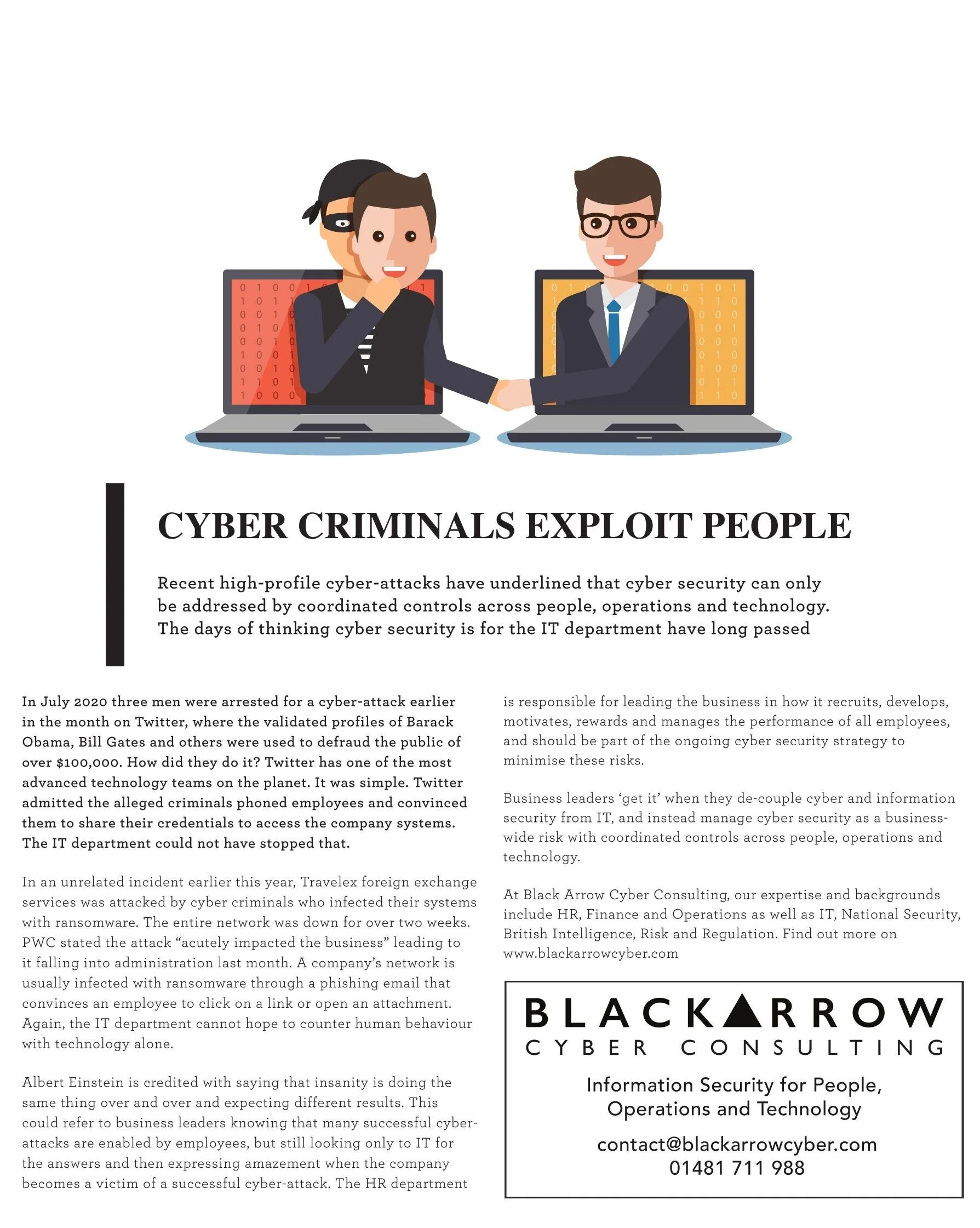
Article in the current edition of the Guernsey Chamber of Commerce Contact magazine - 'Cyber Criminals Exploit People'
Article in the current edition of the Guernsey Chamber of Commerce Contact magazine - 'Cyber Criminals Exploit People'