
Threat Intelligence Blog

Contact us to discuss any insights from our Blog, and how we can support you in a tailored threat intelligence report.

Black Arrow Cyber Threat Alert - Thursday 23 September 2021 - Nagios Management Software Vulnerabiliies and VMWare vCenter Bug Allows for Remote Code Execution
Black Arrow Cyber Threat Alert - Thursday 23 September 2021 - Nagios Management Software Vulnerabiliies and VMWare vCenter Bug Allows for Remote Code Execution

Black Arrow Cyber Threat Alert - Thursday 23 September 2021 - Nagios Management Software Vulnerabilities and VMWare vCenter Bug Allows for Remote Code Execution
1. Nagios Management Software Vulnerabilities Disclosed, Could be Chained to Perform Remote Code Execution
1.1 Executive Board Summary
What is Nagios?
Nagios is a market leading IT monitoring software, used by such prominent businesses as Air BnB and Paypal. Nagios provides a centralised platform to allow both businesses and IT support providers to keep tabs on systems and services remotely.
What’s the risk to my business?
Given the attractive nature of Nagios to an attacker – a central resource with connections to potentially everything in the network – it could be severe. If you or your managed IT provider use Nagios, attackers may be able to remotely conduct attacks without requiring authentication – effectively bypassing your security.
What can I do?
Contact your IT department or provider to determine whether your systems are monitored by Nagios. A patch has been issued that your technical teams can implement straight away. See our technical summary for more details.
1.2 Technical Summary for Network Defenders
11 new security vulnerabilities have been disclosed for the Nagios network management platform. Of note is the potential to “chain” these attacks together to perform Remote Code Execution (RCE), theoretically allowing for pre-authenticated access and privilege escalation at the highest level.
Who is affected?
Anyone using Nagios XI, Nagios XI Switch Wizard, Nagios XI Docker Wizard or Nagios XI Watchguard.
What can I do?
These issues have been designated and fixed in Nagios XI 5.8.5 and above, Nagios XI Switch Wizard 2.5.7 or above, Nagios XI Docker Wizard 1.13 or above, and Nagios XI Watchguard 1.4.8 or above.
IT teams are advised to perform the necessary patches as soon as is practicable.
What’s the risk?
Consumers may be aware of the harm caused during the Solarwinds and Kaseya round of vulnerabilities, with the latter causing major disruption as a potential supply chain attack.
Solutions such as Nagios and Kaseya, while they undoubtedly provide IT teams with an efficient and broad toolset to support their network stack, offer attackers near unprecedented access if successfully breached. Given the wide scope network integration these toolkits the risk remains high for vulnerabilities in this software sector.
2. Black Arrow Threat Alert: Critical VMWare vCenter Bug Allows for Remote Code Execution by Anyone on the Network
VMWare – a server hosting platform widely used in the Island by businesses and IT providers alike – have disclosed a bug in their vCenter management service dubbed as requiring attention “right now”.
2.2 Executive Board Summary
What is VMWare vCenter?
vCenter is a major component of the VMWare virtualisation ecosystem, used in managing virtual machines and servers. Nearly all businesses of reasonable size will utilise virtualisation to some extent – the act of running multiple servers on a single physical box. If you use a computer on a business network, you’ve probably got VMWare.
What’s the risk to my business?
If you are one of the many local firms using VMWare, high. VMWare have designated this bug as critical, as it allows for malicious files to be uploaded remotely – the most dangerous type of vulnerability. Attackers could craft these files to gain access to sensitive data, or as a springboard for another type of attack like ransomware.
What can I do?
Contact your IT department or IT provider to determine whether your systems are vulnerable. A patch has already been issued, so all up-to-date services will be protected. See our technical summary for more details.
2.3 Technical Summary For Network Defenders
A new vulnerability has been discovered in vCenter server. The bug allows for anyone with network access to vCenter via port 443 – locally or via remote connection – to arbitrarily abuse the file upload service to insert malicious content. The bug falls under the “Remote Code Execution” category for vulnerabilities and is deemed highly critical as such.
What versions are affected?
VMWare advise that the bug impacts all current releases of vCenter Server – 6.5, 6.7 and 7.0.
What can I do?
Perform an initial check to determine if you are running on an affected version of vCenter Server. VMWare notes that organisations that have recently updated to version 7.0 Update 2c may not be impacted – though it is still recommended to run patches.
VMWare recommend immediate patching on any affected systems, where at all possible. A workaround has also been released, involving modification to a text file on the affected server and restarting services, though it should be noted this is only a temporary fix.
What’s the risk?
Industry resources report that threat actors have already begun scanning for this vulnerability since its release. In equal measure, the vulnerability allows for anyone with local network access to the affected server – i.e. staff member or third party contractor – to carry out the attack.
Given the severity and potential benefit to attackers, activity is expected to increase over the following weeks.

The next open Cyber User Education and Awareness Training session with any availability left is on Wednesday 06 October 2021 from 10am-12pm.
The next open Cyber User Education and Awareness Training session with any availability left is on Wednesday 06 October 2021 from 10am-12pm.
The next open Cyber User Education and Awareness Training session with any availability left is on Wednesday 06 October 2021 from 10am-12pm.
We currently have 4 spaces remaining and the cost per delegate is £150.
Firms can send between 1-14 staff to these open training courses meaning less disruption to business operations and new starters, for example, don't need to wait until the next time the whole firm gets cyber training.
These open courses are run at least once per week so we can offer a lot of flexibility.
Remember only with Black Arrow do you get access to world-class cyber security experts from British Intelligence, Defence, Law Enforcement, Big-4 Advisory, FTSE100, Global Financial Services and the GFSC.
Call us on 711 988 or email training@blackarrowcyber.com to book places for your staff members.


Black Arrow Cyber Threat Briefing 17 September 2021
Black Arrow Cyber Threat Briefing 17 September 2021
-Ransomware Preparedness Is Low Despite Executives’ Concerns
-MSPs That Cannot Modernize Will Find Themselves And Their Clients Falling Behind
-Two-Thirds Of Cloud Attacks Could Be Stopped By Checking Configurations, Research Finds
-Open Source Software Cyber Attacks Increasing By 650%, Popular Projects More Vulnerable
-Third-Party Cloud Providers: Expanding The Attack Surface
-Ransomware Encrypts South Africa's Entire Dept Of Justice Network
-2021’s Most Dangerous Software Weaknesses
-46% Of All On-Prem Databases Are Vulnerable To Attack, Breaches Expected To Grow
-Most Fortune 500 Companies’ External IT Infrastructure Considered At Risk
-Thousands Of Internet-Connected Databases Contain High Or Critical Vulnerabilities
-Only 30% Of Enterprises Use Cloud Services With End to End Encryption For External File Sharing
Welcome to this week’s Black Arrow Cyber Threat Briefing – a weekly digest, collated and curated by our cyber experts to provide senior and middle management with an easy to digest round up of the most notable threats, vulnerabilities, and cyber related news from the last week.

Top Cyber Stories of the Last Week
Ransomware Preparedness Is Low Despite Executives’ Concerns
86.7% of C-suite and other executives say they expect the number of cyber attacks targeting their organisations to increase over the next 12 months, according to a recent poll conducted by researchers. While 64.8% of polled executives say that ransomware is a cyber threat posing major concern to their organisations over the next 12 months, only 33.3% say that their organisations have simulated ransomware attacks to prepare for such an incident. https://www.helpnetsecurity.com/2021/09/15/ransomware-preparedness/
MSPs That Cannot Modernize Will Find Themselves And Their Clients Falling Behind
Researchers sought feedback from IT professionals to explore the performance of modern (and not-so-modern) managed service providers (MSPs). The survey found that even satisfactory MSPs are falling short in certain key areas: cloud strategy, security, and IT spending. https://www.helpnetsecurity.com/2021/09/16/msps-falling-behind/
Two-Thirds Of Cloud Attacks Could Be Stopped By Checking Configurations, Research Finds
On Wednesday, researchers published its latest Cloud Security Threat Landscape report, spanning Q2 2020 through Q2 2021. According to the research, two out of three breached cloud environments observed by the tech giant "would likely have been prevented by more robust hardening of systems, such as properly implementing security policies and patching systems." https://www.zdnet.com/article/two-thirds-of-cloud-attacks-could-be-stopped-by-checking-configurations-research-finds/
Open Source Software Cyber Attacks Increasing By 650%, Popular Projects More Vulnerable
Researchers released a report that revealed continued strong growth in open source supply and demand dynamics. Further, with regard to open source security risks, the report reveals a 650% year over year increase in supply chain attacks aimed at upstream public repositories, and a fascinating dichotomy pertaining to the level of known vulnerabilities present in popular and non-popular project versions. https://www.helpnetsecurity.com/2021/09/17/open-source-cyberattacks/
Third-Party Cloud Providers: Expanding The Attack Surface
In the era of digital transformation, which is essentially an organisation’s way of stating they are increasing their reliance on cloud-based services—enterprises’, digital landscapes are more interconnected than ever before. This means that the company you buy a technology function from may have downstream third-party providers that enable plumbing, infrastructure and development technology that drive their business. With modern computing environments moving further away from the enterprise, the safety assumption paradigm is shifting. This has impacted the threat landscape because as organisations increase migration to the cloud (a third party), they must now consider that these newly onboarded third parties may have serious security issues that could present adversaries with opportunities to infiltrate your network. https://www.helpnetsecurity.com/2021/09/13/third-party-cloud-providers/
Ransomware Encrypts South Africa's Entire Dept Of Justice Network
The justice ministry of the South African government is working on restoring its operations after a recent ransomware attack encrypted all its systems, making all electronic services unavailable both internally and to the public. As a consequence of the attack, the Department of Justice and Constitutional Development said that child maintenance payments are now on hold until systems are back online. https://www.bleepingcomputer.com/news/security/ransomware-encrypts-south-africas-entire-dept-of-justice-network/
2021’s Most Dangerous Software Weaknesses
Researchers recently updated a list of the top 25 most dangerous software bugs, and it’s little surprise that a number of them have been on that list for years. The Common Weakness Enumeration (CWE) list represents vulnerabilities that have been widely known for years, yet are still being coded into software and being bypassed by testing. Both developers and testers presumably know better by now, but keep making the same mistakes in building applications. https://threatpost.com/2021-angerous-software-weaknesses/169458/
46% Of All On-Prem Databases Are Vulnerable To Attack, Breaches Expected To Grow
A five-year longitudinal study comprising nearly 27,000 scanned databases discovered that the average database contains 26 existing vulnerabilities. 56% of the Common Vulnerabilities and Exposures (CVEs) found were ranked as ‘High’ or ‘Critical’ severity, aligned with guidelines from the National Institute of Standards and Technology (NIST). This indicates that many organisations are not prioritizing the security of their data and neglecting routine patching exercises. Based on Imperva scans, some CVEs have gone unaddressed for three or more years. https://www.helpnetsecurity.com/2021/09/15/on-prem-databases-vulnerable/
Most Fortune 500 Companies’ External IT Infrastructure Considered At Risk
Nearly three quarters of Fortune 500 companies’ IT infrastructure exists outside their organisation, a quarter of which was found to have a known vulnerability that threat actors could infiltrate to access sensitive employee or customer data, as research reveal. https://www.helpnetsecurity.com/2021/09/15/external-it-infrastructure-risk/
Thousands Of Internet-Connected Databases Contain High Or Critical Vulnerabilities
After spending five years poring over port scan results, researchers reckon there's about 12,000 vulnerability-containing databases accessible through the internet. The study also found that of the 46 per cent of 27,000 databases scanned, just over half that number contained "high" or "critical" vulns as defined by their CVE score. https://www.theregister.com/2021/09/14/imperva_12k_database_vuln_report/
Only 30% Of Enterprises Use Cloud Services With End to End Encryption For External File Sharing
A recent study of enterprise IT security decision makers conducted by researchers shows that majority of enterprises use additional encryption methods to boost the security of cloud collaboration and file transfer, however, tools with built-in end-to-end encryption are still less frequent despite the growing popularity of this privacy and security enhancing technology. https://www.helpnetsecurity.com/2021/09/13/external-file-sharing/
Threats
Ransomware
The State Of Ransomware: National Emergencies And Million-Dollar Blackmail
Ransomware Attackers Targeted App Developers With Malicious Office Docs, Says Microsoft
Microsoft: Windows MSHTML Bug Now Exploited By Ransomware Gangs
Ransomware Gang Threatens To Wipe Decryption Key If Negotiator Hired
US General In Charge Of Cyber Security Pledges ‘Surge’ To Address Ransomware Attacks
REvil Ransomware Is Back In Full Attack Mode And Leaking Data
Ransomware-Hit Law Firm Secures High Court Judgment Against Unknown Criminals
Ransomware Encrypts South Africa's Entire Dept Of Justice Network
BEC
Phishing
Other Social Engineering
Brits Open Doors For Tech-Enabled Fraudsters Because They 'Don't Want To Seem Rude'
Scammers In Russia Offer Free Bitcoin On A Hacked Government Website
Malware
Mobile
Cyber Security Expert: Israeli Spyware Company NSO Group Poses ‘A Serious Threat To Phone Users’
After The T-Mobile Breach, Companies Are Preventing Customers From Securing Their Accounts
IOT
Vulnerabilities
Microsoft September 2021 Patch Tuesday Fixes 2 Zero-Days, 60 Flaws
Third Critical Bug Affects Netgear Smart Switches — Details And PoC Released
Patch Now! PrintNightmare Over, MSHTML Fixed, A New Horror Appears … OMIGOD
No Patch For High-Severity Bug In Legacy IBM System X Servers
Experts Warn About Vulnerabilities of U.S. GPS System To Cyber Terrorists
Data Breaches/Leaks
Organised Crime & Criminal Actors
Cryptocurrency/Cryptojacking
DoS/DDoS
Nation State Actors
Cloud
As usual, contact us to help assess where your risks lie and to ensure you are doing all you can do to keep you and your business secure.
Look out for our weekly ‘Cyber Tip Tuesday’ video blog and on our YouTube channel.
You can also follow us on Facebook, Twitter and LinkedIn.
Links to articles are for interest and awareness and linking to or reposting external content does not endorse any service or product, likewise we are not responsible for the security of external links.

Black Arrow Cyber Threat Briefing 10 September 2021
Black Arrow Cyber Threat Briefing 10 September 2021
-91% Of IT Teams Have Felt 'Forced' To Trade Security For Business Operations
-Ransomware Attacks Increased Exponentially In 2021
-One In Three Suspect Phishing Emails Reported By Employees Really Are Malicious
-Hackers Shift From Malware To Credential Hijacking
-Attacker Breakout Time Now Less Than 30 Minutes
-Hackers Leak VPN Account Passwords From 87,000 Fortinet FortiGate Devices
-The Impact Of Ransomware On Cyber Insurance Driving The Need For Broader Cyber Security Knowledge
-Hackers Exploit Camera Vulnerabilities To Spy On Parents
-39% Of All Internet Traffic Is From Bad Bots
Welcome to this week’s Black Arrow Cyber Threat Briefing – a weekly digest, collated and curated by our cyber experts to provide senior and middle management with an easy to digest round up of the most notable threats, vulnerabilities, and cyber related news from the last week.

Top Cyber Stories of the Last Week
91% Of IT Teams Have Felt 'Forced' To Trade Security For Business Operations
A new survey suggests that most IT staff have felt pressured to ignore security concerns in favour of business operations. On Thursday, a new study report was released, which combines data from an online YouGov survey targeting office workers that adopted WFH and global research conducted with IT decision-makers. In total, 91% of those surveyed said that they have felt "pressured" to compromise security due to the need for business continuity during the COVID-19 pandemic. 76% of respondents said that security had taken a backseat, and furthermore, 83% believe that working from home has created a "ticking time bomb" for corporate security incidents. https://www.zdnet.com/article/91-of-it-teams-have-felt-forced-to-trade-security-for-business-operations/
Ransomware Attacks Increased Exponentially In 2021
The growing threat of ransomware has been highlighted by NCC Group's Research Intelligence and Fusion Team (RIFT) analysis. Between January-March 2021 and April-June 2021, the number of ransomware assaults studied by the team climbed by 288%, indicating that enterprises are still facing waves of digital extortion in the form of targeted ransomware. https://www.ehackingnews.com/2021/09/ransomware-attacks-increased.html
Phishing Attacks: One In Three Suspect Emails Reported By Employees Really Are Malicious
All the time spent ticking boxes in cyber security training sessions seems to be paying off after all: according to a new report, about a third of emails reported by employees really are malicious or highly suspect, demonstrating the effectiveness of the well-established maxim "Think before you click". Researchers analysed over 200,000 emails that were flagged by employees from organisations across the globe in the first half of 2021 and found that 33% of the reports could be classified as phishing. https://www.zdnet.com/article/phishing-attacks-one-in-three-suspect-emails-reported-by-employees-really-are-malicious/
Hackers Shift From Malware To Credential Hijacking
Adversaries are relying less on malware to conduct attacks that are consequently more difficult to detect, according to an annual report conducted by researchers. “According to data from our customer base indexed by Threat Graph, 68% of detections from the last three months were not malware-based,” reads the report released Wednesday. “Attackers are increasingly attempting to accomplish their objectives without writing malware to the endpoint, using legitimate credentials and built-in tools (living off the land)—which are deliberate efforts to evade detection by traditional antivirus products.” https://www.nextgov.com/cybersecurity/2021/09/report-hackers-shift-malware-credential-hacking/185209/
Attacker Breakout Time Now Less Than 30 Minutes
The average time it takes threat actors to move from initial access to lateral movement has fallen by 67% over the past year, putting extra pressure on security operations (SecOps) teams, according to researchers. The findings come from researchers own investigations with customers across around 248,000 unique global endpoints. For incidents where this “breakout time” could be derived over the past year, it averaged just 1 hour 32 minutes. However, in over a third (36%) of intrusions, adversaries managed to move laterally to additional hosts in under 30 minutes. https://www.infosecurity-magazine.com/news/attacker-breakout-time-now-less/
Hackers Leak VPN Account Passwords From 87,000 Fortinet FortiGate Devices
Network security solutions provider Fortinet confirmed that a malicious actor had unauthorizedly disclosed VPN login names and passwords associated with 87,000 FortiGate SSL-VPN devices. "These credentials were obtained from systems that remained unpatched at the time of the actor's scan. While they may have since been patched, if the passwords were not reset, they remain vulnerable," the company said in a statement on Wednesday. https://thehackernews.com/2021/09/hackers-leak-vpn-account-passwords-from.html
53% Find It Difficult To Prevent An Insider Attack During Data Aggregation
Recent data from researchers found that 53% of companies find it impossible or very difficult to prevent an insider attack when data is being aggregated, a key indicator of intent of an attack. The vast majority of security threats follow a pattern or sequence of activity leading up to an attack, and insider threats are no exception. To fully understand any insider incident, visibility into the entire kill chain of an attack is imperative to preventing the exfiltration of critical data. https://venturebeat.com/2021/09/02/53-find-it-difficult-to-prevent-an-insider-attack-during-data-aggregation/
The Impact Of Ransomware On Cyber Insurance Driving The Need For Broader Cyber Security Knowledge
Not only have ransomware attacks spiked, the amount of ransom demanded has grown exponentially—to somewhere between $50 and $70 million dollars. Cyber Insurers can’t cover “whatever amount the hacker demands”—so major policies lost money. Insurers have responded by raising premiums, restricting coverage, or even getting out of the cyber-insurance game altogether in vulnerable markets. https://www.helpnetsecurity.com/2021/09/10/cyber-insurance-ransomware/
Hackers Exploit Camera Vulnerabilities To Spy On Parents
Various zero day vulnerabilities in home baby monitor could be compromised that lets threat actors hack into camera feed and put malicious codes like malware. The security issues were found in the IoT gadgets, made by China based developer Victure, that were found by researchers. In a security report, researchers revealed about the stack-based buffer flaw present in ONVIF server Victure PC420 component camera that allows hackers to plant remote codes on the victim device. When compromised, hacker can discover cameras (not owned by them) and command devices to broadcast camera feeds to third party and exploit the camera firmware. https://www.ehackingnews.com/2021/09/hackers-exploit-camera-vulnerabilities.html
39% Of All Internet Traffic Is From Bad Bots
Automated traffic takes up 64% of internet traffic – and whilst just 25% of automated traffic was made up by good bots, such as search engine crawlers and social network bots, 39% of all traffic was from bad bots, a Barracuda report reveals.
These bad bots include both basic web scrapers and attack scripts, as well as advanced persistent bots. These advanced bots try their best to evade standard defences and attempt to perform their malicious activities under the radar. The report revealed that the most common of these persistent bots were ones that went after e-commerce applications and login portals. https://www.helpnetsecurity.com/2021/09/07/bad-bots-internet-traffic/
Threats
Ransomware
BEC
Phishing
Other Social Engineering
Malware
Traffic Exchange Networks Distributing Malware Disguised As Cracked Software
New Malware Uses Novel Fileless Technique To Evade Detection
Mobile
IOT
Vulnerabilities
Zoho ManageEngine Password Manager Zero-Day Gets A Fix, Amid Attacks
New CPU Side-Channel Attack Takes Aim At Chrome’s Site Isolation Feature
Microsoft, CISA Urge Mitigations For Zero-Day RCE Flaw In Windows
Atlassian CISO Defends Company's Confluence Vulnerability Response, Urges Patching
PoC Released For GhostScript Vulnerability That Exposed Airbnb, Dropbox
New 0-Day Attack Targeting Windows Users With Microsoft Office Documents
Cisco Patches Critical Authentication Bug With Public Exploit
Data Breaches/Leaks
Organised Crime & Criminal Actors
Cryptocurrency/Cryptojacking
Insider Threats
DoS/DDoS
Nation State Actors
Cloud
Privacy
Other News
OWASP Shakes Up Web App Threat Categories With Release Of Draft Top 10
A Zero-Trust Future: Why Cyber Security Should Be Prioritized For The Hybrid Working World
Microsoft Has A $20 Billion Hacking Plan, But Cyber Security Has A Big Spending Problem
Misbehaving Microsoft Teams Ad Brings Down The Entire Windows 11 Desktop
This Seemingly Normal Lightning Cable Will Leak Everything You Type
HSE Cyber Attack: Irish Health Service Still Recovering Months After Hack
As usual, contact us to help assess where your risks lie and to ensure you are doing all you can do to keep you and your business secure.
Look out for our weekly ‘Cyber Tip Tuesday’ video blog and on our YouTube channel.
You can also follow us on Facebook, Twitter and LinkedIn.
Links to articles are for interest and awareness and linking to or reposting external content does not endorse any service or product, likewise we are not responsible for the security of external links.
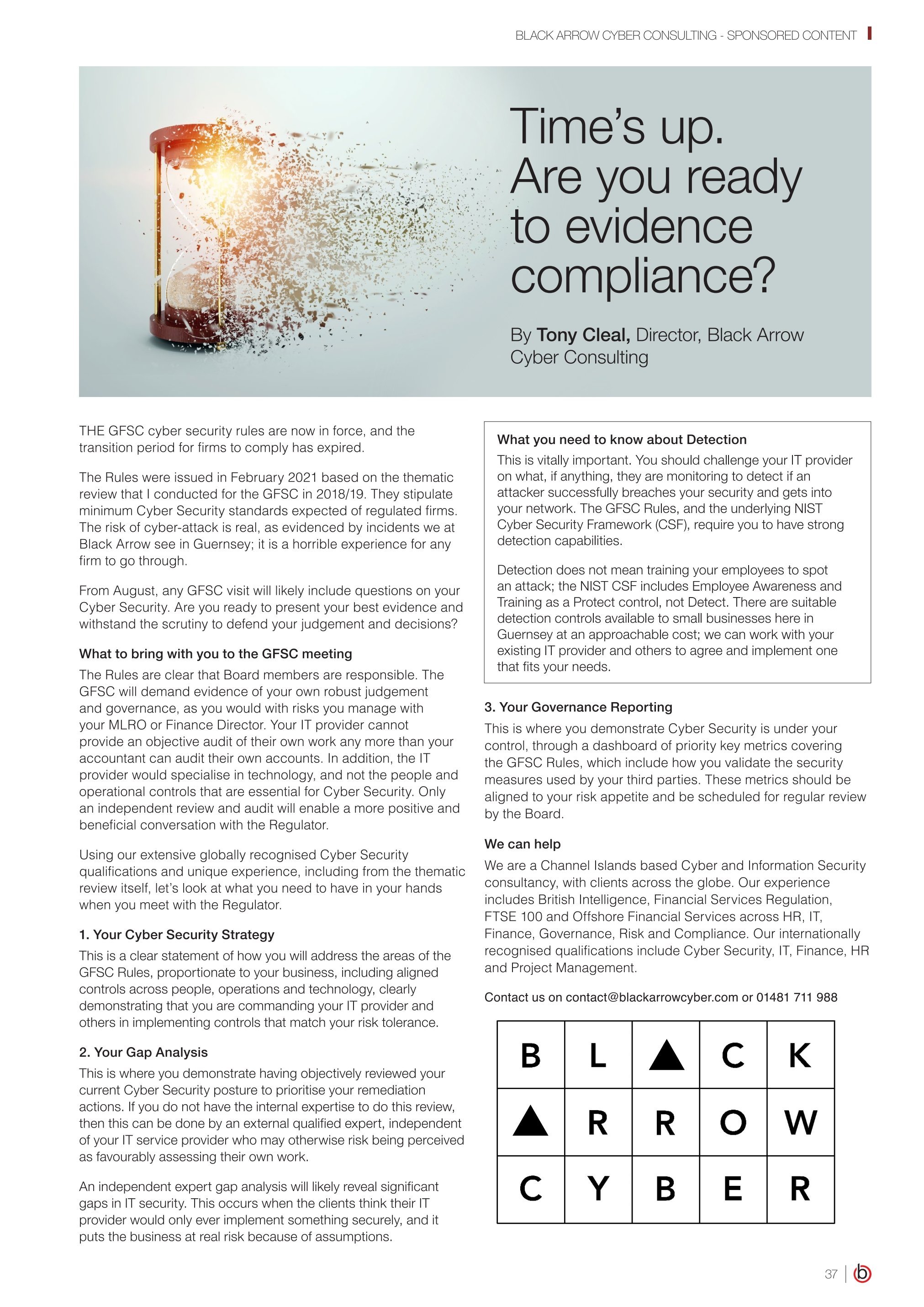
Guernsey regulated financial services firms - are you ready to evidence compliance with the new GFSC Cyber Rules? - Guernsey Press 04 September 2021
Time’s up. Are you ready to evidence compliance with the new GFSC Cyber Rules now in effect?
Time’s up. Are you ready to evidence compliance with the new GFSC Cyber Rules now in effect?
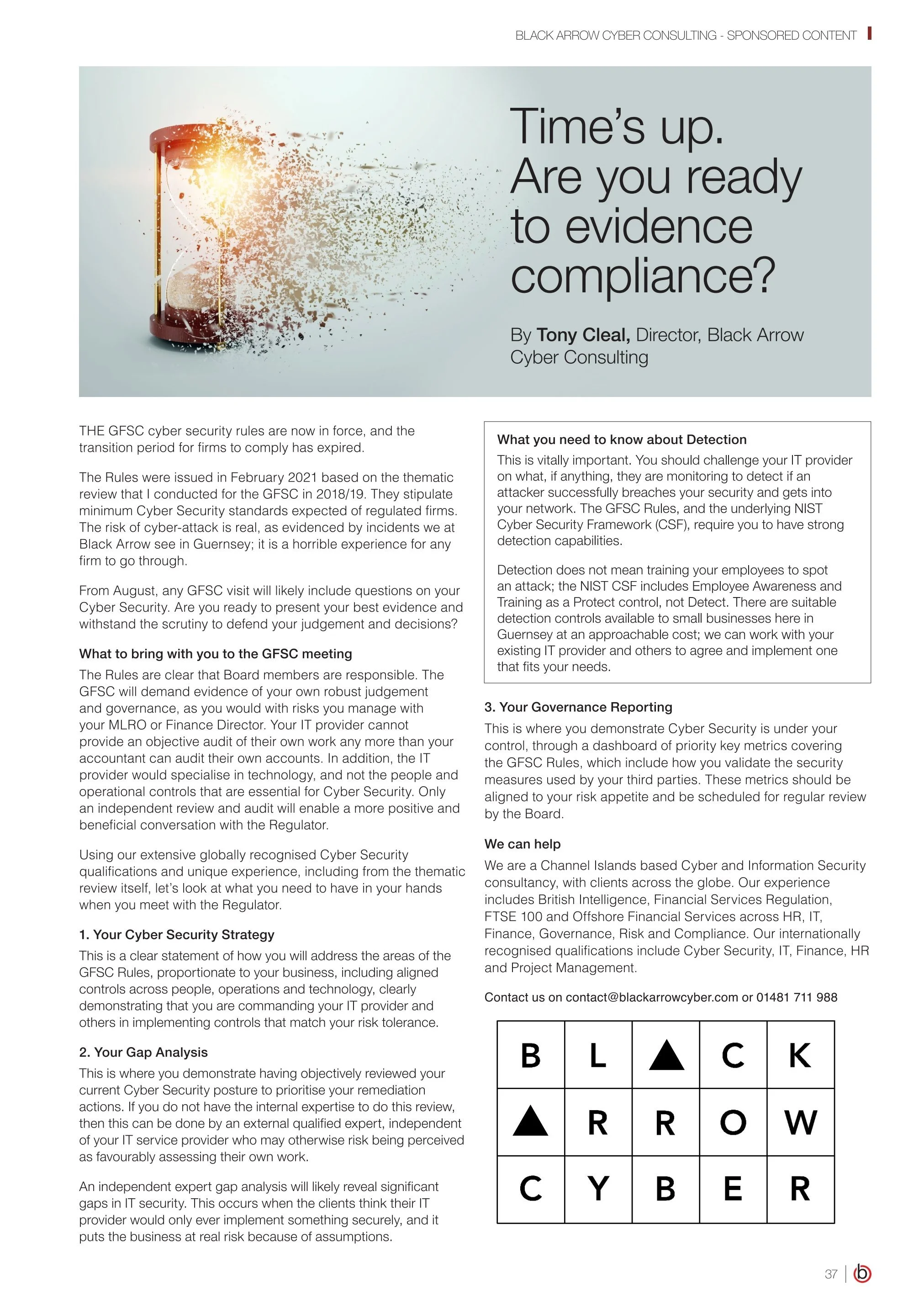

Black Arrow Cyber Threat Briefing 03 September 2021
Black Arrow Cyber Threat Briefing 03 September 2021
-Ransomware Attacks Soar 288% in H1 2021
-Ransomware Costs Expected To Reach $265 Billion By 2031
-Brute Force Email Attacks and Account Takeover Attempts Rise 671%, Reaching Unprecedented Levels, Causing Financial And Reputational Damage
-Investigation Into Hacked "Map" Of UK Gun Owners
-Eight US Financial Services Firms Given Six-Figure Fines Over BEC Data Breaches
-Ransomware Has Been A ‘Game Changer’ For Cyber Insurance
-WhatsApp hit with $267 million GDPR fine for bungling user privacy disclosure
-Microsoft Warns About Open Redirect Phishing Campaign
Welcome to this week’s Black Arrow Cyber Threat Briefing – a weekly digest, collated and curated by our cyber experts to provide senior and middle management with an easy to digest round up of the most notable threats, vulnerabilities, and cyber related news from the last week.

Top Cyber Stories of the Last Week
Ransomware Attacks Soar 288% in First Half of 2021
The number of ransomware attacks surged by 288% between the first and second quarters of 2021 as double extortion attempts grew, according to the latest data.
Nearly a quarter (22%) of data leaks in the second quarter came from the Conti ransomware group, who typically gain initial network access to victim organisations via phishing emails.
It’s an unfortunate fact that no organisation in any sector is safe from ransomware today.
Targets range from IT companies and suppliers to financial institutions and critical national infrastructure providers, with ransomware-as-a-service increasingly being sold by ransomware gangs in a subscription model. https://www.infosecurity-magazine.com/news/ransomware-attacks-soar-half-2021/
Ransomware Costs Expected To Reach $265 Billion By 2031
Think ransomware is expensive now? It’s not predicted to get any cheaper over the next decade. Ransoms could cost victims a collective total of $265 billion by 2031. The estimate is based on the prediction that the price tag will increase 30% every year over the next 10 years. https://securityintelligence.com/news/ransomware-costs-expected-265-billion-2031/
Brute Force Email Attacks and Account Takeover Attempts Rise 671%, Reaching Unprecedented Levels, Causing Financial And Reputational Damage
A new Email Threat Report for Q3 2021 examines the escalating adverse impact of socially-engineered and never-seen-before email attacks, and other advanced email threats—both financial and reputational—to organisations worldwide. The report surveyed advanced email attacks across eight major industry sectors, including retail and consumer goods, manufacturing, technology, energy and infrastructure services, medical, media and television, finance, and hospitality.
The report also finds 61% of organisations experienced a vendor email compromise/supply chain attack in Q2 2021.
Key report findings include:
32.5% of all companies were targeted by brute force attacks in early June 2021
137 account takeovers occurred per 100,000 mailboxes for members of the C-suite
61% of organisations experienced a vendor email compromise attack this quarter
22% more business email compromise attacks since Q4 2020
60% chance of a successful account takeover each week for organisations with 50,000+ employees
73% of all advanced threats were credential phishing attacks
80% probability of attack every week for retail and consumer goods, technology, and media and television companies
https://finance.yahoo.com/news/brute-force-email-attacks-account-120100299.html
Investigation Into Hacked "Map" Of UK Gun Owners
Gun-selling site Guntrader announced a data breach affecting more than 100,000 customers in July. This week, reports emerged that an animal rights activist blog had published the information. The group had formatted the data so it could be easily imported into mapping software to show individual homes. The National Crime Agency, which has been investigating the data breach and its fallout, said it "is aware that information has been published online as a result of a recent data breach which impacted Guntrader". https://www.bbc.co.uk/news/technology-58413847
Eight US Financial Services Firms Given Six-Figure Fines Over BEC Data Breaches
The US Securities and Exchange Commission (SEC) has sanctioned multiple financial services firms for cyber security failures that led to the compromise of corporate email accounts and the personal data of thousands of individuals. The case was brought after the unauthorised takeover of cloud-based email accounts at Seattle-based KMS Financial Services, and subsidiaries of California-headquartered Cetera Financial Group and Iowa-based Cambridge Investment Group. https://portswigger.net/daily-swig/eight-us-financial-services-firms-given-six-figure-fines-over-bec-data-breaches
Ransomware Has Been A ‘Game Changer’ For Cyber Insurance
Ransomware attacks accounted for nearly one quarter of all cyber incidents globally last year, according to a software company. The researchers “think of December 2019 as the tipping point for when we started to see ransomware take hold”. The U.S. was hit by a barrage of ransomware attacks in 2019 that impacted at least 966 government agencies, educational establishments, and healthcare providers at a potential cost in excess of $7.5 billion. All of this has a massive knock-on affect for the Insurance firms. https://www.insurancejournal.com/news/national/2021/08/30/628672.htm
Getting Ahead Of A Major Blind Spot For CISOs: Third-Party Risk
For many CISOs and security leaders, it was not long ago that their remit focused on the networks and digital ecosystems for their organisation alone. In today’s digital world, those days are a thing of the past with a growing number of businesses relying on third-party vendors to scale, save time and outsource expertise to stay ahead. With this change, new security risks affiliated with third-party vendors are more prevalent than ever before. https://www.helpnetsecurity.com/2021/09/01/getting-ahead-of-a-major-blind-spot-for-cisos-third-party-risk/
WhatsApp Hit With $267 Million GDPR Fine For Bungling User Privacy Disclosure
Ireland’s Data Protection Commission fined Facebook-owned messenger WhatsApp for $225 million for failing to provide users enough information about the data it shared with other Facebook companies.
The fine is the largest penalty that the Irish regulator has waged since the European Union data protection law, the General Data Protection Regulation, or GDPR, went into effect in 2018. https://www.cyberscoop.com/whatsapp-hit-with-267-million-gdpr-fine-for-bungling-user-privacy-disclosure/
Microsoft Warns About Open Redirect Phishing Campaign
Microsoft’s Security Intelligence team is warning over phishing campaigns using open redirector links, links crafted to subvert normal inspection efforts. Smart users know to hover over links to see where they're going to lead, but these links are prepared for that type of user and display a safe destination designed to lure targets into a false sense of security. Click the link and you'll be redirected to a domain that appears legit (such as a Microsoft 365 login page, for example) and sets the stage for you to voluntarily hand over credentials to bad actors without even realising it until it's too late. https://www.windowscentral.com/microsoft-warns-about-open-redirect-phishing-campaign
Previous Employees With Access To Corporate Data Remain A Threat To Businesses
Offboarding employees securely is a key problem for business leaders, with 40% concerned that employees who leave a company retain knowledge of passwords that grant access to corporate data. This is according to a report, which found few organisations are implementing access management solutions that work with all applications, meaning most lack the ability to revoke access to all corporate data as soon as an employee leaves. https://www.helpnetsecurity.com/2021/09/02/previous-employees-access-data/
BEC Scammers Seek Native English Speakers On Underground
Looking for work? Speak fluent English? Capable of convincingly portraying a professional – as in, somebody a highly ranked corporate leader would talk to? If you lack scruples and disregard those pesky things called “laws,” it could be your lucky day: Cyber Crooks are putting up help-wanted ads, looking for native English speakers to carry out the social-engineering elements of business email compromise (BEC) attacks. https://threatpost.com/bec-scammers-native-english-speakers/169092/
Half Of Businesses Can't Spot These Signs Of Insider Cyber Security Threats
Most businesses are struggling to identify and detect early indicators that could suggest an insider is plotting to steal data or carry out other cyber attacks. Research suggests that over half of companies find it impossible or very difficult to prevent insider attacks. These businesses are missing indicators that something might be wrong. Those include unusual amounts of files being opened, attempts to use USB devices, staff purposefully circumventing security controls, masking their online activities, or moving and saving files to unusual locations. All these and more might suggest that a user is planning malicious activity, including the theft of company data. https://www.zdnet.com/article/half-of-businesses-cant-spot-these-signs-of-insider-cybersecurity-threats/
Threats
Ransomware
Conti Ransomware Now Hacking Exchange Servers With ProxyShell Exploits
LockFile Ransomware Bypasses Protection Using Intermittent File Encryption
FBI, CISA: Ransomware Attack Risk Increases On Holidays, Weekends
LockBit Jumps Its Own Countdown, Publishes Bangkok Air Files
Phishing
Malware
Cyber Attackers Are Now Quietly Selling Off Their Victim's Internet Bandwidth
Cyber Criminal Sells Tool To Hide Malware In AMD, NVIDIA GPUS
Cyber Criminals Abusing Internet-Sharing Services To Monetise Malware Campaigns
Mobile
Snowden Slams Apple CSAM: Warns iPad, iPhone, Mac Users Worldwide
Kaspersky Lab Has Reported About Android Viruses Designed To Steal Money Automatically
Dangerous Android Malware Is Spreading — Beware Of Text Message Scam
Vulnerabilities
New BrakTooth Flaws Leave Millions Of Bluetooth-Enabled Devices Vulnerable
Meltdown-Like Vulnerability Disclosed For AMD Zen+ And Zen 2 Processors
NPM Package With 3 Million Weekly Downloads Had A Severe Vulnerability
Cisco Patches Critical Authentication Bug With Public Exploit
QNAP Working On Patches For OpenSSL Flaws Affecting Its NAS Devices
This Top TP-Link Router Ships With Some Serious Security Flaws
Data Breaches/Leaks
Organised Crime & Criminal Actors
Dark Web
DoS/DDoS
OT, ICS, IIoT and SCADA
Cloud
As usual, contact us to help assess where your risks lie and to ensure you are doing all you can do to keep you and your business secure.
Look out for our weekly ‘Cyber Tip Tuesday’ video blog and on our YouTube channel.
You can also follow us on Facebook, Twitter and LinkedIn.
Links to articles are for interest and awareness and linking to or reposting external content does not endorse any service or product, likewise we are not responsible for the security of external links.

Our modern, bright and airy dedicated cyber training suite right in the heart of town is now taking bookings.
Our modern, bright and airy dedicated cyber training suite right in the heart of town is now taking bookings.

We offer open courses, where firms can send anywhere from 1 to 16 members of staff along for User Education and Awareness Training, or we run closed courses for firms tailored specifically to your needs.
Our flexible training suite, comprising two separate training rooms can accommodate:
-Training Room 1:
max 24 auditorium style or 16 cabaret style
-Training Room 2:
max 12 auditorium style or 8 cabaret style
Contact us today for discuss your training requirements for cost effective and flexible training to suit your needs, conveniently located right in the heart of town.
Contact us on 01481 711988 or email training@blackarrowcyber.com to book or discuss your needs

Black Arrow Cyber Threat Briefing 27 August 2021
Black Arrow Cyber Threat Briefing 27 August 2021
-Cyber Crime Losses Triple To £1.3bn In 1h 2021
-New Ransomware Wake-Up Call
-22% Of Cyber Security Incidents In H1 2021 Were Ransomware Attacks
-Key Email Threats And The High Cost Of Business Email Compromise
-Microsoft Warns Thousands Of Cloud Customers Of Exposed Databases
-58% Of IT Leaders Worried Their Business Could Become A Target Of Rising Nation State Attacks
-Cyber Insurance Market Encounters ‘Crisis Moment’ As Ransomware Costs Pile Up
Welcome to this week’s Black Arrow Cyber Threat Briefing – a weekly digest, collated and curated by our cyber experts to provide senior and middle management with an easy to digest round up of the most notable threats, vulnerabilities, and cyber related news from the last week.

Top Cyber Stories of the Last Week
Cyber Crime Losses Triple To £1.3bn In H1 2021
Individuals and organisations lost three times more money to cyber crime and fraud in the first half of the year compared to the same period in 2020, as incidents soared, according to new figures. The report revealed that between January 1 and July 31 2020, victims lost £414.7m to cyber crime and fraud. However, the figure surged to £1.3bn for the same period in 2021. This can be partly explained by the huge increase in cases from last year to this. In the first half of 2020, there were just 39,160 reported to Action Fraud, versus 289,437 in the first six months of 2021. https://www.infosecurity-magazine.com/news/cybercrime-losses-triple-to-13bn/
Ransomware On A Rampage; A New Wake-Up Call
The ransomware rampage is continuing at pace and continues to create significant cyber security challenges. The use of ransomware by hackers to leverage exploits and extract financial benefits is not new. Ransomware has been around for over 2 decades, (early use of basic ransomware malware was used in the late 1980s) but as of late, it has become a trending and more dangerous cybersecurity threat. The inter-connectivity of digital commerce and expanding attack surfaces have enhanced the utility of ransomware as cyber weapon of choice for bad actors. Like bank robbers, cyber criminals go where the money is accessible. And it is now easier for them to reap benefits from extortion. Hackers can now demand cryptocurrencies payments or pre-paid cards that can be anonymously transacted. Those means of digital payments are difficult to trace by law enforcement. https://www.forbes.com/sites/chuckbrooks/2021/08/21/ransomware-on-a-rampage-a-new-wake-up-call/?sh=64a622362e81
22% Of Cyber Security Incidents In H1 2021 Were Ransomware Attacks
A report uncovered the number and nature of UK cyber security breaches reported to the UK Information Commissioner’s Office (ICO) in 2020 and 2021. So far in 2021 phishing was to blame for most incidents, accounting for 40% of all cyber security cases reported to the ICO, slightly down from 44% the year before. However, ransomware is surging, up from 11% of all reported incidents in the first half of 2020 to 22% in 2021. https://www.helpnetsecurity.com/2021/08/25/cybersecurity-incidents-h1-2021/
Ransomware: These Four Rising Gangs Could Be Your Next Major Cyber Security Threat
In recent months some significant ransomware operators have seemingly disappeared. But that doesn't mean that ransomware is any less of a problem, quite the opposite – new groups are emerging to fill the gaps and are often worse than the gangs that went before them. Cyber security researchers have detailed four upcoming families of ransomware discovered during investigations – and under the right circumstances, any of them could become the next big ransomware threat. One of these is LockBit 2.0, a ransomware-as-a-service operation that has existed since September 2019 but has gained major traction over the course of this summer. Those behind it revamped their dark web operations in June – when they launched the 2.0 version of LockBit – and aggressive advertising has drawn attention from cyber criminals. https://www.zdnet.com/article/ransomware-these-four-rising-threats-could-be-the-next-major-cybersecurity-risk-facing-your-business/
Key Email Threats And The High Cost Of Business Email Compromise
Researchers published the results of a study analysing over 31 million threats across multiple organisations and industries, with new findings and warnings issued by technical experts that every organisation should be aware of. A key aspect to preventing attacks is having a deep understanding of cyber actor patterns and continuously monitoring and deconstructing campaigns to anticipate future ones. Phishing can be a profitable business model, and most breaches begin with a phishing email. What appears to be an innocent email from a trusted vendor or internal department can lead to firm-wide shutdowns, loss of crucial data, and millions in financial costs. As detailed in the report, threats ranging from ransomware, credential harvesters to difficult-to-discover but costly Business Email Compromise (BEC) targeted inboxes, could have resulted in over $354 million in direct losses had they been successful. https://www.helpnetsecurity.com/2021/08/23/key-email-threats/
Microsoft Warns Thousands Of Cloud Customers Of Exposed Databases
Microsoft on Thursday warned thousands of its cloud computing customers, including some of the world's largest companies, that intruders could have the ability to read, change or even delete their main databases, according to a copy of the email and a cyber security researcher. The vulnerability is in Microsoft Azure's flagship Cosmos DB database. A research team at security a company discovered it was able to access keys that control access to databases held by thousands of companies. https://www.reuters.com/technology/exclusive-microsoft-warns-thousands-cloud-customers-exposed-databases-emails-2021-08-26/
58% Of IT Leaders Worried Their Business Could Become A Target Of Rising Nation State Attacks
Researchers released the findings of a global survey of 1,100 IT decision makers (ITDMs), examining their concerns around rising nation state attacks. 72% of respondents said they worry that nation state tools, techniques, and procedures (TTPs) could filter through to the dark net and be used to attack their business. https://www.helpnetsecurity.com/2021/08/23/rising-nation-state-attacks/
Cyber Insurance Market Encounters ‘Crisis Moment’ As Ransomware Costs Pile Up
It’s a sure sign of trouble when leading insurance industry executives are worried about their own prices going up. Ransomware now accounts for 75% of all cyber insurance claims, up from 55% in 2016, according to the credit ratings agency. The percentage increase in claims is outpacing that of premiums, said a June report which concluded that “the prospects for the cyber insurance market are grim.” Fitch Ratings in April found that the ratio of losses to premiums earned was at 73% last year, jeopardizing the profitability of the industry. https://www.cyberscoop.com/cyber-insurance-ransomware-crisis/
Security Teams Report Rise In Cyber Risk
Do you feel like you are gaining in your ability to protect your data and your network? If you are like 80% of respondents to the a recent report, you expect to experience a data breach that compromises customer data in the next 12 months. The report surveyed more than 3,600 businesses of all sizes and industries across North America, Europe, Asia-Pacific, and Latin America for their thoughts on cyber risk. Despite an increased focus on security due to high-profile ransomware and other attacks in the past year, respondents reported a rise in risk due to inadequate security processes like backing up key assets. https://www.csoonline.com/article/3629477/security-teams-report-rise-in-cyber-risk.html
WARNING: Microsoft Exchange Under Attack With ProxyShell Flaws
The U.S. Cyber security and Infrastructure Security Agency is warning of active exploitation attempts that leverage the latest line of "ProxyShell" Microsoft Exchange vulnerabilities that were patched earlier this May, including deploying LockFile ransomware on compromised systems. The vulnerabilities enable adversaries to bypass ACL controls, elevate privileges on the Exchange PowerShell backend, effectively permitting the attacker to perform unauthenticated, remote code execution. While the former two were addressed by Microsoft on April 13, a patch for CVE-2021-31207 was shipped as part of the Windows maker's May Patch Tuesday updates. https://thehackernews.com/2021/08/microsoft-exchange-under-attack-with.html
Threats
Ransomware
70% of Cyber Pros Believe Cyber Insurance is Exacerbating Ransomware
Nigerian Threat Actors Solicit Employees To Deploy Ransomware for Cut Of Profits
New Ransomware Called LockFile Targets Microsoft Exchange Servers
Researchers Find New Evidence Linking Diavol Ransomware To TrickBot Gang
FBI Sends Its First-Ever Alert About A ‘Ransomware Affiliate’
Phishing
That Email Asking For Proof Of Vaccination Might Be A Phishing Scam
Phishing Could Have Cost Businesses $354m In Potential Direct Losses
Other Social Engineering
Scammers Impersonate Europol Chief In An Effort To Defraud Belgians
Man Admits Impersonating Apple Support Staff To Steal 620,000 Photos From iCloud Accounts
Malware
New SideWalk Backdoor Targets U.S.-Based Computer Retail Business
Mozi Botnet Gains The Ability To Tamper With Its Victims’ Traffic
Shadowpad Malware Is Becoming A Favourite Choice Of Chinese Espionage Groups
Mobile
IOT
Mirai-Style Iot Botnet Is Now Scanning For Router-Pwning Critical Vuln In Realtek Kit
IoT Market To Reach $1.5 Trillion By 2027, Security Top Priority
Hackers Could Increase Medication Doses Through Infusion Pump Flaws
Vulnerabilities
VMware Issues Patches To Fix New Flaws Affecting Multiple Products
Critical Flaw Discovered In Cisco APIC for Switches — Patch Released
CISA Warns Admins To Urgently Patch Exchange ProxyShell Bugs
Data Breaches/Leaks
Guernsey Data Authority Imposed Sanctions On 11 Firms For Breaches Last Year
Data Leak Exposed 38 Million Records, Including COVID-19 Vaccination Statuses
Nokia Subsidiary Discloses Data Breach After Conti Ransomware Attack
T-Mobile Breach Hits 53 Million Customers As Probe Finds Wider Impact
Organised Crime & Criminal Actors
Cryptocurrency/Cryptojacking
Insider Threats
DoS/DDoS
OT, ICS, IIoT and SCADA
Nation State Actors
Cloud
Privacy
As usual, contact us to help assess where your risks lie and to ensure you are doing all you can do to keep you and your business secure.
Look out for our weekly ‘Cyber Tip Tuesday’ video blog and on our YouTube channel.
You can also follow us on Facebook, Twitter and LinkedIn.
Links to articles are for interest and awareness and linking to or reposting external content does not endorse any service or product, likewise we are not responsible for the security of external links.

Black Arrow Cyber Threat Briefing 20 August 2021
Black Arrow Cyber Threat Briefing 20 August 2021:
-Third of Global Companies Have Experienced Ransomware Attack, Survey Finds
-Company Size Is A Nonissue With Automated Cyberattack Tools
-60% Of Employees Reuse Passwords Across Business And Personal Accounts
-LockBit 2.0 Ransomware Proliferates Globally
-Secret Terrorist Watchlist With 2 Million Records Exposed Online
-Phishing Costs Quadruple Over 6 Years
-Security Teams Report Rise In Cyber Risk
-Phishing Attacks Increase In H1 2021, Sharp Jump In Crypto Attacks
Welcome to this week’s Black Arrow Cyber Threat Briefing – a weekly digest, collated and curated by our cyber experts to provide senior and middle management with an easy to digest round up of the most notable threats, vulnerabilities, and cyber related news from the last week.

Top Cyber Stories of the Last Week
A Third of Global Companies Have Experienced Ransomware Attack, Survey Finds
Roughly a third of large international companies have faced a ransomware attack or other data breach in the last 12 months, according to a new survey.
Analysts surveyed almost 800 companies and found 37% of international companies experienced ransomware attacks this past year. The survey focused on companies with more than 500 employees.
Company Size Is A Nonissue With Automated Cyber Attack Tools
Even with plenty of old problems to contend with, firms need to get ready for new and more powerful automated ransomware tools.
Cyber criminals are constantly looking for the best return on their investment and solutions that lower the chance of being caught. Sadly, that appears to mean small businesses are their current target of opportunity.
Tech media and cyber pundits have been sounding the alarm and offering small businesses specific cybersecurity solutions for a few years now, but it seems to no avail.
https://www.techrepublic.com/article/company-size-is-a-nonissue-with-automated-cyberattack-tools/
Over 60% Of Employees Reuse Passwords Across Business And Personal Accounts
Nearly two thirds of employees are using personal passwords to protect corporate data, and vice versa, with even more business leaders concerned about this very issue. Surprisingly, 97% of employees know what constitutes a strong password, yet over half (53%) admit to not always using one.
http://hrnews.co.uk/over-60-of-employees-reuse-passwords-across-business-and-personal/
LockBit 2.0 Ransomware Proliferates Globally
Fresh attacks target companies’ employees, promising millions of dollars in exchange for valid account credentials for initial access.
The LockBit ransomware-as-a-service (RaaS) gang has ramped up its targeted attacks, researchers said, with attempts against organizations in Chile, Italy, Taiwan and the U.K. using version 2.0 of its malware.
https://threatpost.com/lockbit-ransomware-proliferates-globally/168746/
Secret Terrorist Watchlist With 2 Million Records Exposed Online
A secret terrorist watchlist with 1.9 million records, including classified "no-fly" records was exposed on the internet.
The list was left accessible on an Elasticsearch cluster that had no password on it.
Phishing Costs Nearly Quadrupled Over 6 Years
Lost productivity & mopping up after the costly attacks that follow phishing – BEC & ransomware in particular – eat up most costs, not pay-outs to crooks.
Research shows that the cost of phishing attacks has nearly quadrupled over the past six years: Large US companies are now losing, on average, $14.8 million annually, or $1,500 per employee.
That’s up sharply from 2015’s figure of $3.8 million, according to a new study from Ponemon Institute that was sponsored by Proofpoint.
According to the study, released Tuesday, phishing leads to some of the costliest cyber attacks.
https://threatpost.com/phishing-costs-quadrupled/168716/
Security Teams Report Rise In Cyber Risk
A recent report shows declining confidence in many organisations’ security function to address today’s threats.
80% of respondents to the Trend Micro’s biannual Cyber Risk Index (CRI) report said they expect to experience a data breach that compromises customer data in the next 12 months.
The report surveyed more than 3,600 businesses of all sizes and industries across North America, Europe, Asia-Pacific, and Latin America for their thoughts on cyber risk. Despite an increased focus on security due to high-profile ransomware and other attacks in the past year, respondents reported a rise in risk due to inadequate security processes like backing up key assets.
Organisations are overwhelmed as they pivot from traditional to distributed networks. Pandemic-driven work-from-home growth is potentially how businesses will be run going forward. That distributed network means that it’s harder for IT staff to know what assets are under their control and what security controls should be in place. With the line blurring between corporate and personal assets, organizations are overwhelmed with the pace of change.
https://www.csoonline.com/article/3629477/security-teams-report-rise-in-cyber-risk.html
Organisations Aware Of The Importance Of Zero Trust, Yet Still Relying On Passwords
Organisations have become more security conscious over the course of the pandemic, leading them to invest heavily in zero trust, according to a new study.
The report surveyed over 600 global security leaders about their initiatives and found that remote work has led to a change in how organizations view the importance of zero trust, with financial services, healthcare organisations and the software industry seeing the most significant progress.
78% of companies globally say that zero trust has increased in priority and nearly 90% are currently working on a zero trust initiative, up from just 41% a year ago.
https://www.helpnetsecurity.com/2021/08/11/importance-of-zero-trust/
Reliance On Third Party Workers Making Companies More Vulnerable To Cyber Attacks
A new survey revealed 83% of respondents agree that because organisations increasingly rely on contractors, freelancers, and other third party workers, their data systems have become more vulnerable to cyber attacks.
Further, 88% of people say organisations and government entities must have better data security systems in place to protect them from the increase in third party remote attacks.
Recent high-profile breaches, including SolarWinds, Colonial Pipeline, and JBS Foods, have exposed how vulnerable organisations are to cyber crime and in particular ransomware attacks. Of note with recent attacks is how data breaches can quickly affect aspects of everyday life, such as the ability to fill a car with petrol or buy meat at the supermarket.
https://www.helpnetsecurity.com/2021/08/16/reliance-on-third-party-workers/
The Cyber Security Skills Gap Persists For The Fifth Year Running
Most organisations are still lacking talent, according to a new report, but experts think expanding the definition of a cybersecurity professional can help.
T-Mobile Hack Is A Return To The Roots Of Cyber Crime
In the world of cyber crime, ransomware attacks might be the sophisticated bank heists. The hack of T-Mobile is more akin to smashing a window, grabbing merchandise, and running.
The attack that exposed the personal information of millions of T-Mobile customers spotlights a common type of cyber threat that can inflict significant damage to consumers, much like the recent rash of ransomware attacks hitting companies.
The breach exposed the data of more than 40 million people, T-Mobile confirmed Wednesday, including customer’s full names and driver’s license information. A hacker posted about the stolen information on a cyber crime forum late last week, offering to sell the information to buyers for the price of six bitcoin, or about $270,000.
This type of attack, in which hackers worm their way into companies’ systems, steal data and try to sell it online, has been a common tactic for years, cyber security experts say. Unlike the high-profile ransomware attacks that have disrupted fuel supplies, hospital systems and food production in recent months, these data exfiltration hacks do not lock down computer systems.
https://www.washingtonpost.com/technology/2021/08/19/tmobile-breach-data-hacks/
Phishing Attacks Increase In H1 2021, Sharp Jump In Crypto Attacks
The first half of 2021 shows a 22 percent increase in the volume of phishing attacks over the same time period last year, a new report reveals. Notably, however, phishing volume in June dipped dramatically for the first time in six months, immediately following a very high-volume in May.
Bad actors continue to utilise phishing to fleece proprietary information, and are developing more sophisticated ways to do so based on growth in areas such as cryptocurrency and sites that use single-sign-on.
https://www.helpnetsecurity.com/2021/08/19/phishing-attacks-h1-2021/
Connected Devices Increasingly At Risk As New Ransomware Attacks Are Reported Almost Daily
A new report has shined a light on the state of connected devices. The number of agentless and un-agentable devices increased to 42% in this year’s report (compared to 32% of agentless or un-agentable devices in 2020). These devices include medical and manufacturing devices that are critical to business operations along with network devices, IP phones, video surveillance cameras and facility devices (such as badge readers) that are not designed with security in mind, cannot be patched, and cannot support endpoint security agents.
With almost half of devices in the network that are either agentless or un-agentable, organisations need to complement their endpoint security strategy with a network-based security approach to discover and secure these devices.
https://www.helpnetsecurity.com/2021/08/12/connected-devices-risks/
Threats
Ransomware
John Oliver On Ransomware Attacks: ‘It’s In Everyone’s Interest To Tet This Under Control’
Device Complexity Leaving Schools At Heightened Risk Of Ransomware Attacks
This Ransomware Has Returned With New Techniques To Make Attacks More Effective
Diavol Ransomware Sample Shows Stronger Connection To TrickBot Gang
Ransomware Criminals' Demands Rise As Aggressive Tactics Pay Off
BEC
Phishing
Other Social Engineering
Malware
Malware Campaign Uses Clever 'Captcha' To Bypass Browser Warning
Malware Dev Infects Own PC And Data Ends Up On Intel Platform
Researchers Discover New AdLoad Malware Campaigns Targeting Macs And Apple Products
Mobile
IOT
Vulnerabilities
Multiple Flaws Affecting Realtek Wi-Fi SDKs Impact Nearly A Million IoT Devices
Unpatched Remote Hacking Flaw Disclosed In Fortinet's FortiWeb WAF
65 Vendors Affected By Severe Vulnerabilities In Realtek Chips
Eight-Year-Old Bug In Microsoft's 64-Bit VBA Prompts Complaints Of Neglect
Cisco Won’t Fix Zero-Day RCE Vulnerability In End-Of-Life VPN Routers
Data Breaches/Leaks
Chase Bank Accidentally Leaked Customer Info To Other Customers
Colonial Pipeline Reports Data Breach After May Ransomware Attack
Ford Bug Exposed Customer And Employee Records From Internal Systems
Dark Web
Dark Web Blockchain Analysis Tool Suspended After Flurry Of Media Coverage
Dark Web Drug Dealer Indicted For Laundering $137 Million In Bitcoin From Prison
Dark Web Criminals Have Built A Tool That Checks For Dirty Bitcoin
Supply Chain
DoS/DDoS
OT, ICS, IIoT and SCADA
Nation State Actors
Cloud
Other News
Threat Actors Hacked US Census Bureau In 2020 By Exploiting A Citrix Flaw
Cyber Security Is Top Priority For Enterprises As They Shift To Digital-First Operating Models
SMEs Awareness Of GDPR Is High, But Few Adhere To Its Legal Requirements
Hacker Finds A Way To Steal Windows 365 User Names And Passwords
As usual, contact us to help assess where your risks lie and to ensure you are doing all you can do to keep you and your business secure.
Look out for our weekly ‘Cyber Tip Tuesday’ video blog and on our YouTube channel.
You can also follow us on Facebook, Twitter and LinkedIn.
Links to articles are for interest and awareness and linking to or reposting external content does not endorse any service or product, likewise we are not responsible for the security of external links.

Black Arrow Cyber Threat Briefing 13 August 2021
Black Arrow Cyber Threat Briefing 13 August 2021:
-SMBs Increasingly Vulnerable To Ransomware, Despite The Perception They Are Too Small To Target
-440% Increase In Phishing
-Users Can Be Just As Dangerous As Hackers
-With Crime-As-A-Service, Anyone Can Be An Attacker
-Move To Cloud Creating Security Blindspots
-Connected Devices Increasingly At Risk Of Ransomware Attacks
-Ransomware Payments Explode Amid ‘Quadruple Extortion’
-Accenture Hit With $50M Ransomware
Welcome to this week’s Black Arrow Cyber Threat Briefing – a weekly digest, collated and curated by our cyber experts to provide senior and middle management with an easy to digest round up of the most notable threats, vulnerabilities, and cyber related news from the last week.

Top Cyber Stories of the Last Week
SMBs Increasingly Vulnerable To Ransomware, Despite The Perception They Are Too Small To Target
A new report this week warns that small and medium-sized businesses (SMBs) are at particular risk based on the attack trends seen during the first six months of the year. The report revealed that during the first half of 2021, 4 out of 5 organisations experienced a cyber security breach originating from a vulnerability in their third-party vendor ecosystem. That’s at a time when the average cost of a data breach rose to around $3.56 million, with the average ransomware payment jumping 33% to more than $100,000.
https://www.helpnetsecurity.com/2021/08/10/smbs-ransomware/
May 2021 Saw A 440% Increase In Phishing, The Single Largest Phishing Spike On Record
In May 2021, a report revealed a 440% increase in phishing, holding the record for the single largest phishing spike in a single month. It also showed that industries such as oil, gas and mining saw a 47% increase in the same six-month period, with manufacturing and wholesale traders seeing a 32% increase. The report extends its yearly threat intelligence report, with updated metrics between January 1 and June 30 2021. It also investigates the latest trends in malware, phishing and crypto exchanges.
https://www.infosecurity-magazine.com/news/may-phishing-increase-webroot/
Users Can Be Just As Dangerous As Hackers
Most organisations should be at least as worried about user management as they are about Bond villain-type hackers launching compromises from abroad. Most organisations have deployed single sign-on and modern identity-management solutions. These generally allow easy on-boarding, user management, and off-boarding. However, on mobile devices, these solutions have been less effective. Examples include mobile applications such as WhatsApp, Signal, Telegram, or even SMS-which are common in the workforce. All these tools allow for low-friction, agile communication in an increasingly mobile business environment. Today, many of these tools offer end-to-end encryption (e2ee), which is a boon when viewed through the lens of protecting against outside attackers. However, e2ee also resists internal governance and compliance programs.
https://thehackernews.com/2021/08/users-can-be-just-as-dangerous-as.html?m=1
With Crime-As-A-Service, Anyone Can Be An Attacker
Crime-as-a-Service (CaaS) is the practice of experienced cybercriminals selling access to the tools and knowledge needed to execute cyber crime – in particular, it’s often used to create phishing attacks. For hackers, phishing is one of the easiest ways to steal your organisation’s data. Traditionally, executing a successful phishing campaign required a seasoned cyber criminal with technical expertise and knowledge of social engineering. However, with the emergence of CaaS, just about anyone can become a master of phishing for a small fee.
https://www.helpnetsecurity.com/2021/08/03/crime-as-a-service/
The Rise Of Cloud Is Creating Security Blindspots
Businesses are growing increasingly reliant on cloud services, but with all the good, businesses must also face the bad, according to a new report which says that the rise of cloud means greater complexity and more security blind spots.
Increased expansion into the cloud has led to new risks. All of the respondents in the report had suffered at least one incident in their public cloud environment in the last year, with 30 percent saying they had no formal sign-off before pushing to production.
https://www.itproportal.com/news/the-rise-of-cloud-is-creating-security-blindspots/
Connected Devices Increasingly At Risk As New Ransomware Attacks Are Reported Almost Daily
A report has been released on the state of connected devices. The 2021 study addresses pandemic-related cyber security challenges, including the growth of connected devices and related increase of security risks from these devices as threat actors took advantage of chaos to launch attacks. The study incorporates security risk and trend analysis of anonymized data for the past 12 months (June 2020 through June 2021) across the company’s 500+ deployments in healthcare, life sciences, retail, and manufacturing verticals. The number of agentless and un-agentable devices increased to 42% in this year’s report (compared to 32% of agentless or un-agentable devices in 2020).
https://www.helpnetsecurity.com/2021/08/12/connected-devices-risks/
The Value Of PII And How It Still Fuels Malign Activities In The Digital Ecosystem
The COVID-19 pandemic engendered new vulnerabilities in the digital ecosystem for threat actors to exploit, resulting in items like vaccines, fraudulent vaccine certificates, and other COVID-19 related items being sold in dark marketplaces and underground forums, an Intelligence report reveals. The research analysed the value of personally identifiable information (PII), drawing links between the breach economy, PII, and a range of emerging digital threats to executives and brands.
https://www.helpnetsecurity.com/2021/08/10/pii-value-digital-ecosystem/
Ransomware Payments Explode Amid ‘Quadruple Extortion’
Two reports slap hard figures on what’s already crystal clear: Ransomware attacks have skyrocketed, and ransomware payments are the comet trails that have followed them skyward. The average ransomware payment spiked 82 percent year over year: It’s now over half a million dollars, according to the first-half 2021 update report. As far as the sheer multitude of attacks goes, researchers on Thursday reported that they’ve identified and analysed 121 ransomware incidents so far in 2021, a 64 percent increase in attacks, year-over-year.
https://threatpost.com/ransomware-payments-quadruple-extortion/168622/
Hackers Netting Average Of Nearly $10,000 For Stolen Network Access
A new report from a cyber security company has spotlighted the thriving market on the dark web for network access that nets cyber criminals thousands of dollars. Researchers have examined network access sales on underground Russian and English-language forums before compiling a study on why criminals sell their network access and how criminals transfer their network access to buyers. More than 37% of all victims in a sample of the data were based in North America while there was an average price of $9,640 and a median price of $3,000.
https://www.zdnet.com/article/hackers-netting-average-of-nearly-10000-for-stolen-network-access/
1M Stolen Credit Cards Hit Dark Web For Free
Threat actors have leaked 1 million stolen credit cards for free online as a way to promote a fairly new and increasingly popular cyber criminal site dedicated to…selling payment-card credentials. Researchers noticed the leak of the payment-card data during a “routine monitoring of cyber crime and Dark Web marketplaces,” researchers said in a post published over the weekend. The cards were published on an underground card-selling market, AllWorld.Cards, and stolen between 2018 and 2019, according to info posted on the forum.
https://threatpost.com/1m-stolen-credit-cards-dark-web/168514/
Ransomware Group Demanding $50M In Accenture Security Breach
The hacker group behind a ransomware attack on global solution provider giant Accenture has made a ransom demand for $50 million, according to a cyber security firm that reports seeing the demand. The threat actor is demanding the $50 million in exchange for more than 6 TB of data, according to a tweet.
Threats
Ransomware
Ransomware Gangs Exploiting Windows Print Spooler Vulnerabilities
Hackers Reportedly Threaten To Leak Data From Gigabyte Ransomware Attack
Synology Warns Of Malware Infecting NAS Devices With Ransomware
Phishing
Other Social Engineering
Malware
Discord Malware Is A Persistent And Growing Threat Warns Sophos
Microsoft Warning: This Unusual Malware Attack Has Just Added Some New Tricks
Experts Shed Light On New Russian Malware-As-A-Service Written In Rust
IISpy: A Complex Server‑Side Backdoor With Anti‑Forensic Features
Mobile
A 5G Shortcut Leaves Phones Exposed to Stingray Surveillance
Beware! New Android Malware Hacks Thousands of Facebook Accounts
IOT
Vulnerabilities
Microsoft Confirms There's Yet Another New Windows Print Spooler Security Bug
Magento Update Released To Fix Critical Flaws Affecting E-Commerce Sites
Organised Crime & Criminal Actors
Attackers Started Exploiting a Router Vulnerability Just 2 Days After Its Disclosure
Hackers Steal $600 Million In Crypto From DeFi Site Poly Network
Dark Web
Supply Chain
DoS/DDoS
Nation State Actors
Cloud
Privacy
Other News
The Challenges Healthcare CISOs Face In An Evolving Threat Landscape
Researchers Develop RISC-V Chip for Quantum-Resistant Encryption
Quantum Computers Could Threaten Blockchain Security. These New Defenses Might Be The Answer
Saving Money By Holding Onto Old Tech Is Costing Us All Billions
Attacks Against Industrial Networks Will Become A Bigger Problem. We Need To Fix Security Now
Kaseya's Universal Revil Decryption Key Leaked On A Hacking Forum
As usual, contact us to help assess where your risks lie and to ensure you are doing all you can do to keep you and your business secure.
Look out for our weekly ‘Cyber Tip Tuesday’ video blog and on our YouTube channel.
You can also follow us on Facebook, Twitter and LinkedIn.
Links to articles are for interest and awareness and linking to or reposting external content does not endorse any service or product, likewise we are not responsible for the security of external links.

Guernsey Regulated Financial Services Firms, the deadline for compliance with the GFSC Cyber Rules is today!
Guernsey Regulated Financial Services Firms, the deadline for compliance with the GFSC Cyber Rules is today!
Will you be ready to explain your strategy and governance when the GFSC turn up for a regulatory visit?
The Cyber Rules compel Boards to take accountability for Cyber risks where previously it may have belonged to IT. Technology is only one piece of the puzzle, and often it is your people that present your weakest link.
We support our clients with an independent and proportionate gap analysis report that assesses risks and controls across people, operations and technology. This informs the strategy and governance that shows the GFSC what they want to see, reinforced by objective education and awareness for Boards and users.

Guernsey Regulated Financial Services Firms, the deadline for compliance with the GFSC Cyber Rules is today!
Will you be ready to explain your strategy and governance when the GFSC turn up for a regulatory visit?
The Cyber Rules compel Boards to take accountability for Cyber risks where previously it may have belonged to IT. Technology is only one piece of the puzzle, and often it is your people that present your weakest link.
We support our clients with an independent and proportionate gap analysis report that assesses risks and controls across people, operations and technology. This informs the strategy and governance that shows the GFSC what they want to see, reinforced by objective education and awareness for Boards and users.
We help our clients get the best performance from their IT Provider, to see and remediate the risks that cannot be revealed in a self-assessment either by the provider or the client.
Talk to the professionals today, with the experience and qualifications you can count on.
Contact us on contact@blackarrowcyber.com or call us on 711988

Black Arrow Cyber Threat Briefing 06 August 2021
Black Arrow Cyber Threat Briefing 06 August 2021:
-Ransomware Volumes Hit Record High
-Ransomware Gangs Recruiting Insiders To Breach Corporate Networks
-More Than 12,500 Vulnerabilities Disclosed In First Half Of 2021
-New DNS Vulnerability Allows 'Nation-State Level Spying' On Companies
-Constant Review Of Third Party Security Critical As Ransomware Threat Climbs
-Kaseya Ransomware Attack Sets Off Race To Hack Service Providers
-Joint UK/US Advisory Detailing Top 30 Vulnerabilities Include Plenty Of Usual Suspects
Welcome to this week’s Black Arrow Cyber Threat Briefing – a weekly digest, collated and curated by our cyber experts to provide senior and middle management with an easy to digest round up of the most notable threats, vulnerabilities, and cyber related news from the last week.

Top Cyber Stories of the Last Week
Ransomware Volumes Hit Record Highs As 2021 Wears On
Ransomware has seen a significant uptick so far in 2021, with global attack volume increasing by 151 percent for the first six months of the year as compared with the year-ago half. Meanwhile, the FBI has warned that there are now 100 different strains circulating around the world. From a hard-number perspective, the ransomware scourge hit a staggering 304.7 million attempted attacks. To put that in perspective, the firm logged 304.6 million ransomware attempts for the entirety of 2020.
https://threatpost.com/ransomware-volumes-record-highs-2021/168327/
Ransomware Gangs Recruiting Insiders To Breach Corporate Networks
The LockBit 2.0 ransomware gang is actively recruiting corporate insiders to help them breach and encrypt networks. In return, the insider is promised million-dollar payouts. Many ransomware gangs operate as a Ransomware-as-a-Service, which consists of a core group of developers, who maintain the ransomware and payment sites, and recruited affiliates who breach victims' networks and encrypt devices. Any ransom payments that victims make are then split between the core group and the affiliate, with the affiliate usually receiving 70-80% of the total amount. However, in many cases, the affiliates purchase access to networks from other third-party pentesters rather than breaching the company themselves. With LockBit 2.0, the ransomware gang is trying to remove the middleman and instead recruit insiders to provide them access to a corporate network.
More Than 12,500 Vulnerabilities Disclosed In First Half Of 2021
Two new reports were released, covering data breaches and vulnerabilities in the first half of 2021, finding that there was a decline in the overall number of reported breaches but an increase in the number of vulnerabilities disclosed. The company's data breach report found that there were 1,767 publicly reported breaches in the first six months of 2021, a 24% decline compared to the same period last year. The number of reported breaches grew in the US by 1.5% while 18.8 billion records were exposed year to date, a 32% decline compared to the 27.8 billion records leaked in the first half of 2020.
New DNS Vulnerability Allows 'Nation-State Level Spying' On Companies
Security researchers found a new class of DNS vulnerabilities impacting major DNS-as-a-Service (DNSaaS) providers that could allow attackers to access sensitive information from corporate networks.
DNSaaS providers (also known as managed DNS providers) provide DNS renting services to other organisations that do not want to manage and secure yet another network asset on their own.
These DNS flaws provide threat actors with nation-state intelligence harvesting capabilities with a simple domain registration.
Constant Review Of Third Party Security Critical As Ransomware Threat Climbs
Enterprises typically would give their third-party suppliers "the keys to their castle" after carrying out the usual checks on the vendor's track history and systems, according to a New York-based Forrester analyst who focuses on security and risk. They believed they had done their due diligence before establishing a relationship with the supplier, but they failed to understand that they should be conducting reviews on a regular basis, especially with their critical systems suppliers. Third-party suppliers should have the ability to deal with irregular activities in their systems and the appropriate security architecture in place to prevent any downstream effects, he added.
Kaseya Ransomware Attack Sets Off Race To Hack Service Providers
A ransomware attack in July that paralyzed as many as 1,500 organisations by compromising tech-management software from a company called Kaseya has set off a race among criminals looking for similar vulnerabilities, cyber security experts said. An affiliate of a top Russian-speaking ransomware gang known as REvil used two gaping flaws in software from Florida-based Kaseya to break into about 50 managed services providers (MSPs) that used its products, investigators said. Now that criminals see how powerful MSP attacks can be, "they are already busy, they have already moved on and we don’t know where," said head of the non-profit Dutch Institute for Vulnerability Disclosure, which warned Kaseya of the weaknesses before the attack.
‘It’s Quite Feasible To Start A War’: Just How Dangerous Are Ransomware Hackers?
Secretive gangs are hacking the computers of governments, firms, even hospitals, and demanding huge sums. But if we pay these ransoms, are we creating a ticking time bomb? They have the sort of names that only teenage boys or aspiring Bond villains would dream up (REvil, Grief, Wizard Spider, Ragnar), they base themselves in countries that do not cooperate with international law enforcement and they don’t care whether they attack a hospital or a multinational corporation. Ransomware gangs are suddenly everywhere, seemingly unstoppable – and very successful.
Joint UK/US Advisory Detailing Top 30 Vulnerabilities Include Plenty Of Usual Suspects
A joint advisory from law enforcement agencies in the US, UK, and Australia this week tallied the 30 most-frequently exploited vulnerabilities. Perhaps not surprisingly, the list includes a preponderance of flaws that were disclosed years ago; everything on the list has a patch available for whoever wants to install it. But as we've written about time and again, many companies are slow to push updates through for all kinds of reasons, whether it's a matter of resources, know-how, or an unwillingness to accommodate the downtime often necessary for a software refresh. Given how many of these vulnerabilities can cause remote code execution—you don't want this—hopefully they'll start to make patching more of a priority.
https://www.wired.com/story/top-vulnerabilities-russia-nso-group-iran-security-news/
Average Total Cost Of A Data Breach Increased By Nearly 10% Year Over Year
Based on in-depth analysis of real-world data breaches experienced by over 500 organisations, the global study suggests that security incidents became more costly and harder to contain due to drastic operational shifts during the pandemic, with costs rising 10% compared to the prior year. Businesses were forced to quickly adapt their technology approaches last year, with many companies encouraging or requiring employees to work from home, and 60% of organisations moving further into cloud-based activities during the pandemic. The new findings suggest that security may have lagged behind these rapid IT changes, hindering organizations’ ability to respond to data breaches.
https://www.helpnetsecurity.com/2021/07/29/total-cost-data-breach/
65% Of All DDoS Attacks Target US And UK
Distributed denial of service (DDoS) attacks are common for cyber criminals who want to disrupt online-dependent businesses. According to the data analysed by a VPN team, 65% of all distributed denial of service (DDoS) attacks are directed at the US or UK. Computers and the internet industry are the favourite among cyber criminals. The United States was a target for 35% of all DDoS attacks in June 2021. Cyber criminals launched DDoS attacks against Amazon Web Services, Google, and other prominent US-based companies in the past. The United Kingdom comes second as it fell victim to 29% of all DDoS attacks. As the UK has many huge businesses, they often are targeted by hackers for valuable data or even a ransom. China was threatened by 18% of all DDoS attacks in June 2021. Assaults from and to China happen primarily due to political reasons, to interrupt some government agency.
https://www.pcr-online.biz/2021/08/05/65-of-all-ddos-attacks-target-us-and-uk/
Threats
Ransomware
Ransomware Attacks Rise Despite US Call For Clampdown On Cyber Criminals
BlackMatter Ransomware Gang Rises From The Ashes Of DarkSide, Revil
Criminals Are Using Call Centres To Spread Ransomware In A Crafty Scheme
Phishing
Microsoft Warns Office 365 Users Over This Sneaky Phishing Campaign
Spear Phishing Now Targets Employees Outside The Finance And Executive Teams, Report Says
Other Social Engineering
Malware
A Wide Range Of Cyber Attacks Leveraging Prometheus TDS Malware Service
Several Malware Families Targeting IIS Web Servers With Malicious Modules
Microsoft: This Windows And Linux Malware Does Everything It Can To Stay On Your Network
Mobile
An Explosive Spyware Report Shows Limits Of IOS, Android Security
This Android Malware Steals Your Data In The Most Devious Way
The Latest Android Bank-Fraud Malware Uses A Clever Tactic To Steal Credentials
Vulnerabilities
Code Execution Flaw Found In Cisco Firepower Device Manager On-Box Software
Cisco Issues Critical Security Patches To Fix Small Business VPN Router Bugs
Decade-Long Vulnerability In Multiple Routers Could Allow Network Compromise
Security Researchers Warn Of TCP/IP Stack Flaws In Operational Technology Devices
PwnedPiper PTS Security Flaws Threaten 80% of Hospitals In The U.S.
Data Breaches
Threat Actors Leaked Data Stolen From EA, Including FIFA Code
Hackers Breach San Diego Hospital, Gaining Access To Patients'... Well, Uh, Everything
OT, ICS, IIoT and SCADA
Organised Crime & Criminal Actors
Cryptocurrency/Cryptojacking
Supply Chain
Nation State Actors
Here's 30 Servers Russian Intelligence Uses To Fling Malware At The West, Beams RiskIQ
Russian Federal Agencies Were Attacked With Chinese Webdav-O Virus
New Chinese Spyware Being Used In Widespread Cyber Espionage Attacks
Suspected Chinese Hackers Took Advantage Of Microsoft Exchange Vulnerability To Steal Call Records
Iranian APT Lures Defense Contractor In Catfishing-Malware Scam
Chinese Hackers Target Major Southeast Asian Telecom Companies
Cloud
Reports Published in the Last Week
Other News
Leaked Document Says Google Fired Dozens Of Employees For Data Misuse
Hybrid Work Is Here To Stay – But What Does That Mean For Cyber Security?
Huawei To America: You're Not Taking Cyber Security Seriously Until You Let China Vouch For Us
Trusted Platform Module Security Defeated In 30 Minutes, No Soldering Required
Credit-Card-Stealing, Backdoored Packages Found In Python's PyPi Library Hub
As usual, contact us to help assess where your risks lie and to ensure you are doing all you can do to keep you and your business secure.
Look out for our weekly ‘Cyber Tip Tuesday’ video blog and on our YouTube channel.
You can also follow us on Facebook, Twitter and LinkedIn.
Links to articles are for interest and awareness and linking to or reposting external content does not endorse any service or product, likewise we are not responsible for the security of external links.

Black Arrow Cyber Threat Briefing 30 July 2021
Black Arrow Cyber Threat Briefing 30 July 2021: Many Workers Ignore Security Risks To Maximize Productivity; Financial Services Accounting For Nearly 40% Of All Phishing URLs; Half Of Organisations Are Ineffective At Countering Phishing And Ransomware Threats; 36% Of Organisations Suffered A Serious Cloud Security Data Leak Or A Breach In The Past Year; HP Finds 75% Of Threats Were Delivered By Email In First Six Months Of 2021
Welcome to this week’s Black Arrow Cyber Threat Briefing – a weekly digest, collated and curated by our cyber experts to provide senior and middle management with an easy to digest round up of the most notable threats, vulnerabilities, and cyber related news from the last week.
Top Cyber Stories of the Last Week

Many Workers Ignore Security Risks To Maximize Productivity
A large proportion of employees often take shortcuts to optimize productivity at work, despite understanding the security risks, new data suggests. According to a survey which polled 8,000 workers worldwide, almost four in five (79%) have engaged in one or more “risky activity” in the past twelve months. In a third of cases (35%), this involved saving passwords to their browser. A similar percentage admitted to using a single password across multiple online accounts, while 23% connected personal devices to corporate networks.
https://www.itproportal.com/news/many-workers-ignore-security-risks-to-maximize-productivity/
Financial Services Accounting For Nearly 40% Of All Phishing URLs
A report was released for H1 2021, which revealed that there has been a major jump in phishing attacks since the start of the year with a 281 percent spike in May and another 284 percent increase in June, for a total of 4.2 billion phishing emails detected for June alone. For this 6-month window researchers identified Crédit Agricole as the most impersonated brand, with 17,555 unique phishing URLs, followed by Facebook, with 17,338, and Microsoft, with 12,777.
https://www.helpnetsecurity.com/2021/07/22/financial-services-phishing/
Half Of Organisations Are Ineffective At Countering Phishing And Ransomware Threats
Half of organisations are not effective at countering phishing and ransomware threats. The findings come from a study compiled from interviews with 130 cyber security professionals in mid-sized and large organisations. “Phishing and ransomware were already critical enterprise security risks even before the pandemic hit and, as this report shows, the advent of mass remote working has increased the pressure of these threats,”. “Organisations need multi-layered defences in place to mitigate these risks.”
https://www.helpnetsecurity.com/2021/07/19/countering-phishing-and-ransomware/
36% Of Organisations Suffered A Serious Cloud Security Data Leak Or A Breach In The Past Year
As cloud adoption accelerates and the scale of cloud environments grows, engineering and security teams say that risks—and the costs of addressing them—are increasing. The findings are part of the State of Cloud Security 2021 survey. The survey of 300 cloud pros (including cloud engineers; security engineers; DevOps; architects) found that 36% of organisations suffered a serious cloud security data leak or a breach in the past 12 months, and eight out of ten are worried that they’re vulnerable to a major data breach related to cloud misconfiguration. 64% say the problem will get worse or remain unchanged over the next year.
https://www.helpnetsecurity.com/2021/07/27/cloud-security-data-leak/
HP Finds 75% Of Threats Were Delivered By Email In First Six Months Of 2021
According to the latest HP Report, email is still the most popular way for malware and other threats to be delivered, with more than 75% of threats being sent through email messages. The report -- covering the first half of 2021 -- is compiled based on customers who opt to share their threat alerts with the company. HP's researchers found that there has been a 65% rise in the use of hacking tools downloaded from underground forums and filesharing websites from H2 2020 to H1 2021. Some of the tools can solve CAPTCHA challenges using computer vision techniques.
Data Breach Costs Hit Record High Due To Pandemic
Data breaches have always proved costly for victimized organisations. But the coronavirus pandemic made a bad situation even worse. A report released Wednesday looks at how and why the average cost of dealing with a data breach has jumped to a new high. The average cost of a data breach among companies surveyed reached $4.24 million per incident, the highest in 17 years.
https://www.techrepublic.com/article/data-breach-costs-hit-record-high-due-to-pandemic/
Top 30 Critical Security Vulnerabilities Most Exploited By Hackers
Intelligence agencies in Australia, the U.K., and the U.S. issued a joint advisory on Wednesday detailing the most exploited vulnerabilities in 2020 and 2021, once again demonstrating how threat actors can swiftly weaponize publicly disclosed flaws to their advantage. The top 30 vulnerabilities span a wide range of software, including remote work, virtual private networks (VPNs), and cloud-based technologies, that cover a broad spectrum of products from Microsoft, VMware, Pulse Secure, Fortinet, Accellion, Citrix, F5 Big IP, Atlassian, and Drupal.
https://thehackernews.com/2021/07/top-30-critical-security.html
Average Time To Fix High Severity Vulnerabilities Grows From 197 Days To 246 Days In 6 Months: Report
A recent report has found that the remediation rate for severe vulnerabilities is on the decline, while the average time to fix is on the rise. The report, which is compiled monthly, covers window of exposure, vulnerability by class and time to fix. The latest report found that the window of exposure for applications has increased over the last six months while the top-5 vulnerability classes by prevalence remain constant, which the researchers behind the report said was a "systematic failure to address these well-known vulnerabilities." According to researchers, the time to fix vulnerabilities has dropped 3 days, from 205 days to 202 days. The average time to fix is 202 days, the report found, representing an increase from 197 days at the beginning of the year. The average time to fix for high vulnerabilities grew from 194 days at the beginning of the year to 246 days at the end of June.
Why Remote Working Leaves Us Vulnerable To Cyber Attacks
An industry survey found 56% of senior IT technicians believe their employees have picked up bad cyber security habits while working from home. For Example. A cyber-crime group known as REvil took meticulous care when picking the timing for its most recent attack - US Independence Day, 4 July. They knew many IT specialists and cyber-security experts would be on leave, enjoying a long weekend off work. Before long, more than 1,000 companies in the US, and at least 17 other countries, were under attack from hackers. Many firms were forced into a costly downtime period as a result. Among those targeted during the incident was a well-known software provider, Kaseya. REvil used Kaseya as a conduit to spread its ransomware - a malware that can scramble and steal an organisation's computer data - through other corporate and cloud-based networks that use the software.
https://www.bbc.co.uk/news/business-57847652
Stop Mitigating Cyber Security Threats And Start Preventing Them
The impacts of a successful cyber attack can be devastating. Through multiple forms of extortion, criminals can use stolen data and other business-critical assets, including sensitive financial and customer data to hold companies hostage with just one campaign. The average cost of a phishing attack last year was $832,500, with zero-day attacks costing around $1,238,000. Spending this amount of money to recover from a cyber attack could bring a company to its knees. Today’s cyber attacks present very real existential threats to businesses and C-level executives are beginning to fully realize the gravity of these threats. It is critical that organizations invest in solutions that are going to help stop these attackers before they enter their environments.
Threats
Ransomware
Babuk Ransomware Decryptor Causes Encryption 'Beyond Repair'
Ransomware Can Penetrate Quickly, Significantly Damaging An Organisation
BlackMatter Ransomware Targets Companies With Revenue Of $100 Million And More
LockBit Ransomware Now Encrypts Windows Domains Using Group Policies
The World's Top Ransomware Gangs Have created A cyber Crime "Cartel"
Social Engineering
Average Organisation Targeted By Over 700 Social Engineering Attacks Each Year: Report
These Hackers Built An Elaborate Online Profile To Fool Their Targets Into Downloading Malware
Malware
Hackers Exploit Microsoft Browser Bug To Deploy VBA Malware On Targeted PCs
Microsoft Warns Of LemonDuck Malware Targeting Windows and Linux Systems
Japanese Computers Hit By A Wiper Malware Ahead Of 2021 Tokyo Olympics
Mobile
New Android Malware Uses VNC To Spy And Steal Passwords From Victims
UBEL Is The New Oscorp — Android Credential Stealing Malware Active In The Wild
Vulnerabilities
Microsoft Warns Of Credential Stealing NTLM Relay Attacks Against Windows Domain Controllers
VPN Servers Seized By Ukrainian Authorities Weren’t Encrypted
Hackers Have Found Yet Another Way To Attack Kubernetes Clusters
Windows 10 Printer Problems Persist Following Latest Security Update
Apple Releases Urgent 0-Day Bug Patch For Mac, iPhone And iPad Devices
Researchers Warn Of Unpatched Kaseya Unitrends Backup Vulnerabilities
New Linux Kernel Bug Lets You Get Root On Most Modern Distros
Dozens Of Web Apps Vulnerable To DNS Cache Poisoning Via ‘Forgot Password’ Feature
Nasty MacOS Malware XCSSET Now Targets Google Chrome, Telegram Software
Data Breaches
Organised Crime & Criminal Actors
Threat Actor Offers Clubhouse Secret Database Containing 3.8b Phone Numbers
Number Of Hacking Tools Increasing As Cyber Criminals Become More Organised
Dark Web
Supply Chain
DoS/DDoS
Nation State Actors
Chinese Hackers Implant PlugX Variant On Compromised MS Exchange Servers
APT Group Hits IIS Web Servers With Deserialization Flaws And Memory-Resident Malware
Privacy
Reports Published in the Last Week
As usual, contact us to help assess where your risks lie and to ensure you are doing all you can do to keep you and your business secure.
Look out for our weekly ‘Cyber Tip Tuesday’ video blog and on our YouTube channel.
You can also follow us on Facebook, Twitter and LinkedIn.
Links to articles are for interest and awareness and linking to or reposting external content does not endorse any service or product, likewise we are not responsible for the security of external links.
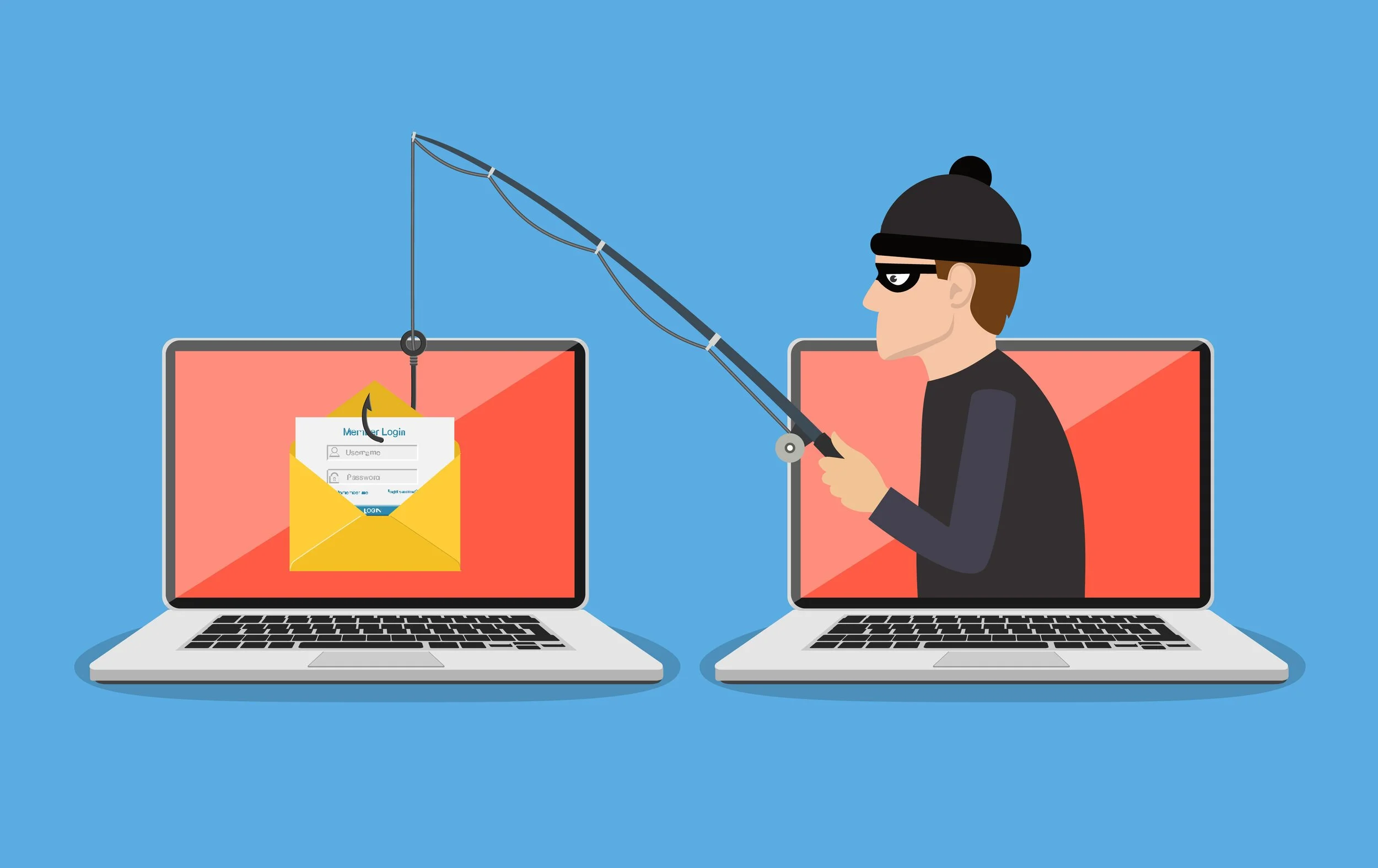
Black Arrow Cyber Threat Briefing 23 July 2021
Black Arrow Cyber Threat Briefing 23 July 2021: 40% Fell Victim To A Phishing Attack In The Past Month; Traditional Ransomware Defences Are Failing Businesses; The Number Of Employees Going Around IT Security May Surprise You; 740 Ransomware Victims Named On Data Leak Sites In Q2 2021; A More Dynamic Approach Is Needed To Tackle Today’s Evolving Cyber Security Threats; Law Firm For Ford, Boeing, Exxon, Marriott, Walgreens, And More Hacked In Ransomware Attack; UK And Allies Accuse China Of 'Reckless' Cyber Extortion And Microsoft Hack; Even after Emotet takedown, Office docs deliver 43% of all malware downloads now; Gun owners' fears after firearms dealer data breach
Welcome to this week’s Black Arrow Cyber Threat Briefing – a weekly digest, collated and curated by our cyber experts to provide senior and middle management with an easy to digest round up of the most notable threats, vulnerabilities, and cyber related news from the last week.
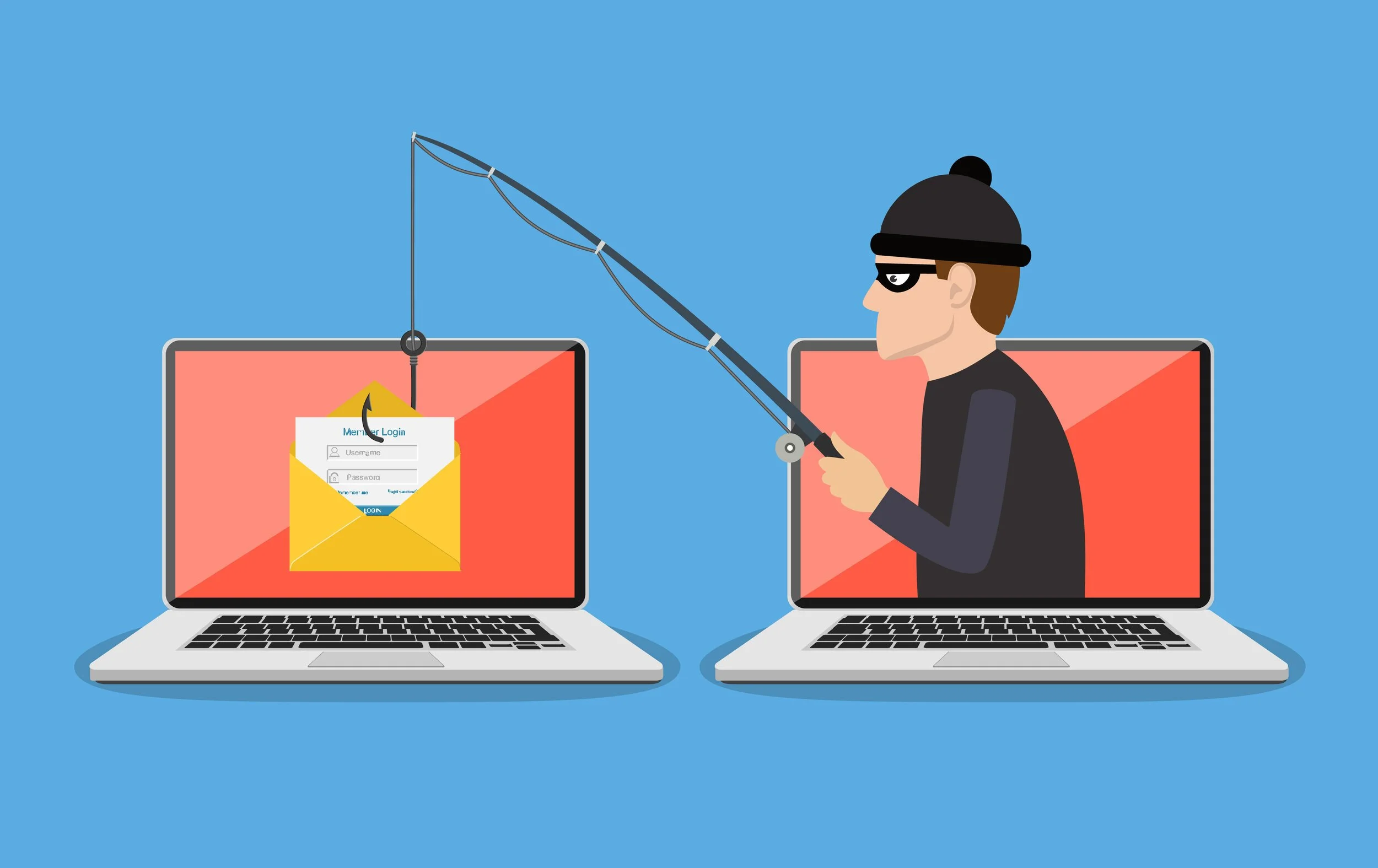
Top Cyber Stories of the Last Week
40% Fell Victim To A Phishing Attack In The Past Month
The global shift to remote work has exacerbated the onslaught, sophistication, and impact of phishing attacks, according to Ivanti. Nearly three-quarters (74%) of respondents said their organisations have fallen victim to a phishing attack in the last year, with 40% confirming they have experienced one in the last month.
Eighty percent of respondents said they have witnessed an increase in volume of phishing attempts and 85% said those attempts are getting more sophisticated. In fact, 73% of respondents said that their IT staff had been targeted by phishing attempts, and 47% of those attempts were successful.
Smishing and vishing scams are the latest variants to gain traction and target mobile users. According to recent research by Aberdeen, attackers have a higher success rate on mobile endpoints than on servers – a pattern that is trending dramatically worse. Meanwhile, the annualized risk of a data breach resulting from mobile phishing attacks has a median value of about $1.7M, and a long tail of value of about $90M.
https://www.helpnetsecurity.com/2021/07/23/risk-phishing-attacks/
Traditional Ransomware Defences Are Failing Businesses
Traditional cyber security strategies are failing to protect organisations from ransomware attacks, new research suggests. Based on a poll of 200 IT decision-makers whose businesses recently suffered ransomware attacks, 54 percent of all victims had their employees go through anti-phishing training. Furthermore, almost half (49 percent) had perimeter defences set up at the time of the attack. However, attack methods have grown too sophisticated for traditional security measures to keep up. Many attacks (24 percent) still start with a successful phishing attempt, while almost a third (31 percent) see attacker enter the network through public cloud.
https://www.itproportal.com/news/traditional-ransomware-defenses-are-failing-businesses/
Cyber Security Risk: The Number Of Employees Going Around IT Security May Surprise You
Last month, a report was published highlighting challenges associated with enabling IT freedoms while ensuring tight security procedures. The findings detail a complex balancing act between IT teams and network users. Calibrating this equilibrium is particularly challenging in the age of remote work as employees log on and virtually collaborate via a host of digital solutions. Overall, the survey found that virtually all employees (93%) "are working around IT restrictions," and a mere 7% said they were "satisfied with their corporate IT restrictions." Interestingly, this information about IT workarounds does not match security leaders' and IT expectations.
740 ransomware victims named on data leak sites in Q2 2021: report
More than 700 organizations were attacked with ransomware and had their data posted to data leak sites in Q2 of 2021, according to a new research report from cyber security firm Digital Shadows.
Out of the almost 2,600 victims listed on ransomware data leak sites, 740 of them were named in Q2 2021, representing a 47% increase compared to Q1.
https://www.zdnet.com/article/740-ransomware-victims-named-on-data-leak-sites-in-q2-2021-report/
A More Dynamic Approach Is Needed To Tackle Today’s Evolving Cyber Security Threats
For decades, the cyber security industry has followed a defense-in-depth strategy, which allowed organisations to designate the battlefield against bad actors at their edge firewall. Nowadays, cyber criminals have become as creative as ever. New cyber threats are emerging every day, and with the constantly increasing rate of Ransomware, Phishing, etc. We’re forced to take a more dynamic approach when tackling these cyber threats on a day to day basis. Recent statistics demonstrate the scale of the cyber security issues faced by companies. In 2020, malware attacks increased by 358% and ransomware increased by 435%, and the average cost of recovering from a ransomware attack has doubled in the last 12 months, reaching almost $2 million in 2021.
https://www.helpnetsecurity.com/2021/07/13/dynamic-approach-cybersecurity-threats/
Law Firm For Ford, Boeing, Exxon, Marriott, Walgreens, And More Hacked In Ransomware Attack
Campbell Conroy & O'Neil, P.C., a law firm handling hundreds of cases for the world's leading companies, has announced a large data breach that resulted from a ransomware attack in February. In a statement, the law firm said it noticed unusual activity on its network on February 27. The firm later realized it was being hit with a ransomware attack and contacted the FBI as well as cyber security companies for help.
UK And Allies Accuse China Of 'Reckless' Cyber Extortion And Microsoft Hack
The Government was hinting yet again at covertly using Britain’s own offensive cyber capabilities – hitting back at cyber attacks with cyber attacks of our own. This approach goes all the way back to 2013, when then defence secretary told the Conservative Party conference that the UK would “build a dedicated capability to counter-attack in cyber space and, if necessary, to strike in cyber space”.
Even after Emotet takedown, Office docs deliver 43% of all malware downloads now
Malware delivered over the cloud increased by 68% in Q2, according to data from cyber security firm Netskope.
The company released the fifth edition of its Cloud and Threat Report that covers the cloud data risks, threats and trends they see throughout the quarter.
The report noted that cloud storage apps account for more than 66% of cloud malware delivery.
"In Q2 2021, 43% of all malware downloads were malicious Office docs, compared to just 20% at the beginning of 2020. This increase comes even after the Emotet takedown, indicating that other groups observed the success of the Emotet crew and have adopted similar techniques," the report said.
Gun Owners' Fears After Firearms Dealer Data Breach
Thousands of names and addresses belonging to UK customers of a leading website for buying and selling shotguns and rifles have been published to the dark web following a "security breach".
Guntrader.uk told the BBC it learned of the breach on Monday and had notified the Information Commissioner's Office.
Police, including the National Crime Agency, are investigating.
One affected gun owner said he was afraid the breach could lead to his family being targeted by criminals.
Gun ownership is tightly controlled in the UK, making guns difficult to acquire, and potentially valuable on the black market.
The individual, who did not wish to be named, told the BBC the breach "seriously compromises my security arrangements for my firearms and puts me in a situation where me and my family could be targeted and in danger".
Threats
Ransomware
BEC
Phishing
Malware
Leaked NSO Group Data Hints At Widespread Pegasus Spyware Infections
This New Malware Hides Itself Among Windows Defender Exclusions To Evade Detection
MacBook Users Beware! Hackers Are Buying $49 Malware To Wreak Havoc On MacOS
New MosaicLoader Malware Targets Software Pirates Via Online Ads
CISA Warns Of Stealthy Malware Found On Hacked Pulse Secure Devices
This Password-Stealing Windows Malware Is Distributed Via Ads In Search Results
Mobile
Vulnerabilities
Researcher Uncovers Yet Another Unpatched Windows Printer Spooler Vulnerability
16-Year-Old Security Bug Affects Millions Of HP, Samsung, Xerox Printers
Fortinet Fixes Bug Letting Unauthenticated Hackers Run Code As Root
Windows 10 Vulnerability Lets Anyone Get Administrator Privileges
Researchers Discover Security Flaws In Telegram Encryption Protocol
Microsoft Shares Workaround For Windows 10 SeriousSAM Vulnerability
Apple Issues Urgent iPhone Updates; None for Pegasus Zero-Day
Data Breaches
Organised Crime & Criminal Actors
Supply Chain
DoS/DDoS
OT, ICS, IIoT and SCADA
Nation State Actors
UK And Allies Hold Chinese State Responsible For Pervasive Pattern Of Hacking
Chinese Hacking Group APT31 Uses Mesh Of Home Routers To Disguise Attacks
France Warns Of APT31 Cyber Spies Targeting French Organisations
APT Hackers Distributed Android Trojan Via Syrian E-Government Portal
Cloud
Privacy
Other News
Application Security Tools Ineffective Against New And Growing Threats
Pegasus: What Is The Israeli Spyware And How Can You Tell If It’s On Your Phone?
DHS Releases New Mandatory Cyber Security Rules For Pipelines After Colonial Ransomware Attack
1 in 5 companies fail PCI compliance assessments of their infrastructure
As usual, contact us to help assess where your risks lie and to ensure you are doing all you can do to keep you and your business secure.
Look out for our weekly ‘Cyber Tip Tuesday’ video blog and on our YouTube channel.
You can also follow us on Facebook, Twitter and LinkedIn.
Links to articles are for interest and awareness and linking to or reposting external content does not endorse any service or product, likewise we are not responsible for the security of external links.

Black Arrow move to dedicated offices in the Pollet, over three floors with Guernsey's only dedicated cyber training suite, in the centre of Town
Black Arrow are pleased to announce we are now in our new dedicated offices at 31-33 Le Pollet, St Peter Port, Guernsey, GY1 1WQ. Spread over three floors, and with Guernsey's only dedicated cyber training suite, right in the the centre of Town. Talk to us today to discuss your user education and awareness training needs or any of the other services we offer to see how we can help you:
-Cyber Security Strategy
-Cyber Risk Management
-Incident Response
-Threat Intelligence
-Cyber Security Gap Analysis
-Virtual Chief Information Security Office (vCISO)
-Cyber Readiness Exercises and Simulations


Black Arrow Cyber Threat Briefing 16 July 2021
Black Arrow Cyber Threat Briefing 16 July 2021: 84% Of Orgs Experienced Phishing Or Ransomware Attacks In The Last Year; Phishing continues to be one of the easiest paths for ransomware; Only Half Of Orgs Can Defend Against Ransomware; MI5 Chief Warns Public Of Cyber-Threat From Hostile States Such As China & Russia; Almost All Orgs Suffered Insider Data Breaches; Cyber Crime Costs Orgs Nearly $1.79 Million Per Minute; Sonicwall Releases Urgent Notice About 'Imminent' Ransomware Targeting Firmware; Google Finds Zero-Day Security Flaws In All Your Favourite Browsers
Welcome to this week’s Black Arrow Cyber Threat Briefing – a weekly digest, collated and curated by our cyber experts to provide senior and middle management with an easy to digest round up of the most notable threats, vulnerabilities, and cyber related news from the last week.

Top Cyber Stories of the Last Week
84% Of Organisations Experienced Phishing Or Ransomware Attacks In The Last Year
A new report from Trend Micro has found that 84% of organisations have reported phishing or ransomware security incidents in the last 12 months.
The findings come from an Osterman Research study commissioned by Trend Micro that was compiled from interviews with cyber security professionals in midsize and large organisations nationwide. The research also found that half of organisations are not effective at countering phishing and ransomware threats.
Phishing continues to be one of the easiest paths for ransomware
Ransomware gangs are still using phishing as one of the main ways to attack an organisation, according to a new survey from Cloudian featuring the insights of 200 IT decision-makers who experienced a ransomware attack over the last two years.
More than half of all respondents have held anti-phishing training among employees, and 49% had perimeter defenses in place when they were attacked.
Nearly 25% of all survey respondents said their ransomware attacks started through phishing, and of those victims, 65% had conducted anti-phishing training sessions. For enterprises with fewer than 500 employees, 41% said their attacks started with phishing. About one-third of all victims said their public cloud was the entry point ransomware groups used to attack them.
Ransomware: Only Half Of Organisations Can Effectively Defend Against Attacks, Warns Report
Around half of firms don't have the technology to prevent or detect ransomware attacks, according to research by cybersecurity company Trend Micro. It suggests that many organisations don't have the cybersecurity capabilities required to prevent ransomware attacks, such as the ability to detect phishing emails, remote desktop protocol (RDP) compromise or other common techniques deployed by cyber attackers during ransomware campaigns.
For example, the report warns that many organisations struggle with detecting the suspicious activity associated with ransomware and attacks that could provide early evidence that cyber criminals have compromised the network. That includes failing to identify unusual lateral movement across corporate networks, or being able to spot unauthorised users gaining access to corporate data.
MI5 Chief Warns Public Of Cyber-Threat From Hostile States Such As China & Russia
Head of Britain's MI5, Ken McCallum, is urging the public to be as vigilant about threats from "hostile states" as from terrorism.
These include disruptive cyber-attacks, misinformation, espionage and interference in politics - and are usually linked to Russia and China.
McCallum is warning that "less visible threats... have the potential to affect us all," affecting UK jobs and public services and could even lead to a loss of life.
The head of the Security Service wants to challenge the idea that activity by so-called "hostile states", usually taken to mean primarily Russia and China, only affects governments or certain institutions.
Instead, he is to argue in an annual threat update, that the British public are not immune to the "tentacles" of covert action by other states.
In the speech at MI5's Thames House headquarters, Mr McCallum will warn the "consequences range from frustration and inconvenience, through loss of livelihood, potentially up to loss of life".
Almost All Organisations Have Suffered Insider Data Breaches
Egress’ Insider Data Breach Survey 2021 claims that 94 percent of organisations have experienced insider data breaches in the last year. Human error was the top cause of serious incidents, according to 84 percent of IT leaders surveyed.
However, IT leaders are more concerned about malicious insiders, with 28 percent indicating that intentionally malicious behaviour is their biggest fear. Despite causing the most incidents, human error came bottom of the list, with just over one-fifth (21 percent) saying that it’s their biggest concern.
Additionally, almost three-quarters (74 percent) of organisations have been breached because of employees breaking security rules, and 73 percent have been the victim of phishing attacks.
The survey, independently conducted by Arlington Research on behalf of Egress, surveyed 500 IT leaders and 3,000 employees in the US and UK across vertical sectors including financial services, healthcare and legal.
https://workplaceinsight.net/almost-all-organisations-have-suffered-insider-data-breaches/
Cyber Crime Costs Organisations Nearly $1.79 Million Per Minute
Cybercrime costs organisations an incredible $1.79m every minute, according to RiskIQ’s 2021 Evil Internet Minute Report.
The study, which analysed the volume of malicious activity on the internet, laid bare the scale and damage of cyber-attacks in the past year, finding that 648 cyber-threats occurred every minute.
The researchers calculated that the average cost of a breach is $7.2 per minute, while the overall predicted cybersecurity spend is $280,060 every minute.
E-commerce has been heavily hit by online payment fraud in the past year, with cyber-criminals taking advantage of the shift to online shopping during the COVID-19 pandemic. While the e-commerce industry saw a record $861.1bn in sales, it lost $38,052 to online payment fraud every minute.
https://www.infosecurity-magazine.com/news/cybercrime-costs-orgs-per-minute/
Phishing, Ransomware Driving Wave of Data Breaches
Data compromises have increased every month this year except May.
If that trend continues, or even if there is only an average of 141 new compromises per month for the next six months, the total will still exceed the previous high of 1,632 breaches set in 2017.
These were among the findings of the nonprofit organization Identity Theft Resource Center’s (ITRC) latest data breach analysis report, which revealed publicly reported U.S. data breaches are up 38% in the second quarter of 2021, for a total of 491 compromises, compared to Q1.
https://securityboulevard.com/2021/07/phishing-ransomware-driving-wave-of-data-breaches/
Top CVEs Trending with Cybercriminals
An analysis of criminal forums reveal what publicly known vulnerabilities attackers are most interested in.
Criminal small talk in underground forums offer critical clues about which known Common Vulnerabilities and Exposures (CVEs) threat actors are most focused on. This, in turn, offers defenders clues on what to watch out for.
An analysis of such chatter, by Cognyte, examined 15 cybercrime forums between Jan. 2020 and March 2021. In its report, researchers highlight what CVEs are the most frequently mentioned and try to determine where attackers might strike next.
“Our findings revealed that there is no 100 percent correlation between the two parameters, since the top five CVEs that received the highest number of posts are not exactly the ones that were mentioned on the highest number of Dark Web forums examined,” the report said. “However, it is still enough to understand which CVEs were popular among threat actors on the Dark Web during the time examined.”
https://threatpost.com/top-cves-trending-with-cybercriminals/167889/
Sonicwall Releases Urgent Notice About 'Imminent' Ransomware Targeting Firmware
Networking device maker SonicWall sent out an urgent notice to its customers about "an imminent ransomware campaign using stolen credentials" that is targeting Secure Mobile Access (SMA) 100 series and Secure Remote Access (SRA) products running unpatched and end-of-life 8.x firmware.
In addition to the notice posted to its website, SonicWall sent an email to anyone using SMA and SRA devices, urging some to disconnect their devices immediately. They worked with Mandiant and other security companies on the issue, according to the release.
Google Finds Zero-Day Security Flaws In All Your Favourite Browsers
Researchers at Google have shared insight into four zero-day security vulnerabilities in popular web browsers which were exploited in the wild earlier this year.
DIscovered by Google's Threat Analysis Group (TAG), the four vulnerabilities in Google Chrome, Internet Explorer, and WebKit, the browser engine used by Apple's Safari, were used as a part of three different campaigns.
https://www.techradar.com/news/google-finds-zero-day-security-flaws-in-all-your-favorite-browsers
Threats
Ransomware
Ransomware attackers are growing bolder and using new extortion methods
REvil ransomware gang's websites vanish soon after Kaseya fiasco, Uncle Sam threatens retaliation
What it's really like to negotiate with ransomware attackers
This ransomware gang hunts for evidence of crime to pressure victims into paying a ransom
BEC
Phishing
Other Social Engineering
Malware
Trickbot Malware Rebounds with Virtual-Desktop Espionage Module
Hackers Spread BIOPASS Malware via Chinese Online Gambling Sites
Mobile
Vulnerabilities
Microsoft July 2021 Patch Tuesday: 117 vulnerabilities, Pwn2Own Exchange Server bug fixed
SonicWall vulnerability allows attackers to obtain full control of device and underlying OS
Microsoft's Emergency Patch Fails to Fully Fix PrintNightmare RCE Vulnerability
Serious Security Vulnerability Hits DrayTek’s UK Fibre Routers
Kaseya issues patch for on-premise customers, SaaS rollout underway
Data Breaches
Morgan Stanley suffered data breach of customers after supply chain hack
Fashion retailer Guess discloses data breach after ransomware attack
Insurance giant CNA reports data breach after ransomware attack
Organised Crime & Criminal Actors
SolarWinds 0-day gave Chinese hackers privileged access to customer servers
Magecart hackers hide stolen credit card data into images and bogus CSS files
Cryptocurrency/Cryptojacking
Insider Threats
Dark Web
Supply Chain
OT, ICS, IIoT and SCADA
Vulnerability in Schneider Electric PLCs allows for undetectable remote takeover
Unpatched Critical RCE Bug Allows Industrial, Utility Takeovers
Nation State Actors
Privacy
User Education, Awareness and Training
Other News
Kaseya's Staff Sounded the Alarm About Security Flaws for Years Before Ransomware Attack
Israeli Firm Helped Governments Target Journalists, Activists with 0-Days and Spyware
Endpoint Detection (alone) won’t protect your organisation from advanced hacking groups
Kaseya hack proves we need better cyber metrics
Instagram's Security Checkup will help users secure their accounts after a hack
79% of organisations identify threat modelling as a top priority in 2021
As usual, contact us to help assess where your risks lie and to ensure you are doing all you can do to keep you and your business secure.
Look out for our weekly ‘Cyber Tip Tuesday’ video blog and on our YouTube channel.
You can also follow us on Facebook, Twitter and LinkedIn.
Links to articles are for interest and awareness and linking to or reposting external content does not endorse any service or product, likewise we are not responsible for the security of external links.
Black Arrow Cyber Threat Briefing 09 July 2021
Black Arrow Cyber Threat Briefing 09 July 2021: Hackers Demand $70 Million To End Biggest Ransomware Attack On Record; Zero Day Malware Reached An All-Time High In Q1 2021; New Trojan Malware Steals Millions Of Login Credentials; MacOS Targeted In WildPressure APT Malware Campaign; The Cost Of Cyber Insurance Increased 32% Last Year And Shows No Signs Of Easing; Critical Flaws In Windows Print Spooler Service Could Allow For Remote Attacks; British Airways Settles Over Record Claim For Data Breach; Hackers On Loose As 9,000 Data Leaks A Year Recorded
Welcome to this week’s Black Arrow Cyber Threat Briefing – a weekly digest, collated and curated by our cyber experts to provide senior and middle management with an easy to digest round up of the most notable threats, vulnerabilities, and cyber related news from the last week.
Top Cyber Stories of the Last Week
Hackers Demand $70 Million To End Biggest Ransomware Attack On Record
An affiliate of the notorious REvil gang, best known for extorting $11 million from the meat-processor JBS after a Memorial Day attack, infected thousands of victims in at least 17 countries on Friday, largely through firms that remotely manage IT infrastructure for multiple customers. REvil was demanding ransoms of up to $5 million, the researchers said. But late Sunday it offered in a posting on its dark web site a universal decryptor software key that would unscramble all affected machines in exchange for $70 million in crypto currency.
https://www.cbsnews.com/news/ransomware-attack-revil-hackers-demand-70-million/
Zero Day Malware Reached An All-Time High Of 74% In Q1 2021
74% of threats detected in Q1 2021 were zero day malware – or those for which a signature-based antivirus solution did not detect at the time of the malware release – capable of circumventing conventional antivirus solutions. The report also covers new threat intelligence on rising network attack rates, how attackers are trying to disguise and repurpose old exploits, the quarter’s top malware attacks, and more.
https://www.helpnetsecurity.com/2021/06/29/zero-day-malware-q1-2021/
New Trojan Malware Steals Millions Of Login Credentials
There is a new custom Trojan-type malware that managed to infiltrate over three million Windows computers and steal nearly 26 million login credentials for about a million websites. The findings suggest that the Trojan classifies the websites into a dozen categories, which include virtually all popular email services, social media platforms, file storage and sharing services, ecommerce platforms, financial platforms, and more. In all, the unnamed malware managed to siphon away 1.2 terabytes of personal data including over a million unique email addresses, over two billion cookies, and more than six million other files.
https://www.techradar.com/news/malware-steals-millions-of-login-credentials-for-popular-websites
Ransomware As A Service: Negotiators Are Now In High Demand
The Ransomware-as-a-Service (RaaS) ecosystem is evolving into something akin to a corporate structure, with new openings available for "negotiators" -- a role focused on extorting victims to pay a ransom. A study in RaaS trends has recently come out saying that one-man-band operations have almost "completely dissolved" due to the lucrative nature of the criminal ransomware business. Showing the potential financial gains squeezed from companies desperate to unlock their systems have given rise to specialists in cyber crime and extortion and have also led to a high demand for individuals to take over the negotiation part of an attack chain.
MacOS Targeted In WildPressure APT Malware Campaign
Recently, threat actors known as WildPressure have added a MacOS malware variant to their latest campaign targeting energy sector businesses, while enlisting compromised WordPress websites to carry out attacks. Furthermore, known novel malware, initially identified in March 2020 and dubbed Milum, has now been retooled with a PyInstaller bundle containing a trojan dropper compatible with Windows and MacOS systems, according to researchers. Compromised endpoints allow the advanced persistent threat (APT) group to download and upload files and executing commands.
The Cost Of Cyber Insurance Increased 32% Last Year And Shows No Signs Of Easing
The cost of insurance to protect businesses and organisations against the ever-increasing threat of cyber crimes has soared by a third in the last year. Also adding that global cyber insurance pricing has increased by an average of 32 percent in the year to June. Not only are premiums going through the roof, insurers are also attaching more strings to their policies, demanding ever more assurances that firms taking out cover have the necessary systems and processes in place to prevent a cyber mishap. Previous research also suggests that the upward squeeze on premiums shows no sign of easing, which, in turn, is putting more strain on the sector.
https://www.theregister.com/2021/07/05/cyber_insurance_report/
Critical Flaws In Windows Print Spooler Service Could Allow For Remote Attacks
Administrators are urged to apply the latest patches from Microsoft and disable the Windows Print spooler service in domain controllers and systems not used for printing. This is because Microsoft is currently grappling with a couple of security holes in its Windows Print spooler service that could allow attackers to remotely control an affected system. Anyone able to exploit the more recent vulnerability of the two would be able to run code on the compromised computer with full system privileges. That attacker could then install software, modify data and create new user accounts.
End Users In The Dark About Latest Cyber Threats, Attacks
According to a recent survey, which polled consumers and end users, high-profile incidents such as the ransomware attack on Colonial Pipeline Co. and the breach of a Florida city's water utilities were either overlooked or ignored by many outside the IT and information security fields. As a result, the responsibility for keeping users informed and aware of the need for heightened security appears to fall on administrators and IT staff.
British Airways Settles Over Record Claim For Data Breach
British Airways has settled what is thought to be the biggest claim for a data breach in British legal history, involving 16,000 victims. However, the amount was not disclosed. When The breach took place three years ago, multiple data sources and customer data was leaked, including the leakage of names, addresses and card payment details which affected 420,000 customers and staff. As a result, in 2019 the Information Commissioner’s Office hit BA with its largest ever fine at £20 million.
Hackers On Loose As 9,000 Data Leaks A Year Recorded
Public bodies and the private sector suffered nearly 9,000 data security incidents in 12 months with sensitive and private information hacked, lost or accidentally given to the wrong people. This Data was seen to lists more than 500 organisations hit by ransomware attacks and a further 562 incidents of hacking. There was also a total of 8,815 data security incidents in 2020/21 with the most breaches in the health and education sectors. Furthermore, over the past three years, police forces across England and Wales suffered an average eight breaches a week. Even security experts announced that these figures were “alarming” and that the public would be “disturbed” to learn how often important information/data was being lost.
https://www.thetimes.co.uk/article/hackers-9000-data-leaks-recorded-cyber-crime-56nvs7t6w
Threats
Ransomware
Swedish Coop Supermarkets Shut Due To US Ransomware Cyber Attack
Ransomware-Hit Law Firm Gets Court Order Asking Crooks Not To Publish The Data They Stole
This Crowd Sourced Ransomware Payment Tracker Shows How Much Cyber Criminals Have Heisted
Ransomware: US Warns Russia To Take Action After Latest Attacks
Kaseya Says Up To 1,500 Businesses Compromised In Massive Ransomware Attack
Phishing
Malware
Vulnerabilities
Microsoft Issues Emergency Patch for Critical Windows PrintNightmare Vulnerability
Microsoft Warns Of Critical PowerShell 7 Code Execution Vulnerability
Researchers Briefly Posted PoC For Windows Print Spooler RCE Flaw
Kaseya Patches Imminent After Zero-Day Exploits, 1,500 Impacted
SonicWall Addresses Critical CVE-2021-20026 Flaw In NSM Devices
Kaseya Left Customer Portal Vulnerable To 2015 Flaw In Its Own Software
Morgan Stanley Announces Breach Of Customer SSNs Through Accellion FTA Vulnerability
Data Breaches
Organised Crime & Criminal Actors
UK, US Agencies Warn Of Large-Scale Brute-Force Attacks Carried Out By Russian APT
Moroccan Hacker Dr Hex Arrested For Phishing Attacks, Malware Distribution
Supply Chain
OT, ICS, IIoT and SCADA
Nation State Actors
SolarWinds Hackers Breached RNC Via Synnex In New Attack: Report
Lazarus gang targets engineers with job offers using poisoned emails (tripwire.com)
Cloud
Privacy
Other News
IT Manager Who Swindled Essex Hospital Trust Out Of £800k Gets 5 Years In Prison
Website Of Mongolian Certificate Authority Served Backdoored Client Installer
Security Problems Worsen As Enterprises Build Hybrid And Multiloud Systems
Leaked infrastructure code, credentials and keys costing orgs an average of $1.2 million per year
As usual, contact us to help assess where your risks lie and to ensure you are doing all you can do to keep you and your business secure.
Look out for our weekly ‘Cyber Tip Tuesday’ video blog and on our YouTube channel.
You can also follow us on Facebook, Twitter and LinkedIn.
Links to articles are for interest and awareness and linking to or reposting external content does not endorse any service or product, likewise we are not responsible for the security of external links.

Black Arrow Cyber Threat Briefing 02 July 2021
Black Arrow Cyber Threat Briefing 02 July 2021: Russian Hackers Target IT Supply Chain In Ransomware Attack Leading To Hundreds Of Firms Being Hit; 71% Of Orgs Experienced BEC Attacks Over The Past Year; Cyber Insurance Making Ransomware Crisis Worse; Breach Exposes 92% Of LinkedIn Users; Users Clueless About Cyber Security Risks; Paying Ransoms Make You A Bigger Target; Cyber Crime Never Sleeps; Classified MOD Docs Found At Bus Stop; Don’t Leave Your Cyber IR Plan To IT, It’s An Organisational Risk
Welcome to this week’s Black Arrow Cyber Threat Briefing – a weekly digest, collated and curated by our cyber experts to provide senior and middle management with an easy to digest round up of the most notable threats, vulnerabilities, and cyber related news from the last week.

Image by Clker-Free-Vector-Images from Pixabay
Top Cyber Stories of the Last Week
Russian Hackers Target IT Supply Chain In Ransomware Attack Leading To Hundreds Of Firms Being Hit
Hackers began a ransomware attack on Friday, hitting at least 200 companies, according to cyber security researchers.
In what appears to be one of the largest supply chain attacks to date, hackers compromised Kaseya, an IT management software supplier, in order to spread ransomware to the managed service providers that use its technology, as well as to their clients in turn.
The attacks have been attributed t=to REvil, the notorious Russia-linked ransomware cartel that the FBI claimed was behind recent crippling attack on beef supplier JBS.
The attack is the latest example of hackers weaponising the IT supply chain in order to attack victims at scale, by breaching just one provider. Last year, it emerged that Russian state-backed hackers had hijacked the SolarWinds IT software group in order to penetrate the email networks of US federal agencies and corporations, for example.
Late on Friday, Kaseya urged those using the compromised “VSA server” tool, which provides remote monitoring and patching capabilities, to shut it down immediately.
https://www.ft.com/content/a8e7c9a2-5819-424f-b087-c6f2e8f0c7a1
71% Of Organisations Experienced BEC Attacks Over The Past Year
Business email compromise (BEC) attacks are one of the most financially damaging cyber crimes and have been on the rise over the past year. This is according to a new report which revealed that spoofed email accounts or websites accounted for the highest number of BEC attack as 71% of organisations acknowledged they had seen one over the past year. This is followed by spear phishing (69%) and malware (24%). Data from 270 IT and cyber security professionals were collected to identify the latest enterprise adoption trends, gaps and solution preferences related to phishing attacks.
https://www.helpnetsecurity.com/2021/06/25/bec-attacks-past-year/
Cyber Insurance Isn't Helping With Cyber Security, And It Might Be Making The Ransomware Crisis Worse, Say Researchers
Cyber insurance is designed to protect organisations against the fallout of cyber attacks, including covering the financial costs of dealing with incidents. However, some critics argue that insurance encourages ransomware victims to simply pay the ransom demand that will then be covered by the insurers, rather than have adequate security to deter hackers in the first place. Insurers argue that it's the customer that makes any decision to pay the ransom, not the insurer.
LinkedIn Breach Reportedly Exposes Data Of 92% Of Users, Including Inferred Salaries
A second massive LinkedIn breach reportedly exposes the data of 700M users, which is more than 92% of the total 756M users. The database is for sale on the dark web, with records including phone numbers, physical addresses, geolocation data, and inferred salaries. The hacker who obtained the data has posted a sample of 1M records, and checks confirm that the data is both genuine and up to date. No passwords are included, but as the site notes, this is still valuable data that can be used for identity theft and convincing-looking phishing attempts that can themselves be used to obtain login credentials for LinkedIn and other sites. https://9to5mac.com/2021/06/29/linkedin-breach/
Users Clueless About Cyber Security Risks
Organisations are facing yet another unprecedented threat to their cyber security now that employees are headed back into offices with their personal devices, lax security hygiene and no clue about some of the most catastrophic attacks in history, such as the Colonial Pipeline shutdown. A new survey shows the mountains of work ahead for security teams in not just locking down their organisations’ systems but also in keeping users from getting duped into handing over the keys to the kingdom. 2,000 end users were surveyed in the U.S. and found the dangers to critical infrastructure, utilities and food supplies are not sinking in with the public, despite the deluge of headlines.
https://threatpost.com/users-clueless-cybersecurity-risks-study/167404/
Ransomware: Paying Up Won't Stop You From Getting Hit Again, Says Cyber Security Chief
Ireland's Health Service Executive (HSE) has been praised for its response after falling victim to a major ransomware attack and for not giving into cyber criminals and paying a ransom. HSE was hit with Conti ransomware in May, significantly impacting frontline health services. The attackers initially demanded a ransom of $20 million in bitcoin for the decryption key to restore the network. While the gang eventually handed over a decryption key without receiving a ransom, they still published stolen patient data – a common technique by ransomware attackers, designed to pressure victims into paying.
Don’t Leave Your Cyber IR Plan To IT, It’s An Organisational Risk
Phishing attacks, insider threats, denial of service disruptions, malware and ransomware — cyber security incidents like these happen on a daily basis. For most of these incidents, the onsite IT team will remediate based on a pre-developed plan and process. And for many of these incidents, that’s a solid approach. But those incident response plans and strategies are IT oriented and geared toward short-term fixes and single incident responses. Meaning, if an incident accelerates beyond a handful of infected laptops or a compromised server and begins to affect operations of all or even part of the organisation, business itself can be disrupted — or even shut down entirely.
https://securityintelligence.com/posts/incident-response-vs-cyber-crisis-management-plan/
Cyber Crime Never Sleeps
When the Colonial Pipeline fell victim to a ransomware attack, people across the United States were shocked to find that a single episode of cyber crime could lead to widespread delays, gas shortages and soaring prices at the pump. But disruptive ransomware attacks like these are far from rare; in fact, they are becoming more and more frequent. Cyber crime is on the rise, and our cyber security infrastructure desperately needs to keep up. A quick look at the data from the last year confirms that cyber crime is a growing threat. Identity theft doubled in 2020 over 2019.
https://www.newsweek.com/cybercrime-never-sleeps-opinion-1603901
IT, Healthcare And Manufacturing Facing Most Phishing Attacks
Researchers examined more than 905 million emails for the H1 2021 Global Phish Cyber Attack Report, finding that the IT industry specifically saw 9,000 phishing emails in a one month span out of almost 400,000 total emails. Their healthcare industry customers saw more than 6,000 phishing emails in one month out of an average of over 450,000 emails and manufacturing saw a bit less than 6,000 phishing emails out of about 330,000 total emails. Researchers said these industries are ripe targets because of the massive amount of personal data they collect and because they are often stocked with outdated technology that can be easily attacked.
https://www.zdnet.com/article/it-healthcare-and-manufacturing-facing-most-phishing-attacks-report/
Classified Ministry Of Defence Documents Found At Bus Stop
Classified Ministry of Defence documents containing details about HMS Defender and the British military have been found at a bus stop in Kent. One set of documents discusses the likely Russian reaction to the ship's passage through Ukrainian waters off the Crimea coast on Wednesday. Another details plans for a possible UK military presence in Afghanistan after the US-led NATO operation there ends. The government said an investigation had been launched.
Cabinet Office Increases Cyber Security Training Budget By Almost 500%
The UK’s Cabinet Office increased its cyber security training budget to £274,142.85 in the fiscal year 2021 – a 483% increase from the £47,018 spent in the previous year. In its FOI response, the Cabinet Office detailed the cyber security courses attended by its staff, revealing that the number of booked courses grew from 35 in 2019-20 to 428 in the current fiscal year.
Threats
Ransomware
Increase In Ransomware Attacks ‘Absolutely Aligns’ With Rise Of Crypto, FireEye CEO Says
Ransomware Gangs Now Creating Websites To Recruit Affiliates
New Ransomware Highlights Widespread Adoption Of Golang Language By Cyber Attackers
This Major Ransomware Attack Was Foiled At The Last Minute. Here's How They Spotted It
Using VMs To Hide Ransomware Attacks Is Becoming More Popular
Phishing
Malware
Microsoft Admits To Signing Rootkit Malware In Supply-Chain Fiasco
The 'ChaChi' Trojan Is Helping A Ransomware Gang Target Schools
Mobile
IoT
Data Breaches
Organised Crime & Criminal Actors
Cryptocurrency/Cryptojacking
OT, ICS, IIoT and SCADA
Nation State Actors
Russian Hackers Had Months-Long Access To Denmark's Central Bank
Russian Hackers Are Trying To Brute-Force Hundreds Of Networks
US And UK Agencies Accuse Russia Of Political Cyber Campaign
Cloud
Privacy
Vulnerabilities
Microsoft Finds Netgear Router Bugs Enabling Corporate Breaches
Exploitable Critical RCE Vulnerability Allows Regular Users To Fully Compromise Active Directory
Critical VMware Carbon Black Bug Allows Authentication Bypass
My Book Live Users Wake Up To Wiped Devices, Active RCE Attacks
Flaws In FortiWeb WAF Expose Fortinet Devices To Remote Hack
Hackers Exploited 0-Day, Not 2018 Bug, To Mass-Wipe My Book Live Devices
A Second Exploit Has Emerged In The Sad WD My Book Live Data Deletion Saga
Microsoft Adds Second CVE For PrintNightmare Remote Code Execution
Zyxel Says A Threat Actor Is Targeting Its Enterprise Firewall And VPN Devices
Other News
As usual, contact us to help assess where your risks lie and to ensure you are doing all you can do to keep you and your business secure.
Look out for our weekly ‘Cyber Tip Tuesday’ video blog and on our YouTube channel.
You can also follow us on Facebook, Twitter and LinkedIn.
Links to articles are for interest and awareness and linking to or reposting external content does not endorse any service or product, likewise we are not responsible for the security of external links.
LinkedIn breach reportedly exposes data of 92% of users, including inferred salaries
LinkedIn breach reportedly exposes data of 92% of users, including inferred salaries
A second massive LinkedIn breach reportedly exposes the data of 700M users, which is more than 92% of the total 756M users. The database is for sale on the dark web, with records including phone numbers, physical addresses, geolocation data, and inferred salaries.
A second massive LinkedIn breach reportedly exposes the data of 700M users, which is more than 92% of the total 756M users. The database is for sale on the dark web, with records including phone numbers, physical addresses, geolocation data, and inferred salaries.
The hacker who obtained the data has posted a sample of 1M records, and checks confirm that the data is both genuine and up-to-date.
Reports indicate that the hacker appears to have misused the official LinkedIn API to download the data, the same method used in a similar breach back in April.
On June 22nd, a user of a popular hacker advertised data from 700 Million LinkedIn users for sale. The user of the forum posted up a sample of the data that includes 1 million LinkedIn users. The sample was examined and found to contain the following information:
· Email Addresses
· Full names
· Phone numbers
· Physical addresses
· Geolocation records
· LinkedIn username and profile URL
· Personal and professional experience/background
· Genders
· Other social media accounts and usernames
Based on analysis by researchers and cross-checking data from the sample with other publicly available information, it appears all data is authentic and tied to real users. Additionally, the data does appear to be up to date, with samples from 2020 to 2021.
No passwords are included, but as the site notes, this is still valuable data that can be used for identity theft and convincing-looking phishing attempts that can themselves be used to obtain login credentials for LinkedIn and other sites.
Although passwords were not included we still recommend you change your LinkedIn password and enable MFA (we strongly recommend MFA on any and all accounts you access online). We also recommend vigilance against social engineering attempts using information gleaned from this breach.
Original post: LinkedIn breach reportedly exposes data of 92% of users

Black Arrow Cyber Threat Briefing 25 June 2021
Black Arrow Cyber Threat Briefing 25 June 2021: BEC Losses Top $1.8B As Tactics Evolve; 30M Dell Devices At Risk For Remote BIOS Attacks, Remote Code Exploits; Bad Employee Behaviours Picked Up During Remote Working Pose Serious Security Risks; Ways Technical Debt Increases Security Risk; Orgs Ill-Equipped To Deal With Growing BYOD Security Threats; Firewall Manufacturer Sees 226.3 Million Ransomware Attack Attempts This Year; Ransomware Criminals Look To Other Hackers To Provide Them With Network Access

Welcome to this week’s Black Arrow Cyber Threat Briefing – a weekly digest, collated and curated by our cyber experts to provide senior and middle management with an easy to digest round up of the most notable threats, vulnerabilities, and cyber related news from the last week.
Top Cyber Stories of the Last Week
BEC Losses Top $1.8B As Tactics Evolve
Business email compromise (BEC) attacks ramped up significantly in 2020, with more than $1.8 billion stolen from organisations with these types of attacks last year alone — and things are getting worse. BEC attacks are carried out by cyber criminals either impersonating someone inside an organisation, or masquerading as a partner or vendor, bent on financial scamming. A new report from Cisco’s Talos Intelligence examined the tactics of some of the most dangerous BEC attacks observed in the wild in 2020 and reminded the security community that in addition to technology, smart users armed with a healthy scepticism of outside communications and the right questions to ask are the best line of defence. “The reality is, these types of emails and requests happen legitimately all over the world every day, which is what makes this such a challenge to stop,” the report said.
https://threatpost.com/bec-losses-top-18b/167148/
30M Dell Devices At Risk For Remote BIOS Attacks, Remote Code Execution
A high-severity series of four vulnerabilities can allow remote adversaries to gain arbitrary code execution in the pre-boot environment on Dell devices, researchers said. They affect an estimated 30 million individual Dell endpoints worldwide. According to analysis the bugs affect 129 models of laptops, tablet, and desktops, including enterprise and consumer devices, that are protected by Secure Boot. Secure Boot is a security standard aimed at making sure that a device boots using only software that is trusted by the device original equipment manufacturer (OEM), to prevent rogue takeovers.
https://threatpost.com/dell-bios-attacks-rce/167195/
Bad Employee Behaviours Picked Up During Remote Working Pose Serious Security Risks in the New Hybrid Workplace
Most employers are wary that the post-pandemic hybrid workforce would bring bad cyber security behaviours. More than half (56%) of employers believed that employees had picked bad security practices while working remotely. Similarly, nearly two-fifths (39%) of employees also admitted that their employee behaviours differed significantly while working from home compared to the office. Additionally, nearly a third (36%) admitted discovering ‘workarounds’ since they started working remotely. Younger workers were more prone to these bad employee behaviours, with 51% of 16-24, 46% of 25-34, and 35% of 35-44-year-olds using ‘workarounds.’ Close to half (49%) of workers adopted the risky behaviour because they felt that they were not being watched by IT departments. Nearly a third (30%) said they felt that they could get away with the risky employee behaviours while working away from the office.
7 Ways Technical Debt Increases Security Risk
Two in three CISOs believe that technical debt, the difference between what's needed in a project and what's finally deployed, to be a significant cause of security vulnerability, according to the 2021 Voice of the CISO report. Most technical debt is created by taking shortcuts while placing crucial aspects such as architecture, code quality, performance, usability, and, ultimately, security on hold. Many large organisations are carrying tens or hundreds of thousands of discovered but un-remediated risks in their vulnerability management systems,. In many sectors there's this insidious idea that underfunded security efforts, plus risk management, are almost as good as actually doing the security work required, which is dangerously wrong.
https://www.csoonline.com/article/3621754/7-ways-technical-debt-increases-security-risk.html
Organisations Ill-Equipped To Deal With Growing BYOD Security Threats
A report shows the rapid adoption of unmanaged personal devices connecting to work-related resources (aka BYOD) and why organisations are ill-equipped to deal with growing security threats such as malware and data theft. The study surveyed hundreds of cyber security professionals across industries to better understand how COVID-19’s resulting surge of remote work has affected security and privacy risks introduced using personal mobile devices. The insights in this report are especially relevant as more enterprises are shifting to permanent remote work or hybrid work models, connecting more devices to corporate networks and, as a result, expanding the attack surface.
https://www.helpnetsecurity.com/2021/06/17/byod-security/
Firewall Manufacturer SonicWall Sees 226.3 Million Ransomware Attack Attempts This Year
Firewall manufacturer SonicWall said it saw dramatic increases in almost every market, even in those such as the US and UK, where ransomware attacks were already common. The US saw a 149% spike, and the UK 69%. “The bombardment of ransomware attacks is forcing organisations into a constant state of defence rather than an offensive stance,” said the SonicWall CEO. “And as the tidal wave of ransomware attacks continues to crush company after company, there is a lot of speculation on how to keep individual organisations safe, but no real consensus on how to move forward when it comes to combating ransomware.
Ransomware Criminals Look To Other Hackers To Provide Them With Network Access
According to a new report, cyber criminals distributing ransomware are increasingly turning to other hackers to buy access into corporate networks.
Researchers said a robust and lucrative criminal ecosystem exists where criminals work together to carry out ransomware attacks. In this ecosystem, ransomware operators buy access from independent cyber criminal groups who infiltrate major targets for part of the ransom proceeds.
Cyber criminal threat groups already distributing banking malware or other trojans may also become part of a ransomware affiliate network said researchers.
5 Biggest Healthcare Security Threats For 2021
Cyber Attacks targeting the healthcare sector have surged because of the COVID-19 pandemic and the resulting rush to enable remote delivery of healthcare services. Security vendors and researchers tracking the industry have reported a major increase in phishing attacks, ransomware, web application attacks, and other threats targeting healthcare providers. The trend has put enormous strain on healthcare security organisations that already had their hands full dealing with the usual volume of threats before the pandemic. “The healthcare industry is under siege from a range of complex security risks," says Terry Ray. Cyber Criminals are hunting for the sensitive and valuable data that healthcare has access to, both patient data and corporate data, he says. Many organisations are struggling to meet the challenge because they are under-resourced and rely on vulnerable systems, third-party applications, and APIs to deliver services.
https://www.csoonline.com/article/3262187/biggest-healthcare-security-threats.html
Threats
Ransomware
Ransomware: Now Gangs Are Using Virtual Machines To Disguise Their Attacks
Clop Ransomware Gang Doxes Two New Victims Days After Police Raids
Wormable Bash DarkRadiation Ransomware Targets Linux Distros And Docker Containers
Faux ‘DarkSide’ Gang Takes Aim At Global Energy, Food Sectors
A Deep Dive Into The Operations Of The LockBIT Ransomware Group
Fashion titan French Connection Says 'FCUK' Ss REvil-Linked Ransomware Makes Off With Data
BEC
Phishing
Phishing Attack's Unusual File Attachment Is A Double-Edged Sword
Man Arrested After 26,000 'Phishing' Text Messages Sent Out In A Single Day
Other Social Engineering
Malware
50% Of Misconfigured Containers Hit By Botnets In Under An Hour
Dirtymoe Malware Has Infected More Than 100,000 Windows Systems
Mobile
Vulnerabilities
Google Confirms 7th Chrome ‘Zero Day’ Vulnerability, Upgrade Now
Linux Marketplaces Vulnerable To RCE And Supply Chain Attacks
Critical Palo Alto Cyber-Defense Bug Allows Remote ‘War Room’ Access
Sonicwall Bug Affecting 800k Firewalls Was Only Partially Fixed
Hackers Are Using Unknown User Accounts To Target Zyxel Firewalls And VPNs
Data Breaches
Cryptocurrency
Dark Web
OT, ICS, IIoT and SCADA
Nation State Actors
The Lazarus Heist: How North Korea Almost Pulled Off A Billion-Dollar Hack
Cyber Espionage By Chinese Hackers In Neighbouring Nations Is On The Rise
Cyber Attack On Polish Government Officials Linked To Russian Hackers
Cloud
Privacy
Other News
IT Leaders Say Cyber Security Funding Being Wasted On Remote Work Support
Hackers Are Trying To Attack Big Companies. Small Suppliers Are The Weakest Link
APNIC Left A Dump From Its WhoIS SQL Database In A Public Google Cloud bucket
Average Time To Fix Critical Cyber Security Vulnerabilities Is 205 Days
As usual, contact us to help assess where your risks lie and to ensure you are doing all you can do to keep you and your business secure.
Look out for our weekly ‘Cyber Tip Tuesday’ video blog and on our YouTube channel.
You can also follow us on Facebook, Twitter and LinkedIn.
Links to articles are for interest and awareness and linking to or reposting external content does not endorse any service or product, likewise we are not responsible for the security of external links.